Category Archives: Films

The Films of Kay Francis

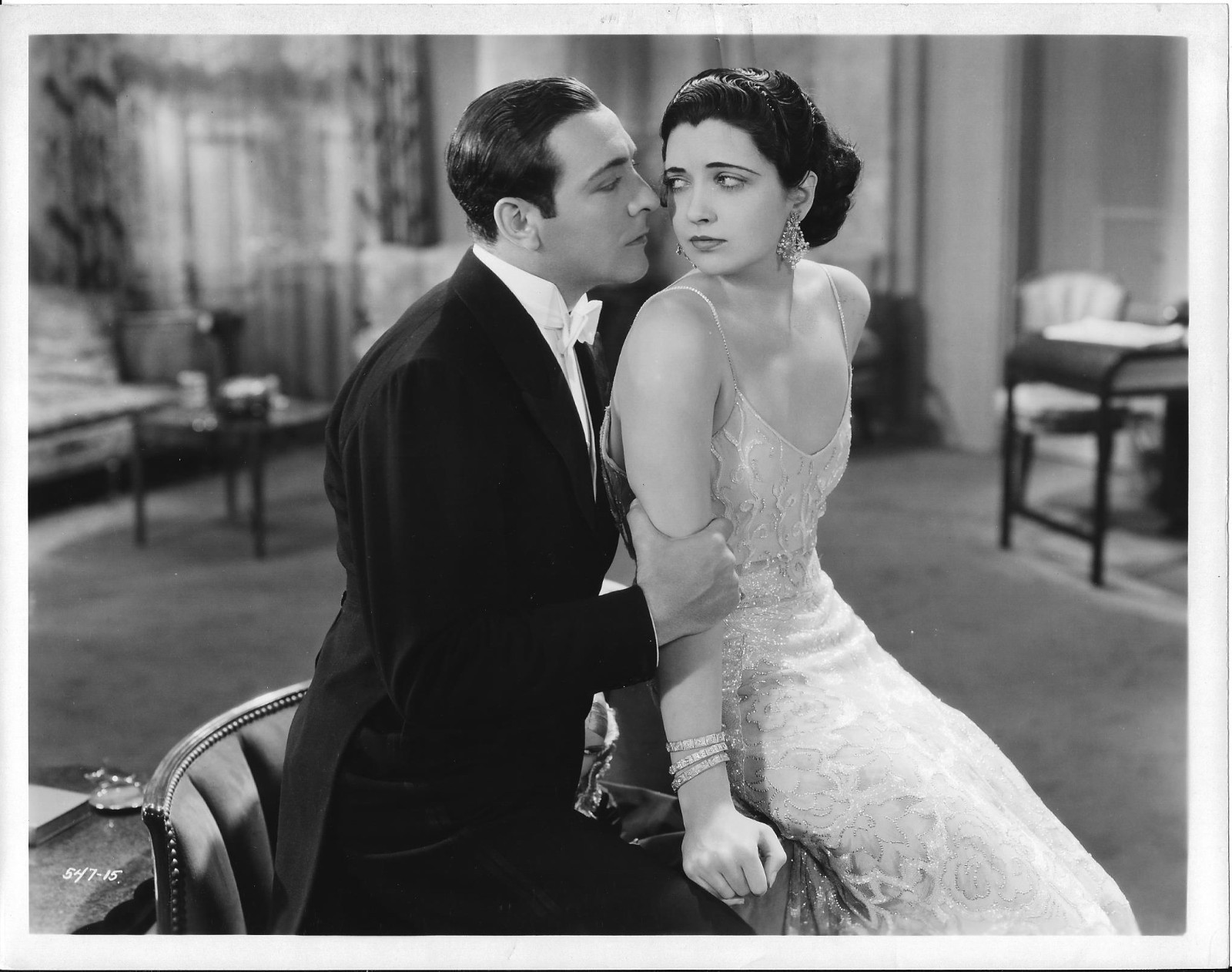
Ladies’ Man (1931)

ladiesman030814Cast:

William Powell … Jamie Darricott
Kay Francis … Norma Page
Carole Lombard … Rachel Fendley
Gilbert Emery … Horace Fendley
Olive Tell … Mrs. Fendley
Martin Burton … Anthony Fendley
John Holland … Peyton Walden
Frank Atkinson … Valet
Maude Turner Gordon … Therese Blanton
Hooper Atchley … Headwaiter
Richard Cramer … Private detective (as Dick Cramer)
Edward Hearn … Maitre D’
Lothar Mendes … Lobby extra
William H. O’Brien … Elevator starter
Frank O’Connor … News clerk

Directed by Lothar Mendes.
From the Novel by Rupert Hughes.

Screenplay by Hermen J. Mankiewicz.
Sound Direction by Harry Lindgren.
Cinematography by Victor Milner.

Released April 30, 1931.
A Paramount Picture.

Background:

“I’m offering a direct challenge to the movie public, playing this part,” William Powell told reporters. “I’m throwing down the gauntlet. I am not a ladies’ man. I haven’t the physical characteristics, for one thing. I am not handsome. Someone like Valentino should have played this part, not Bill Powell.”

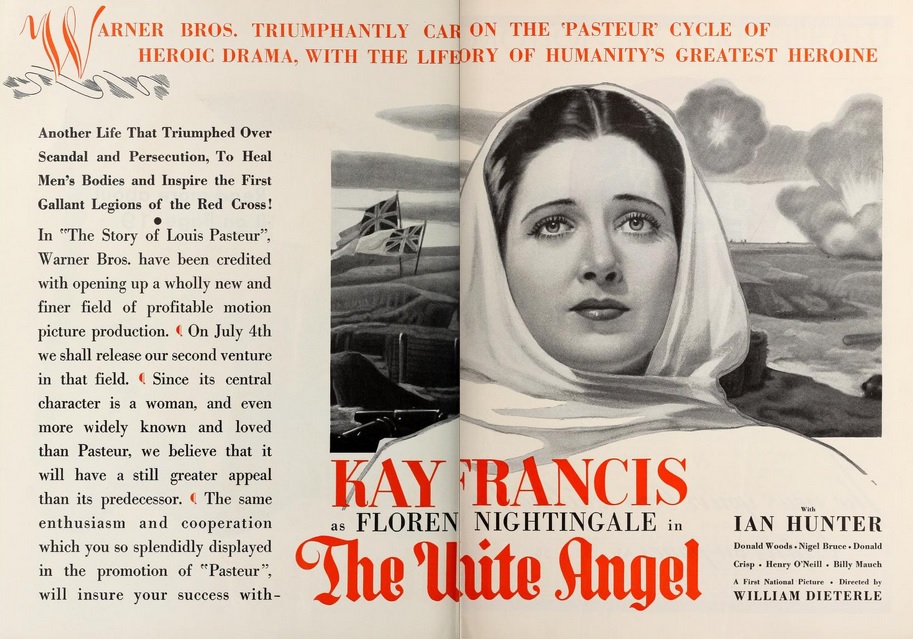
His complaints about Paramount’s casting of him in Ladies’ Man later echoed Kay’s own about her work in such films as The White Angel (1936), at Warner Brothers. Back then, when stars felt they got the raw end in a deal for a picture they wanted nothing to do with, they made their complaints known, and they were usually legit. But Roger Bryant, author of William Powell: The Life and Films, felt that Ladies’ Man was not worth Powell’s complaining, and that, if anything, it was worth a rediscovery.

Based off of a novel by Rupert Hughes, published in 1930, Paramount acquired the property for Paul Lukas and Kay, before replacing Lukas with Powell and throwing Powell’s then fiancé—Carole Lombard—into the mix. Hmm…the successfully established team of William Powell and Kay Francis going up against his new love-interest, Carole Lombard? Paramount must have thought they really had something here.

As a result, Ladies’ Man was given a first-rate production value.
Veteran Olive Tell was recruited to play the role of Mrs. Fendley. Her career had spanned fifteen years, beginning on the stage with Cousin Lucy (1915), and making her film debut in The Silent Master (1917), directed by French filmmaker Leonce Perret. Her role in Ladies’ Man would be an unsympathetic one, as Carole Lombard’s selfish and unrealistic mother, living in a fantasy world of materialistic value.

Her work in sound movies included The Trial of Mary Dugan (1929, with Norma Shearer) and Cock O’ the Walk (1930, with Joseph Schildkraut and Myrna Loy), until she ended her acting career in Paramount’s Zaza (1939, with Claudette Colbert). She died in 1951 of heart failure.

A veteran herself in a way, Carole Lombard had been doing bit parts in films since 1925, but Ladies’ Man proves she still had a lot to learn about screen acting. However, the film made her finally click with audiences. After this, she went on to starring roles in films like Virtue (1932), making her career stretch up until her tragic death ten years later.

And let us not forget, that it was Carole, who urged RKO to sign Kay for the third lead in In Name Only (1939), the film in which Kay made her big screen comeback after leaving Warner Brothers.

But if this film has any significance in the careers of any of its stars, it is Bill Powell’s. This was his last movie for Paramount before making his pit stop at Warner Brothers, before signing with MGM where he reached the peak of his popularity. Powell, Kay, and Ruth Chatterton were all recruited from Paramount to Warner Brothers with the promise of higher salaries, better scripts, and more publicity.

Interestingly, only one of those three would last, and that one would be the inspiration for this website, seventy-some years later.

Ladies’ Man opened to fair reviews, with most of the honors going to William Powell, though Time seemed convinced that this was Paramount’s chance at ruining his future with Warner Brothers (forcing him to play an unsympathetic lead). But audiences didn’t listen, and the Powell-Francis chemistry would shine brightest at Warner Brothers in One-Way Passage (1932).

ladiesmanaprilpicplay

Above: From the April 1931 issue of Picture Play


Webmaster’s Review:

James Darricott makes a living off of dating older, well-married women who rank among the top of New York’s social class. For instance, he charms them, and they in turn make absolute fools of themselves, pawning everything they own to keep him around. But it is in Mrs. Horace Fendley where James as struck a gold mine.

Mrs. Fendley has two children, Anthony and Rachel. Both are aware that James accompanies Mrs. Fendley to parties and such when her husband is unavailable, but they are becoming more suspicious that there is more to their relationship than meets the eye. Matters are worsened when Rachel begins seeing James herself, causing a deserved frustrating resentment against her own mother, who is still very much married to Rachel’s father.

She asks James to give her mother up and settle for her, but James doesn’t love either one of them enough to do what’s best for them. Actually he doesn’t love anyone, except himself.

That is, until Norma Page comes along.

Rachel’s debutante party is attending by everyone of social importance in New York. Among the guests are Norma Page and her aunt. Norma is not from New York, staying only briefly with plans to return home the next day. She only sees James Darricott when she is leaving the party as he arrives. They meet in the doorway, stop, and she looks at him with a slight resentment, knowing exactly what kind of a man he is. He becomes in awe of her, and probably is more attracted to her distance towards him.

Not even sharing words, their relationship is established from here.

James meets Norma in a hotel lobby the next day, and asks her if he can show her around New York. She tells him that she needs to take the train to return home, but he gets her to stay in town just for one more day—or so he thinks. Later, when he goes to her hotel to pick her up, the manager informs James that Norma Page had already checked out.

Waiting at the train station, all of the passengers hop on board, and James assumes Norma is on the train, that he will never see her again. So isn’t he surprised when he turns around and there she is, all ready for a hot date with him and looking radiant in a beautiful evening gown.

The two run into Mrs. Fendley, who was told by James that he could not attend a dinner party with her because of his sick aunt, so she becomes insanely jealous of Norma, that she is able to possess James enough to take him away from her riches and money.

Leaving that location to avoid a scene, they go to a speakeasy where Rachel is emotionally devastated and drunk out of her mind. She’s in no condition to be out, so James and Norma take him back to James’ apartment where she can relax and sleep it off, and where Norma and James can continue their date by looking at the New York City skyline from his balcony. After Rachel wakes up she confronts James and tells him that she loves him, and that she will kill herself if he refuses to marry her.

Anthony shows up in the middle of her big scene, and takes her home. Oddly, none of this seems to bother Norma.

As maybe two weeks go by, Norma and James become serious with each other. Finally he has met a woman who he can honestly say he loves, and Rachel begins to awaken to her senses, and confides in her father that it was not just her mother’s heart whom James has captured, but also her own. Her father tries to tell her nothing is really going on between her mother and James, but she is not a child anymore, and he is unable to convince her.

Mr. Fendley didn’t mind when James was making a fool of his wife, because he knows exactly what his wife is, but because James has broken Rachel’s heart, Mr. Fendley decides it is time for revenge.

As Norma and James prepare their marriage plans, Mrs. Fendley arrives. Norma leaves after James confesses that he wants no more to do with her, and that he and Norma plan to be married. Mrs. Fendley does not take kindly to this, and tells James that if he marries Norma she will kill him. Just as she makes that announcement, Mr. Fendley walks in, and tells his wife to go to the party that is being held by her.

Mr. Fendley pulls out a gun, James flips the lights off, and there is a struggle. Two shots go off, and James pretends to have been shot, then he gets up and attacks Fendley, and the fight moves towards the balcony where James is flipped over.

Norma, just arriving to the hotel, throws herself over James’ body, while Mr. Fendley goes to the party where the police nab him.

As spectators gather around James and see Norma crying, one asks why she is so upset. “He loved me,” she says, teary eyed. “They can never take that away from me.”

This is one of the better movies Kay and William Powell made together, if not because of a stellar script, direction, or impressing lead performances, than because of the beautiful chemistry between Kay and William. The film is easy to follow, and moves quickly just as soon it as begins.

James Darricott is the stereotypical character fans remember William Powell best for: A debonair “ladies’ man” who is surrounded by the finest material objects money can afford. Though he is cold and unfeeling to the trashy snobs around him, it is the love a sympathetic socialite who saves him from self-destruction. In those days, Kay Francis was the definitive sympathetic leading lady who awakened Powell to true love and affection.

Her character is an interesting one. She knows exactly the kind of man Powell is, knows all the lines and tricks, but allows herself to fall for him away. Her hard-to-get approach is what traps him. After having everything he wants, he wants what he can not really have, and once he gets it, he comes to realize that he might not be deserving of it. Though she tells him that this is nonsense, that she will have her name dragged through the mud right beside his, a stronger fate saves her before it is too late.

In her emotional scenes at the end, Francis still shows us that she has a lot of learning to do. She’s too devastated, and clearly needed a few more movies before she was beautifully mannered down, grieving for Powell beautifully and flawlessly in One-Way Passage (1932).

Another one who needed more practice was Carole Lombard. Her drunk scenes are amateurish, and she delivers her lines with a coldness and is rather stiff in a lot of her scenes. At the speakeasy, she is overly sloppy, though her bad performance is not one to be singled out. This was typical for many of the younger actresses of this era.

Olive Tell is in good form as the pathetic Mrs. Fendley, who would go to the most drastic measures to live the most unrealistic lie: That she is enough to make a young, attractive man love her for who she really is. Tell plays Mrs. Fendley as a selfish, materialistic bitch, which is how it should be. Her unappealing photography only strengthens one’s disgust towards her character.

It would be interesting to note that Tell was only eleven years older than Kay in real life, and fourteen than Lombard, though she plays Carole’s mother.

Ironically, though they were engaged through the filming, there is little chemistry between Carole Lombard and William Powell.

Today, Ladies’ Man can best be described as a “headline-getter.” It’s main cast of stars—Powell, Francis, and Lombard—are the only real appealing aspect of this title to people who know little about it. As moviegoers, we have a desire to watch major movie names play off of each other, and with classic movies, we have a desire to see stars with so little associated in their legacies in obscure movies that nobody knows about.

What else would make Reunion in France (1942), with Joan Crawford and John Wayne, worthy of a prestigious DVD release from Warner Home Video?

Ladies’ Man is a prime example of that. Powell is best known for his work with Myrna Loy. Lombard is best known for her marriage with Clark Gable. And Kay is best remembered, if at all, for her expensive wardrobe. So when people like myself find movies like this which tie Powell, Lombard, and Francis together, it adds something to this movie that makes it stand out. And when watching scenes in which the three of them were together, it makes me wish I was a fly on the wall, so I could see how they interacted with each other off stage.

But don’t get a desire for gossip right away, Francis, Lombard, and Powell were all part of the same circle of friends.


Vintage Reviews:

“Women are always waiting for some one—and Mr. Darricott comes along,” a character in “Ladies’ Man” remarks at one point. “If you don’t marry me, I’ll kill myself,” an inebriated young woman screams as she bursts into Mr. Darricott’s apartment along about 3 in the morning. “I trust dinner and the theatre will be just the beginning of the evening,” another young woman says brightly as she leaves the hotel on Mr. Darricott’s arm. And at the close, after Mr. Darricott has been slain by the irate husband of still another woman, his epitaph is spoken by the girl he had confessed to really loving. “He loved me,” she tells a policeman. “They can never take that from me.”

All of which gives an inkling of what to look for in the new entertainment at the Paramount. William Powell’s intelligent performance as the fashionable gigolo and some comparatively grown-up dialogue by Herman J. Mankiewicz save the picture from being a complete bore, but even at that it has its trying moments. Lothar Mendes, the director, has permitted too much idle chatter to creep into the microphone, and he has made a bad story worse by telling it with neither clarity nor distinction.

Mr. Darricott, it must be evident by this time, is a man with an irresistible attraction for women with busy husbands or dull escorts: He kisses hands exquisitely, and his voice, whatever he happens to be saying, has the quality of a caress. He lives, it appears, by selling the jewelry given him by his wealthy female friends.

All the trouble starts after Mr. Darricott becomes Interested in Mrs. Fendley, wife of a banker. Her daughter Rachel falls desperately in love with him, either to save her mother’s reputation or because she happens to be a young and very foolish girl. The film does not make this point clear. Adding fuel to the flames, Mr. Darricott himself becomes enamored of another woman and makes a sincere effort to live decently for her sake. But the angry banker spoils everything by tossing Mr. Darricott fifteen or twenty stories into the street from his apartment.

Mr. Powell receives capable support from the others in the east, Kay Francis appears as the girl he loves, Carole Lombard is Rachel Fendley, Olive Tell is Mrs. Fendley and Gilbert Emery is the outraged banker-husband-father.

A pertinent comment on “Ladies’ Man” was delivered by a young man sitting behind this observer at yesterday’s early showing. “It seems pretty good,” said the young man, “but I can’t make out what it’s all about.”
Published in the New York Times, May 1, 1931.


Film Advertisements


Strangers in Love (1932)

strangersCast:

Fredric March … Buddy Drake / Arthur Drake
Kay Francis … Diana Merrow

Stuart Erwin … Stan Kenney
Juliette Compton … Muriel Preston
George Barbier … Mr. Merrow
Sidney Toler … McPhail
Earle Foxe … J.C. Clark
Lucien Littlefield … Professor Clark
Leslie Palmer … Bronson
Gertrude Howard … Snowball, Servant
Ben Taggart … Crenshaw
John M. Sullivan … Dr. Selous

Directed by Lothar Mendes.
Based on the story by William J. Locke.
Screenplay by Grover Jones & William Slavens McNutt.
Cinematography by Henry Sharp.
Original Music by Rudolph G. Kopp, John Leipold, & Stephan Pasternacki.
Still Photography by Earl Crowley.

A Paramount Picture.
Released March 5, 1932.

Background:

“In a way I am a little frightened at the thought of going to a new studio,” Kay Francis told reporter Elizabeth Yeaman in November 1931. “I know Paramount and like the entire organization. And I was so pleased and happy when they asked me to make one more picture than my contract called for. And they offered to pay me the salary I will receive at Warners.”

No matter how Paramount had treated Kay Francis by the time Strangers in Love was in production, one thing was positively clear: it was time for her to move on. She had reached the peak of her success at the studio with Girls About Town (1931), which probably was as far as she was going to become as a player there. Their organization, which made stars out of Ruth Chatterton, Sylvia Sidney, and Marlene Dietrich, did not know what to do with Kay Francis. Had she stayed, her farthest accomplishments would have probably been a generous equal billing to that of Gary Cooper or Fredric March. Other than that, there was little else for her there.

Warner Brothers, however, knew exactly what they wanted Kay to become, which was an image she herself could identify with. Paramount had given her a lot of vampy roles, but Kay was wise enough to know that, like the flapper, such parts were only going to be popular for so long before they too became old-fashioned. With all of this in mind, she wisely decided to move on after completion of one more film for the studio, Strangers in Love.

Strangers was based on William J. Locke’s The Shorn Lamb, which had been published in the May and August editions of the Ladies’ Home Journal. Locke’s story could be seen from two points of view. The first would be the tragic relationship between two twin brothers, and one’s selfish desire for their father’s fortune. The other can be one girl’s determination to get revenge on the snob who screwed her father in a corrupt business deal.

While both viewpoints seem morbid and dramatic, the resulting film was anything but. Strangers in Love is a strict-formula picture with no surprises within its plot. As the movie unfolds, so does the end before the final reel even begins. But unlike other predictable old movies, Strangers in Love is a title which never fails to entertain.

Seriously, show it to anyone who has not viewed a classic film before, and they will still say that—for such an unimportant film—it’s certainly great.

If The Royal Family of Broadway (1930) made Fredric March a consideration for the “most popular actor on the Paramount lot” title, Dr. Jekyll and Mr. Hyde (1931) confirmed it. Of its most notable names—March, William Powell, Gary Cooper, Clive Brook, Jack Oakie—March was the most gifted. He was strikingly attractive (one of the few male stars of the past to still be considered “sexy” today) on top of majorly talented. Of the actors on the lot, March was the best. A lengthy career on the stage had upped his talent considerably, and the fact that he had no definitive “personality,” or no one role to typecast him, he became a contender for nearly any story Paramount acquired. He could play the villain or the hero, but in Strangers in Love, he proved he could also play both at the same time.

Kay Francis, on the other hand, was done with her “heavy” parts, and now she was moving into more sympathetic leads. In Strangers in Love she is delightfully charming, but the film really ends up becoming March’s. Francis is just an added bonus.

Today Strangers in Love can only be seen in third or fourth generation transfers of old television tapings. The quality of my print was horrible, though I still really liked the film. This may be the only flaw with the picture, which stems from a neglectful owner rather than a tacky creator.

Webmaster’s Review:

Diane Merrow is working as a secretary for Arthur Drake. She assumes that Drake is responsible for her father’s economic failure, and plans to gather up enough dirt on him to get revenge for what he has taken from her father. They have known each other since childhood, which makes the hurt and anger she feels towards him even more spiteful.

Buddy Drake, Arthur’s twin brother, has become victim to the Great Depression. Looking outside of a restaurant window, he and buddy Stan gaze at the bread and butter they can’t even afford, and Stan suggests that Buddy go to see his brother for some money. He takes Stan’s advice, and Arthur coldly receives his twin when he comes to visit. After making Buddy feel like a completely irresponsible mooch, Arthur hands Buddy a check for $1,000 to never see him again.

The two get into a major altercation, with Arthur telling Buddy that he has waited for this moment all his life, to watch him crawl back for money. “I’ve always hated you,” Arthur tells him. He’s always hated his brother because while he was out playing football and enjoying a normal boyhood, Arthur was stuck inside with a weak heart. Older now, it is Arthur’s turn to shine as a successful Egyptologist, while Buddy wanders the streets for scraps of food.

The confrontation gets his heart overstressed, and he dies of a heart attack that very moment. Before Buddy calls for help, he decides to announce his own death, and fake being Arthur.

Learning that his brother cheated him out of his fair share of their late father’s estate, Buddy is even more shocked to learn that his brother has been involved in some shaky scandals. Muriel, Arthur’s girlfriend, is involved in the scandal, and blackmails Buddy into giving her a pretty paycheck to keep her mouth shut, then Buddy sends Stan on his way to get it back.

Police hear of the financial fraud, and go to arrest Muriel and her cohort, Clark. When they arrive there, they announce that they have enough dirt on Arthur Drake to lock him up for life.

In the mean time, Diane has come to fall in love with this changed Arthur, and he with her. When she learns that the police are after him, she helps him get away before they can catch him. They embrace each other and kiss, and Arthur tells her that he is really Buddy. When the police come looking for Arthur, he, Diane, and Stan head out on a boat, and return to the estate where Buddy is informed that half of everything Arthur owned now belongs to him, and probably since Arthur has been dead, it is Arthur’s to share with Diane.

This is a good one. Not too important, but it’s fun to watch. The early films of the 1930s were pretty racy, and that’s what makes them so enjoyable. But it’s a nice relief to watch this one, and it is clear that the producers knew that there was more to a picture than just loads of sex (though that’s some good stuff, too).

Obviously this is Fredric March’s film. He has the dual roles. He is photographed to advantage, and this is one of the films which one can use to protect his image as a matinee idol of his time. Most only remember him as the older character actor from Death of a Salesman (1951) and Inherit the Wind (1961), so its pretty interesting to see that in his prime he was a Johnny Depp- kind of actor. You know, one with talent and good looks, but not a pretty boy whose more delicate than his leading ladies.

Kay doesn’t have a big part, but she’s equally billed to Fredric March, who had just won his Oscar, so it makes it pretty clear her level of stardom the time this movie was made. She doesn’t appear to be as attractive in this as she is in her following films. Actually, by the time she was finished with Paramount after this one, it looks like her style from 1929 had been stretched as far as possible because they didn’t know what to make her look like. Warner Brothers was the studio which finally gave her a personality and a makeover.

Fredric March and Kay Francis have good chemistry, though this is nothing like her work with William Powell. Juliette Compton is a scene stealer was Muriel, a vampish kind of part Kay probably would have played had this movie been produced two years earlier.

This was Kay’s last work with Lothar Mendes, who did a great job directing this pleasing story. As I had written before, it’s not a big film, but one that anyone would find enjoyable, if one could have a visually pleasing copy of this forgotten film.

Screenland, July 1932

 1932screenlandjunestrangersinlove

Film Advertisements:

Transgression (1931)

transgression214Cast:
Kay Francis … Elsie Maury

Paul Cavanagh … Robert Maury
Ricardo Cortez … Don Arturo de Borgus
Nance O’Neil … Honora ‘Nora’ Maury
Doris Lloyd … Paula Vrain
John St. Polis … Serafin, Arturo’s Butler
Ruth Weston … Viscountess de Longueval
Adrienne D’Ambricourt … Elsie’s Maid

Directed by Herbert Brenon.
Produced by William LeBaron.

Based on a novel by Kate Jordan.
Adapted by Elizabeth Meehan.
Dialogue by Benn Levy.
Original Music by Max Steiner.
Costumes and Sets by Max Ree.
Cinematography by Leo Trevor.


An RKO-Radio Picture.
Released June 12, 1931.

Box Office Information:
Cost of Production: $279,000
Domestic Gross: $269,000
Foreign Gross: $41,000
Total Gross: $310,000
Film Lost: $85,000

See the Box Office Page for more info.

Background:

Transgression was the second film adaptation of Kate Jordon’s 1921 novel, The Next Corner. The first had been directed by Sam Wood, and the film starred Conway Tearle, Dorothy Mackaill, Ricardo Cortez, and Lon Chaney. What makes the sound remake so notable for Kay Francis fans is that it is not only the first Kay Francis movie to just feel like a Kay Francis movie, but it gave her the first real opportunity in her entire motion picture career to be the real leading lady in a decent film.

It was a chance many didn’t seem to want to make.

A reviewer for one of Kay’s earlier pictures had stated that it was “doubtful this brunet beauty would ever achieve top stardom.” Certainly her typecasting in supporting vamp roles limited her somewhat during her first year in Hollywood, but by the time Transgression was made she was on the rebound. She had diversified her career seriously with roles in Street of Chance (1930) and Ladies’ Man (1931), two of her Paramount films which gave her a significant departure. Metro Goldwyn Mayer offered her a first top-billed role in Passion Flower (1930), a B movie in which Kay shared the spotlight with Charles Bickford and Kay Johnson. But Paramount again sentenced her to small roles in glorified programmers.

When other studios began to take interest in Paramount’s exotic beauty, she received some of her best roles that pushed her up in popularity considerably.

Though her star treatment is nothing like the way Warner Brothers pampered to Kay in her upcoming years, she’s still the center of Transgression, surrounded by a decent selection of great actors and production value. The sets are impressive, and the picture looks probably more expensive than it actually was to make. Everything is furnished with chandeliers, well designed architecture, and overly exaggerated, beautiful furniture.

Paul Cavanagh, who plays Kay’s husband, had appeared in films with Loretta Young, Myrna Loy, Constance Bennett, and Ruth Chatterton by the time he was loaned out from Fox to appear with Kay in this one. Previously, he had worked with her in The Virtuous Sin (1930), the second of three on screen parings between Kay and Walter Huston. Ricardo Cortez, who had a lengthy career in silent films, had never worked opposite Kay before, and was paired with her in three more films when she switched over to Warner Brothers.

Director Herbert Brenon’s work in such silent film classics as Sorrell and Son (1927) and Laugh, Clown, Laugh (1928) had him highly regarded as one of the most interesting men in pictures. But when talkies arrived, he had trouble adjusting to the new form of movie making and eventually ended his career indefinitely a few years after Transgression’s release.

Today the film survives as an example of why he didn’t make it. Though the picture is considerably enjoyable, it doesn’t seem to be as impressive as it should when a director like Brenon was in charge.

Transgression was a popular enough hit with audiences to have other studios bidding on Kay’s services from Paramount. It was the ideal soapy melodrama that audiences loved so much at the time. After this she went to MGM to appear in the excellent Guilty Hands (1931), and finished her Paramount contract less than a year later.


Webmaster’s Review:

Elsie Maury is the young wife of Robert, a mining engineer who must go to India for over a year on an expedition. Since his older sister Honora, an old maid, constantly criticizes and belittles Elsie out of jealousy, Robert has decided to send Elsie over to Paris where she won’t be lonely.

“Paris can be just as lonely as the English countryside,” Honora insists. “Or it aught to be if one behaves oneself.”

Robert has made up his mind, he knows Elsie will be happier with their friends in Paris. One friend in particular, Paula Vrain, acts as an escort for Elsie, introducing her to the Paris lifestyle and atmosphere. At a beauty salon Elsie is remade from doughty young ingénue into sophisticated Parisian socialite.

She and Paula attend all of the fashionable parties, one of which leads Elsie to be introduced to a mutual friend of Paula’s, Don Arturo.

Elsie and Arturo innocently flirt with each other, but Elsie tries her hardest to remain loyal to Robert, whom she knows really loves her for the young, naïve ingénue she once was, not a sophisticated, stylish party girl in beautiful gowns and hats.

A year goes by, and Robert’s time in India has come to a close. He goes to Paris to see Elsie, and is taken back by her maturity, but, most importantly, her resistance of him. When he takes her in his arms she presses her hand on his chest to keep him at a distance. When he goes to kiss her, she makes it brief and pulls away.

Robert is begins to wonder if she still loves him.

They agree to meet in England in a few days, since Robert has some business to take care of, and Elsie wishes to say good-bye to the friends she’s made over there.

During those few days, Elsie visits Arturo’s villa in the Spanish countryside, where he plans to seduce her. Right before they make love, she decides that she has to write a letter to Robert, telling him that their marriage is over, then she can willingly have sex with Arturo without feeling remorse.

As soon as the letter is sent out, a suspicious man arrives. He is the father of a sixteen-year-old girl who was also seduced by Arturo, and died having his child. He warns Elsie to beat it, and when Arturo attempts to silence him, the man pulls a gun out and shoots him dead. Elsie leaves right away for the train station, hoping to catch that letter before it is mailed out.

Unfortunately, she is too late.

Taking a plane back to England, Elsie makes a way of getting the mail every day before Robert can get that letter. Honora becomes suspicious of this, and she and Robert have a final falling out over Elsie which ends in her leaving forever.

When Arturo’s servant Serafin arrives at the Maury estate to blackmail Elsie into getting Robert involved in a shady business deal. He has the letter that Elsie had written, and plans to show it to Robert if Elsie opens her mouth, but she doesn’t care. She tells Serafin that she is going to tell Robert what did and did not happen in Spain the minute he enters the room. Robert hears all of this, and when he walks in, he tells Serafin to get lost.

Because of her loyalty and devotion to Robert, Elsie insists that he read the letter, but it turns out to be a blank piece of paper. She realizes that the letter must have been burned by mistake when Arturo threw several of them into the fire, but wants to tell Robert what happened their anyway.

He refuses to listen, and they agree to continue on together.

This is one of my guilty favorite Kay Francis films, along with A Notorious Affair (1930) and Allotment Wives (1945). It’s not a good film. Her acting is not consistent. And there are so many bizarre twists and turns in this one that I can’t help but love it.

First of all, I like the way the plot and dialogue connect. Kay Francis, who could not pronounce her R’s, is married to a man named Robert and they have a dog named Rex. She stays in Paris while he is on an expedition. She has an affair with a man named Arturo. She is not liked by her sister-in-law, Honora, and surrounds herself with people with names like Serafin and Paul Vrain. Does everyone notice the consistent R pattern here? In nearly every sentence she is mispronouncing those R’s as W’s, something I always get a kick out of when I watch Kay Francis.

This is especially worthy of mention when she is at Arturo’s villa in the Spanish countryside. “That letter! I must get that letter!” She makes some odd facial expressions, bulging her eyes and making them look like they are about to pop out of her head while she lets her mouth hang open with an overly exaggerated shocked look on her face. The only scenes that top this are the opening ones where she is about as dim-witted and naive as one could possibly imagine.

For the New York Times to give her praise for a “clear portrayal” is beyond me. She is anything but clear, and, as I mentioned before, all over the place in her characterization as Elsie Maury, but I still like this as campy fun.

When people talk about Kay Francis not being able to act, it’s the films like Transgression they are talking about. Her beautiful hairstyles and stylish costumes do make an impression, I might add.

Paul Cavanagh has a thankless role as the husband, though he is believable as a man who can see that Elsie really does love him, despite of her drastic change during her year in Paris without him.

The one who does best here is Ricardo Cortez as Arturo. This is a good one to see him in. He’s capable in his performance, and does great with his Spanish pronunciations, considering he was in fact Austrian in real life.

Kay biographer Scott O’Brien pointed out that Herbert Brenon, the man who directed Laugh, Clown, Laugh (1928), among a long list of highly-regarded silent films, never master the sound picture. Transgression is perfect proof of that. While the story stays on track, his work is especially mediocre, almost as if it was directed by a newcomer, or someone with little experience in filmmaking.


Vintage Reviews:

By Mordaunt Hall in the New York Times.
Published: June 15, 1931
Herbert Brenon’s picture, “Transgression,” an offspring of a novel by Kate Jordan, is for the most part an intelligently filmed story, parts of which are directed so admirably that one wonders why some of the weak spots were overlooked. It is not endowed with any great degree of subtlety and the comings and goings of the characters are set forth a trifle too abruptly.

This production, which is at the Mayfair, is, however, quite a plausible affair and Mr. Brenon has succeeded in eliciting the spectator’s interest and the closing scenes are by no means stereotyped. There are also some compelling atmospheric effects in some of the sequences.

Kay Francis impersonates Elsie Maury, whose husband, Robert, played by Paul Cavanagh, finds it necessary to go to India for a prolonged period. No great love is lost between the two and this accounts for Elsie’s becoming infatuated with Don Arturo soon after they meet in Paris. When Maury returns from his engineering expedition to India, Elsie is somewhat loath to abandon Arturo. She tells her husband in the French capital that she will follow him to England, and he is quite satisfied.

Elsie thus has time to think over her affection for Arturo and weigh it against what affection she has for her husband. Arturo wins and she goes with him to Arturo’s villa on the fringes of Spain. Once there the first thing she does is to pen a letter to Maury informing him of her love for another man.

It is not long after this that a peasant turns up at Arturo’s villa and exposes the affair between his daughter and Arturo. The girl died and her mother passed away soon afterward. After making this announcement the peasant shoots and kills Arturo while Elsie is in the room.

It is then a matter of Elsie’s returning to her husband and trying to get there before the letter in which she confessed her love for Arturo reaches Maury. Mr. Brenon has done excellent work in those scenes where the wife anxiously awaits the letter. Her worry over the missive and the spying on her by Maury’s sister, Honora, add to the interest and impressiveness of these passages.

Toward the close there is a suggestion of blackmail by Arturo’s servant, Serafin, and Maury overhears the conversation between his wife and the Spaniard. What has gone before is to Elsie merely water under the bridge. At the moment she has decided that her husband’s love is well worth while having. And he, despite a chance to hear the full details of his wife’s adventure, refuses to listen to anything. He dismisses the blackmailer after information concerning the missing letter is revealed.

Maury has an imposing home, and therefore at one point it is rather surprising to hear him ask his wife if she has enough food in the house for an extra person. Also it strikes one as being rather careless to tell a blackmailer to get out of the room without seeing that he is escorted out of the house.

Miss Francis gives a clear portrayal. Paul Cavanagh is excellent as the husband. Another expert performance is that of Nance O’Neil, who handles the rôle of Honora Maury. Ricardo Cortez is acceptable in the part of Arturo, but he is too much given to smiling through his part. Mr. Cortez is to be seen on Broadway in three pictures. The others are “Big Business Girl” and “The Maltese Falcon.”


From Modern Screen, September, 1931:

transgressionmodernscreensept


Lobby Cards:transgressionlobby2transgressionlobby1


Posters:transgressionposter092


Theater front in New York, September 1931:uticanynewstanleytheatersept1931

A Notorious Affair (1930)

notorious0508Cast:
Billie Dove … Lady Patricia Hanley Gherardi
Basil Rathbone … Paul Gherardi
Kay Francis … Countess Olga Balakireff
Kenneth Thomson … Dr. Alan Pomeroy
Montagu Love … Sir Thomas Hanley
Philip Strange … Lord Percival Northmore
Malcolm Waite … Higgins, Olga’s Butler

Directed by Lloyd Bacon.
Produced by Robert North.

Based on the play “Fame” by Audrey and Waverly Carter.

Adapted for the screen by Anton Grot.
Set Design by Anton Grot.
Original Music by Cecil Copping.
Cinematography by Ernest Haller.
Film Editing by Frank Ware.


A First National Picture.
Released April 25, 1930.

IMDb Info.
TCMDb Info.


Background:

“One of the most subtle husband-stealing vamps of the screen,” wrote Kenneth R. Porter in the Los Angeles Examiner on June 28, 1930 for his review of A Notorious Affair, “is Kay Francis. It is quite obvious that once she makes up her mind to ‘get’ a man, there is no way out.”

Notorious Affair was Kay Francis’s ninth film and the one which authors Lynn Kear and John Rossman insist made Kay Francis “unforgettable” with movie audiences. Not only does she steal the picture as the nymphomaniac “Countess Olga Balakireff,” but director Lloyd Bacon seemed to have been stolen by Kay himself. He cuts away from the beautiful Billie Dove—technically the film’s real “star”—and Basil Rathbone, Dove’s leading man, to give Kay beautiful close-ups and reaction shots.

So Kay was not only stealing the film with the strongest, most interesting character in A Notorious Affair, but she had the side of the directors and cinematographers who photographed her beautifully in her “butch” coiffure.

Billie Dove had been one of the most popular stars of the silent cinema. While the talking films had slowed down her career considerably, the real reason for her early retirement after Blondie of the Follies (1932) was to have more quality time to spend with her husband, Robert Kenaston, and children. Interestingly, though, Dove was one of the many ingénue/flapper stars of the silent screen, her “dress of beads” in Follies has gone down in Hollywood history as one of the most risque costumes ever photographed. She was the ideal combination of the good girl who knew how to get attention for herself when she knew the right people were watching.

Prior to the film, Basil Rathbone had been an actor on the stage, even appearing with Kay in “Love is Like That” (1927). One of his first major film roles was playing Lord Arthur Dilling to Norma Shearer’s Fay Cheyney in The Last of Mrs. Cheyney (1929), the first film adaptation of Frederick Lonsdale’s famous play which Kay would revive on the stage in the late 1940s. The success of that movie, one of the most profitable in 1929 despite the stock market crash, had helped him a great deal, scoring him the second lead in this one.

Critics weren’t too enthusiastic about A Notorious Affair outside of strong reviews for Kay Francis’ performance. It was a routine melodrama, and many pointed out that the only aspect of the film which dignified it was Kay, who provided “the most disturbing performance since Hell’s Angels” in one critic’s mind.


Webmaster’s Review:

At the estate of Sir Thomas Hanley in Surrey, England, a group of pretentious, snobbish “aristocrats” of the “decent society” are finishing what appears to be a game of polo. We’re introduced to the Countess Olga Balakireff, costumed in mannish clothing with a top hat above her butch coiffeur to complete the outfit. They call her “London’s most daring horsewoman” for a reason; she’s up to snuff on her horses, music, and sexual activities.

Patricia Hanley is the daughter of Sir Thomas. He has ideas that she will marry one of his fellow polo players, but she marries a poor violinist at her own intentions. She loves Paul Gherardi, and he loves her, but her father is only convinced he married her for money and position. When she brings Paul back to her father’s to introduce them, there is a dinner party going on in Patricia’s honor. The Countess coldly watches, from a sofa facing a fireplace, Paul being awkwardly introduced to the snobs of England’s upper crust who make no effort to get to know him.

When Paul walks over towards the fireplace, he gently allows his fingertips to slide down the back of the sofa, unintentionally caressing the Countess’s arm. She blows out a slight bit of smoke, and eyes Paul’s tall, thin body up and down, being entranced by his ambition for music and his dark hair and eyes.

In the room with her father, Patricia is told that running off with Paul will sever her connections to her father and the rest of the upper classes. She accepts this, and tells her father she’ll give him their new address as soon as they are settled in. She turns her back on him, and slowly makes her way out the door.

In the main room she finds Paul talking with the Countess, who promises to see them again “very soon…both of you.”

Within a few months, Paul has become a major star because of his own talent, and the same group of Patricia’s who once snubbed him now embrace him and his “world of art.” With his new found fame comes a nervous energy which is taking its toll on Paul’s health. Only Patricia notices this, besides the Countess Balakireff, who uses Paul’s failing health as a way to trap him sexually.

Alone with the Countess in her London mansion, Paul plays for her while she erotically smells and nibbles on a red rose in her hand. She succeeds in sexually seducing him, leading to Paul’s nervous break down and Patricia’s leaving of him. As Paul returns home, Patricia is stunned by his condition and calls for a doctor immediately. The doctor turns out to be an old boyfriend of hers, and Paul’s whining and nagging about his milk being too cold and his room too hot have her fed up with him.

Paul and the Countess have made it to the South of France where he can recover, only the Countess has become sexually bored with Paul and is ready to leave him as soon as she gets herself another man to trap. When Paul does go in for his operation, Patricia remains at his side throughout the whole ordeal. Afterwards, he fakes being sicker than he really is to keep Patricia at his side, feeling that he has proven himself unworthy of her love.

In a not so surprising outcome, Paul’s condition becomes clear to Patricia, and she decides to stay with him anyway because he is the man she really loves.

Despite having the beautiful Billie Dove as its center attraction, Kay Francis and Basil Rathbone are the real stars of A Notorious Affair. Kay does phenomenal with her role as the Countess Olga Balakireff, and there are several incredible reaction shots and close ups of her, whether she be smoking a cigarette, eyeing up her next boy toy, or just plotting her next move in general. Bacon allows her to have private moments of thought on film—something he really doesn’t even do for Billie Dove.

Kay is sleekly gowned throughout most of the film. Her tall, slender figure is complimented by the popular bias cut of the early 1930s, popularized by Norma Shearer in The Divorcee (1930) and Joan Crawford in Our Blushing Brides (1930). Most of the costumes just seem to flow down her gorgeous physique.

Her two best scenes are when she is alone with a man named Higgins in her London mansion and when she is alone with Paul in the same location. In the first scene, she is a completely cold-hearted snake to a man who once loved her, telling him “I think I’ll send you back to the kennels where you belong, Higgins.” In the second, she just coldly stares at Rathbone with her gray eyes, drawing him into a provocative situation he can not avoid. It is that night he finally sleeps with her. Who knows what she did to him in bed, but that is the night which leads to his nervous breakdown.

Basil Rathbone is not convincing as an Italian musical genius. His accent is ridiculous. He does good with his situations, and we as the audience come to almost despise him by the end of the film, seeing him for the real mooch he really is. Dove as Patricia gives her all to him and gets nothing back in return. She could do so much better for herself; she should have married the doctor who helps save his life at the end.

A Notorious Affair is a tiny little film, but its worth a revival for fans of the “vamp” characters so popular at this time. Anyone who likes what Theda Bara or Pola Negri achieved in silents will greatly appreciate Kay’s work in this one.


Posters:


notoriousaffairposter


Lobby Cards:notoriousaffairlobbycard


Herald:

notoriousaffair09876 notoriousaffair098769

For the Defense (1930)

forthedefesne302Cast:
William Powell … William Foster
Kay Francis … Irene Manners

Scott Kolk … Defoe
William B. Davidson … Dist. Atty. Stone
John Elliott … McGann
Thomas E. Jackson … Daly
Harry Walker … Miller
James Finlayson … Parrott
Charles West … Joe
Charles Sullivan … Charlie (Foster’s chauffeur)
Ernie Adams … Eddie Withers
Bertram Marburgh … Judge Evans
Edward LeSaint … Judge at first trial

Directed by John Cromwell.
Produced by David O. Selznick.

Based on the story by Jules Furthman.
Screenplay by Oliver H.P. Garrett.
Cinematography by Charles Lang.
Film Editing by George Nichols Jr..

A Paramount Picture.
Released July 19, 1930.

Background

For the Defense was the third collaboration between producer David O. Selznick, William Powell, and Kay Francis, whose previous efforts included the underrated Behind the Make-Up and Street of Chance (both 1930).

The unique pairing of Kay Francis and William Powell was a genius move by Selznick; both stars had been typecast as second-billed villains opposite big stars like Clara Bow, Gary Cooper, and Clive Brook. In those movies, Powell and Francis had stolen the spotlight from their loveable costars with their dark, provocative portrayals of characters like “Zara Flynn” and “Jack Harrison.”

Francis and Powell were both physically and mentally different than their contemporaries. Kay was more glamorous and beautiful than the other vamps of the period—Theda Bara, Pola Negri, or Barbara LaMarr. She also brought the vamp out of the distant, exotic locations and into the typical American life. It was one thing for moviegoers to watch Bara as Cleopatra vamping out Fritz Leiber, Sr. as Caesar in Ancient Egypt, but to imagine that dark and dangerous women like Myra May of Gentlemen of the Press could destroy men by simply doing their secretarial work was a whole new concept with talking films—and Kay Francis.

William Powell, on the other hand, before he became the loveable Nick Charles, was equally adept (and even a little scary) in his villainous character portrayals for silent movies made for Paramount and other studios. His stone-cold face, like Kay’s, appeared to be completely blank of emotion.

But unlike the other villainous lovers of silent films, Powell wasn’t really attractive. He had a big nose and forehead, with a wide frame and skinny arms. One thing that he had that the others did not was an undeniable presence. When he was showing his inner-beast to his leading ladies onscreen, he seemed to have no concept of right or wrong; he could easily kill these beautiful, naïve young girls and quickly forget their existence.

Audiences of the time ate this stuff up, but that made life interesting for Francis and Powell only in a handful of movies before it just got old and tiresome. Their only relief for character departure was to be paired opposite each other, which is why their movies together are among the best of both actor’s accomplished careers.

Together on screen, Powell and Francis were given more complicated roles which allowed for them to showcase their dramatic ability. Not only this, but it took the two away from supporting parts, and made them the leading stars of good films. This is all because of David O. Selznick, who expressed belief in the two from day one, while Paramount dismissed both Powell and Francis altogether.

Powell’s corrupt lawyer and Kay’s sneaky but honest girlfriend who brings upon his downfall provided both actors with two of the best parts of their careers, thus far. They’re not good people. They’re not bad people. They’re just people, who do what they have to to make it in the world.

Later that year, while William Powell vacationed in England, Kay completed a film, Raffles (1930), which would have been a perfect vehicle for them. While Ronald Colman was excellent in the title role, it was the ideal property for a team like Francis and Powell.


Webmaster’s Review:

Bill Foster is one of the most successful lawyers in New York City. While he has made many allies defending some of the city’s harshest criminals, he has equally ruffled the feathers of law enforcement officers who hate seeing what they see as the scum of the earth roam free.

He is known for taking his cases to the extreme to prove his client’s innocence. In such a case he throws a bottle of what everyone believes is nitroglycerin on the floor. As everyone takes cover, expecting an explosion from the only evidence the district attorney has, he proves to everyone that the state’s only evidence against his client was bogus.

On Bill’s arm is girlfriend Irene Manners, a stage actress. She credits Bill for everything, including her career, and she loves him enough to marry him, though he tells her he is not the marrying kind. This encourages Jack De Foe to pursue Irene.

Driving with a drunken Jack at five in the morning, Irene hit’s a man on the road and kills him. As another car pulls up, Jack tells her to flee the scene, and he’ll take to credit for everything. For this, she promises Bill’s attention to the case.

When she sees Bill in his office, he asks her if there is anything going on between Jack and Irene, but she insists that there’s nothing. He tells her that if he ever finds out about her being unfaithful, he’ll push her out the door and never come back.

As the case proceeds underway, Bill quickly catches on that there is a piece of Jack’s story missing. That piece is located in court.

The witness who approached the scene of the accident says that a woman had fled from the scene, and the district attorney reveals a ring that Bill recognizes as one he had given Irene. Bill becomes aware that Irene was the woman in the car, though he does not say anything, only pretending to be ill, and asking if the case can be postponed until the following morning.

Jack tells Bill that it was his fault. He tried to get Irene to marry him and she refused. He doesn’t believe Jack, or Irene when she confronts him. And just when everyone suspects Bill will throw the case out of spite, he secretly bribes a juror to hang the case.

Unfortunately, word of this gets out. Irene tries to tell everyone the truth, but no one will listen. Too many people in the city have been waiting for Bill to go under, and now is their big chance. As he is going to prison in Ossining, Irene walks up to the car, and asks Bill if she waits for him to get out, would he like to return to her.

Realizing Irene really loves him, of course he agrees.

This is a star film, custom made for William Powell. Of the three most famous character types he is best remembered for, I like him in this kind of mold best. He’s the corrupt businessman. Though he is in the law practice, he still goes about running his cases as if he is running a business, taking client after client, caring only about himself, though at one point in the film he does say to Kay that he would rather defend the poor who can not afford a good trial.

Aside from Kay’s Irene Manners, he does not trust or care for anyone. This is why he is so emotionally wrecked when he finds out that she was in the car with Jack the night of the accident. But throughout the movie Powell is natural and well-mannered, setting him so different than the other actors of his time. He wasn’t a pretty boy, he was just a good actor, and little movies like this really allowed him to show his stuff.

Obviously Paramount went all out for him here, even giving him Kay again. They had appeared in two movies together before this, and the public apparently caught on that there was something special between them.

As a screen team, their biggest scene together is the one at the speak easy. Unfortunately, it’s oddly set up, with constant shifts of the camera and a failure to link the shots. (For instance, Kay has her arm on the table, cigarette in hand, camera shifts and the cigarette is in her mouth, then it shifts back). But their chemistry is great, and they look perfect next to one another.

When they discuss their relationship, Kay gets her hopes up with the thought of marrying him, and when she gets rejected by him she is obviously upset. He comes to realize this later, realizing he has made a mistake.

Their second big scene together is obviously the final one, but it is so brief it doesn’t have much. This just shows us that they’re going to be together forever, allowing us to know the progress of what their relationship will be some years later.

Scenes like this are reasons I like Paramount movies. A Metro Goldwyn Mayer picture would have gone on and on, progressing from Bill’s time in prison, release, and the wedding. Paramount, like Warner Brothers, cut right to the point with their movies.

Time wasn’t wasted back then.

John Cromwell was one of Kay’s best directors. He gives us a genuine New York City feel, and sincerity in these characters that’s unforgettable. These don’t come across as characters, but actual people in actual predicaments.


Vintage Reviews:

Written by Mordaunt Hall.
Published July 27, 1930 in the New York Times.
It is not often that an attorney who has won fame and fortune by keeping his constituents out of “the big house” takes the train up the river himself. If last week’s screen contributions did nothing else, they showed that even that satiation is possible. The pictures, like life, are making an ado about cleaning up the bar.

The films of the week just over were not startling save in a fashion that was not to their advantage. For that reason, perhaps, “For the Defense” is apt to stand out like a neat bit of lettering. Perhaps it would stand out just a little in any week, although certainly to no such extent. It is good entertainment—even for those who are not lawyers.

William Powell, who has by now pretty well run the gamut of all things appertaining to the underworld, is its star performer. He goes through the picture with the Powell manner of suave abandon. Calmness is the attitude of William Foster, noted criminal lawyer, a blandness that is not shattered even when he is pleaded guilty to the crime of jury bribing. It is for this, of course, that he is sent to join his former clients at Ossining.

“For the Defense” is perhaps designed for the New York field—at least for those who are acquainted with its various spots. The picture opens with a short portrayal of the famous Bridge of Sighs, and later on there are moments of Broadway, the criminal courts and Tombs. Finally there is a scene at the door of the prison up in Westchester.

The story is of an attorney who stubbed his toe now and then but never fell. He was able to get his clients off, even against the weight of evidence. The underworld was, collectively, his friend, and individually his life’s work. His main failure was a nervous desire for stimulant—the only was he could “keep going in this racket.”

Everything went well until his girl got into an affair and the other member of the triangle went on trial for manslaughter. Foster was a defense attorney, or course. A ring was introduced, a ring that the lawyer recognized as his own. He sought the cup that cheers, and then acced to the jury-bribing. Placed on trial himself, he pleaded guilty in order to save his friends. And so—up the river.

Besides Mr. Powell, others in the cast are Kay Francis and Scott Kolk.


Lobby Cards:

forthedefenselobbyforthedefenselobby1


Posters:

for-the-defense


Herald:forthedefenseherald32


Newspaper Advertisement:ftd232

Comet Over Broadway (1938)

commetCast:
Kay Francis … Eve Appleton / Eve Wilson

Ian Hunter … Bert Ballin
John Litel … William ‘Bill’ Appleton
Donald Crisp … Joe Grant
Minna Gombell … Tim Adams
Sybil Jason … Jacqueline ‘Jackie’ Appleton
Melville Cooper … Mr. Emerson
Ian Keith … Wilton ‘John’ Banks
Leona Maricle … Janet Eaton
Ray Mayer … Pianist Tommy Brogan
Vera Lewis … Mrs. Appleton, Bill’s Mother
Nat Carr … Haines, Burlesque Manager
Chester Clute … Willis
Edward McWade … Mr. Harvey
Clem Bevans … Lem Benson

Directed by Busby Berkeley.
Produced by Brian Foy.

Based on a story by Faith Baldwin.
Screenplay by Mark Hellinger, Robert Buckner.
Musical Direction by Leo F. Forbstein.
Gowns by Orry-Kelly.
Art Direction by Charles Novi.
Editing by James Gibbon.

Released December 16, 1938.
A First National Picture.


Box Office Information:

Cost of Production: $278,000
Domestic Gross: $196,000
Foreign Gross: $149,000
Total Gross: $345,000

See the Box Office Page for more info.

Background:

Ironically… Comet Over Broadway was originally intended to be Bette Davis’ follow-up film to her Oscar-winning role in Jezebel (1938). No, really…

But, anyway, when Bette turned the part down, Miriam Hopkins took over, but illness caused her to become “unavailable.” Because of this, Kay was slated.

There are many similarities to this film and I Found Stella Parish. Both plots revolve around actresses with shady pasts. Stella Parish’s involves her jealous husband killing a costar in a drunken rage, believing he is trying to seduce his wife. In Comet, Bill Appleton kills John Banks for a similar reason. The only difference is Stella’s husband, Clifton Jeffers, had no reason to be jealous but couldn’t help it. Bill had the right to be concerned about his wife, but only kills Banks when he makes a comment about Eve.

Talk about sticky situations, and in both mixes, a daughter, played in both films by Sybil Jason, was involved. Such matters complicated the lives of nearly ever character Kay Francis ever played onscreen, which is why she was so long-dismissed as a melodramatic glamour queen with little talent.

Fortunately, things have begun to change.

I Found Stella Parish was a major commercial success, doing record business for Warner Brothers in their 1935-1936 season. Comet Over Broadway did not. One critic even wrote that Kay Francis’ career had “reached a sorry state of affairs.”

Fortunately, Kay had only two more movies to complete before her days at Warner Brothers were over. After a year of bitter feelings, humiliation, and despair, finally a light started to appear at the end of the tunnel.


Webmaster’s Review:

The title credits open with no specific star. In yet another effort to dispose of Kay’s services, Warner Brothers began lowering her billing to stars of lesser rank.

We first see a train pulling into Burnsdale, a small, desolate town with nothing but modest people and lives. Eve Appleton runs a magazine stand at the station, and a delivery man drops off some new orders she’s placed, and makes special note of some theater ones she asked for. Everyone thinks Eve is just wasting her time with focusing all of her attention on the acting world, particularly her mother-in-law.

John Banks is a popular actor who arrives in Burnsdale probably for a rest between train rides. They invite him for their own play that night, and Eve greets her husband, Bill, who warns her not to make a scene about this in front of his mother, who greatly disapproves of Eve’s ideas of the acting world.

“The Golden Era” is the play which Eve is playing in that night, and Banks arrives at the very end, drunk, pretending like he sat through the whole thing. He goes over board blowing smoke to Eve, saying that she’ll one day achieve major stardom.

The following night, Eve heads out to see John, but tells everyone that she was going to a picture show. His mother questions her intentions. “I’m not going to let you talk that way about Eve, if she says she went to a picture show, she did,” Bill insists. He goes out anyway to check on her, but hears that she hasn’t arrived at the movie theater.

He knows she’s gone out to see John Banks, and what neither Bill or Eve know is that John just plans to seduce her and move on out of Burnsdale.

Bill storms into John’s hotel room to find the two in an “uncompromising” position. “Eve, go out to the car,” Bill instructs her. He punches John across the face and knocks him into the lake where he doesn‘t drown, but dies of the severe blow to his head, though Bill doesn‘t appear to be quite that strong to kill a man with one good punch to the jaw. Either way, he gets a life sentence.

Joe Grant, Bill’s lawyer, tells Eve, “Bill Appleton, an innocent man, is going to pay for the life of John Banks. And do you know who is really guilty of the crime? You are. You lied, Eve. Calmly and deliberately you lied to Bill, and that lie killed John Banks.”

Everyone in the film does a good job at making Eve feel like absolute shit for Bill’s sentence.

Eve tells Bill, right before he goes into the prison, that she’s completely sorry, and that, no matter what, she’s going to get him out of there one day. No matter what, she’s going to get him out of prison.

She leaves Burnsdale to follow a theatrical troupe across the country, changing her last name to Wilson. Tim, another actress in the troupe, regrets not having a child herself, and is always suggesting ways for Eve to take care of Jackie, her daughter, but by pretending to not be interested at all. “Get out of the way, you don’t know anything about children,” Tim tells Eve as she pushes her aside to rest Jackie from a crying fit. “You know you’re just dying to put her off onto me.”

For one burlesque act, Kay comes down the stairs in what looks like a dominatrix outfit. She’s dressed in skin-tight leather with a split down the middle of her dress which reveals her legs.

Behind the scenes of that very show, Tim tells Eve that she’s been “nuts” about “that kid” since the very beginning. Eve asks why Tim is so concerned about Jackie, only to learn that Tim was one a mother, too. “She was fine that morning,” Tim remembers. “She was dead that night.”

Eve gives Tim permission to take Jackie with her. “Go home. Take Jackie,” Eve says, teary-eyed.

She goes on an audition for Bert Ballin, who is very impressed with her read with Janet Eaton, who is extremely jealous of Eve’s success. To thank her for her work, Bert takes Eve out to lunch, and it’s a similar set up to a scene in I Found Stella Parish, in which Kay and Ian Hunter go to lunch in a similar looking restaurant.

Janet gets so fed up with Eve, that she insists that she be fired from the Broadway production. She gets her way, and now Eve is out of a job, and sails to London for $135.

Four years later, Tim is showing Joe Grant a scrapbook of Eve’s successes. She’s become one of their most famous stage actresses, and is going to be starring in one of their biggest stage productions. Tim and Jackie, who is now calling Tim “Mommy,” are going to sail out to London to watch her.

Eve greets Jackie and Tim at the station, and is shocked to find out that Tim has raised Jack to think that she is her own daughter, but she realizes how it happened. “How could I tell her one part of the story without telling her the rest?” Tim rightfully points out to Eve. She accepts the situation, and, since Jack would love to grow up to be an actress, Eve sees it as a way to bond the two of them.

In the audience one night is Bert Ballin, who comes to see Eve backstage. He gives her the opportunity to return to America in “Those Who Trespass,” a Broadway production which is a massive hit. Watch for the scene of Kay accepting her audiences applause. It’s a shot of her from I Found Stella Parish, when she accepts her applause after appearing in “This Brief Hour.”

When Bert sees Eve after opening night, she tells him about everything with Bill and John Banks. She admits she never loved her husband, but feels the duty of getting him out of prison. Though she’ll never love him like she loves Bert, she has to not only get Bill free, but bring herself and Jack back to him.

She goes and sees Bill, telling him he’ll be free in a few months. He has no idea of her stage successes. He thinks that she took up a job as a nurse to rich children to pay for his legal fees.

Jack is eventually told the truth; the truth about Eve and Bill, the truth about what happened to split their family up, everything. She’s heartbroken about having to leave Tim, though it makes on wonder why Eve just wouldn’t tell Bill the truth about Tim and everything with the stage. It would benefit Jackie’s happiness, which one would think would be more important to Eve and Bill than anyone else’s.

The two leave New York to return to Burnsdale. Walking towards the prison, Eve is shocked when Jackie gets her attention by calling her “Mommy.”

“What did you say?”

“Yes. Yes, darling? What is it?”

“Keep your head, up Mommy?

The two continue walking, hand in hand, up towards the prison to greet Bill, who will be free at noon.

In the words of Turner Classic Movies host Robert Osborne, “couldn’t someone have given them a ride?”

There is only one person who makes this movie, and it’s not Kay Francis. Minna Gombell, as Tim Adams, is the must-see star of this film. She has the best lines, the most compelling character, and the audience favor throughout most of the movie. Though Kay’s Eve Appleton is clearly the film’s real star, Gombell’s Tim Adams makes for a much more interesting character.

It makes one wish Comet Over Broadway was her movie.

Everyone else in the cast is a little too annoying in that old-fashioned, small-town way, and Kay is just seems too old in the early scenes to be playing a young, naive wife and mother. Not only that, but Comet Over Broadway opens up in 1928, even though Kay is and everybody else is wearing 1938 fashions and hairstyles. It just goes to show the lack of care over the Kay Francis production at this time.

Busby Berkeley’s direction is unimaginative. He always did good at choreographing those numbers in pre-code musicals such as 42nd Street (1932), Footlight Parade (1933), and even Wonder Bar (1934), which starred Kay, but as a dramatic director he had little imagination. It seems as if Kay and the rest of the cast basically just stood in front of the camera and played their lines the way they felt they should have been acted.

It’s almost as if no one was there to even supervise them.


Film Advertisements:

Lobby Cards:

cometlobby0801cometoverkaylobbycometoblobby0915 cometoblobby09151


Trade Ad:comet-over-broadway


Foreign Poster:cometoverbroadwayposter0825

Passion Flower (1930)

passionkayCast:
Kay Francis … Dulce Morado
Kay Johnson … Katherine ‘Cassy’ Pringle Wallace
Charles Bickford … Dan Wallace
Winter Hall … Leroy Pringle
Lewis Stone … Antonio ‘Tony’ Morado
Zasu Pitts … Mrs. Harney, landlady / nurse
Dickie Moore … Tommy Wallace

Directed by William C. DeMille.
Based on a Novel by Kathleen Norris.
Adaptation by Martin Flavin.
Art Direction by Cedric Gibbons.
Gowns by Adrian.
Film Editing by Conrad A. Nervig.

A Metro-Goldwyn-Mayer Picture.
Released December 19, 1930.

Box office Numbers
Cost of Production: $259,000
Domestic Gross: $470,000
Foreign Gross: $172,000
Total Gross: $642,000
Profit: $138,000

Please see the Box Office Page for more info.

Background:

For her final release of 1930, Kay Francis was loaned to Metro Goldwyn Mayer for Passion Flower, directed by William C. de Mille, Cecil’s brother who never quite achieved the notoriety he did. The film, produced by Irving Thalberg, was a melodramatic soap opera with Kay vamping out her charms on her cousin’s husband.

Kay Johnson, one of the lesser stars of the early 1930s, played the cousin. She and Kay had met each other a few years back, and Johnson had even confessed to Kay that she would always be the love of her life. Their affair didn’t extend much; Kay Francis didn’t see Kay Johnson in that way at all, and that probably led to its fair share of awkward moments behind the scenes.

Charles Bickford, who had just scored notoriety opposite Greta Garbo in her first talking film, Anna Christie, was upset over his casting, rightfully calling the movie “melodramatic claptrap.” In his autobiography, Bickford insulted producer Irving Thalberg for denying his request to be loaned out to RKO to appear in Cimarron (1931), and casting him in this predictable dud instead.

Kathleen Norris had been a popular author of melodramatic romantic novels which had been brought to the screen several times. Lucretia Lombard (1923), a melodrama of the similar make as Passion Flower, is a prime example of Norris’ work (Lombard was based on Norris‘ Flaming Passion). About a spoiled brat who gets everything in life but the affections from the man she loves, the film had been a major promotion for a young Norma Shearer, who played the spoiled brat. Irene Rich played Lucretia Lombard.

Completed at a production cost of $259,000, Passion Flower appeared as a second-rate attraction but earned a respectable $642,000 at the box office. It was a major boost for Kay, though Variety doubted that “this brunette will ever achieve stardom.”

Three more movies, Guilty Hands (1931), Storm at Daybreak (1933), and The Feminine Touch (1941), would be Kay’s only other films for Metro Goldwyn Mayer, a studio which probably wouldn’t have known what to do with Kay if she was under contract. Aside from her infamous falling-out with Warner Brothers in the late 1930s, one can not over-look the promotion Warners—clearly the only studio which understood her potential—gave her.

They made Kay Francis a star. Metro Goldwyn Mayer, Fox, and RKO probably couldn’t have.


Webmaster’s Review:

Dulce arrives at her Uncle’s house. She’s greeted by an over joyous cousin, Cassy, who tells Dulce she is in love with a man who has no name or money, someone whom her father certainly won’t approve of. But Dulce doesn’t see it Cassy’s way. She married for money, not love, and doesn’t understand Cassy’s idea of romance.

There is a confrontation between Cassy, her father, and Dan Wallace, Cassy’s lover, who tells her father that he is deeply in love with Cassy, who decides to leave high society life behind to marry Dan. As Dulce comes to realize that love can be more important than money, Dulce tells Dan and Cassy that they can have their wedding at her home.

A farm is the wedding gift from Dulce and her husband, Antonio, but Dan doesn’t accept it. He’s going to support Cassy on his own, and doesn’t need anybody else’s help. Instead they take the top flat in a boarding house with a landlord who “isn’t quite sure” they’re going to “like it.” She’s grim, sarcastic, but a good source for comic relief.

They take the flat for $20 a month.

Soon they have a son named Tommy and a baby daughter, Audrey. It’s their fifth wedding anniversary, and Dulce is over to help Cassy prepare the dinner. The landlord brings the news of a neighbor’s son—who is just about Tommy’s age—who has been run over and killed. Dulce insists that Cassy should take Dan and the kids away from the neighborhood, particularly when Dan looses his job.

Dan and Dulce have a confrontation because Dulce can’t keep her mouth shut. He tells her that he would like her to keep out of his family life because she’s been “waiting for five years for him to fall off his feet” so she can pick him back up.

After hearing about Tommy’s friend who was killed, Dan decides to swallow his pride and take the farm Dulce has offered them, again. He settles his problems with Dulce and wishes he hadn’t been so “thick from the beginning.”

“Oh, let’s not say ‘thick,’ darling,” Dulce responds. “Let’s say dumb.”

They smile and shake hands.

Dan and Dulce go for a horseback ride through the country. Stopping at an edge, they’re surrounded by beautiful mountains, trees, and fields in the valleys. It’s a beautiful set up.

Back at Dulce’s home, Dan is taken in by her charming request for him to stay for dinner. When she comes down the stairs in a beautiful gown, Tony tells her that she’s making a big mistake by flirting with Dan, and that she will ruin her life if she continues their relationship any further.

“My life couldn’t be more ruined any more than it already is,” she tells Tony. “It’s hasn’t been heaven living like this. Oh, I’m sorry, Tony, didn’t mean to hurt you…”

When Dulce runs into Dan in the living room, she admits her unhappiness with Tony and her love for him. He tells her that he could never leave Cassy for her, after all those years Cassy stuck by Dan while they struggled to get by with grim results. They come to a modest conclusion that they mustn’t continue their relationship any further.

In the meantime, Cassy gets word that her father is very ill, possibly dying. Because Dan took the car to Dulce’s, Cassy had to walk over to the house to ask Dulce for her car. What Dan and Dulce don’t realize at first is that Cassy has watched everything from outside the window, including a kiss Dulce and Dan shared. She confronts Dulce about it. “I did fight against it,” she says, trying to defend her actions. “Love isn’t a thing you can control.”

Cassy refuses to speak to her, and is gets back to her father’s house to find out that he has died, and has left her a substantial amount of money. That very day, she also loses her husband.

There is a heartbreaking scene in which Cassy is putting Tommy to bed. His little hands wipe the tears from her eyes and says, “Didn’t think you cried, Mommy.” Thinking things over, Cassy writes a litter to Dan, who has gotten a lot more comfortable with Dulce ever since Tony died. The letter asks him to return to her, but it’s message is eclipsed by the news that Dulce is free to marry Dan.

He doesn’t take the offer up.

Rereading the letter from Cassy, and looking at a photograph of his children which came with it, he decides to visit his family. Dan is working class, and is fed up with Dulce’s way of life, which consists of high society parties and meaningless friendships.

Dan decides to leave Dulce, who insists that she is leaving him. He has a family and genuine love with Cassy, something Dulcy probably could never really give to him. The film ends with her telling him goodbye, and Dan, Tommy, and Cassy deciding that things are going to return to the way they were before he left the family.

Kay is beautiful, particularly at the scenes of the wedding and the party in which Dan receives the letter from Cassy and Dulce hears news of Tony’s death. Her hair has grown-out more, and Adrian has gowned her beautifully throughout the entire film, with the exception of the hat she wears in the opening sequence, which makes her look like a desert storm trooper.

Her acting in the beginning it a little flamboyant and showy. She talks with her hands, sarcastically smiles in an all-knowing way, and says her lines with an emphasis on certain words to indicate her character is a narrow-minded snob. As Dulce’s eyes begin to open up and see love for what it really is, she becomes more natural and is a pleasure to watch.

Johnson is good in that Pollyanna-sort of nature. Her character’s actions are more down to Earth, and she’s forgiving in her husband after his affair with Dulce in a way which doesn’t tarnish her own dignity. She holds her own against her cousin, letting her know that if Dan decides to return, okay, if not, that’s just fine. She’ll always love him, but will move on with her life.

Charles Bickford was playing a role which is hard to imagine anyone else playing. Cimarron obviously is far better than Passion Flower in terms of story, direction, and dialogue, but his acting in Flower is fairly good. I’m not necessarily the biggest fan of his, but I like his work in this one.

Dickie More is good, too. He’s one of my favorite child stars because he was mischievous and funny at the same time. 

Passion Flower was a second-rate feature but did respectable at the box office. With Kay Francis’ name heading the cast, it made a substantial profit which encouraged Paramount to give Kay more starring roles and have her loaned out for more, too. Transgression (1931), which was made for RKO, was a perfect follow-up for Passion Flower.

Films like these forwarded Kay Francis’ transition from second-billed leading lady to Hollywood superstar.


Film Advertisements:

Lobby Cards:

passionflowerlc76


Herald:passionflowertraded10211passionflowertraded1021


Foreign Ad:Passion_Flower-199049809-large

Divorce (1945)

divorce65654Cast:

Kay Francis … Diane Carter
Bruce Cabot … Bob Phillips
Helen Mack … Martha Phillips
Jerome Cowan … Jim Driscoll
Craig Reynolds … Bill Endicott
Ruth Lee … Liz Smith
Jean Fenwick … June Endicott
Mary Gordon … Ellen
Larry Olsen … Michael Phillips
Johnny Calkins … Robby Phillips
Jonathan Hale … Judge Conlon
Addison Richards … Plummer
Leonard Mudie … Harvey Hicks
Reid Kilpatrick … Dr. Andy Cole
Virginia Wave … Secretary

Directed by William Nigh.
Produced by Jeffery Bernerd & Kay Francis.

Story by Sidney Sutherland.
Screenplay by Harvey H. Gates & Sidney Sutherland.
Musical Direction & Composition by Edward J. Kay.
Set Decoration by Vin Taylor.
Cinematography by Harry Neumann.
Gowns by Odette Myrtil.
Hats by Keneth Hopkins.

A Monogram Picture.
Released August 18, 1945.

Background:

“Harry Langdon, Kay Francis, and Bela Lugosi,” wrote Ted Okuda in The Monogram Checklist: The Films of Monogram Pictures Corporation, “were among the distinguished performers whose failing careers reduced them to appearing in cheap Monogram programmers.”

More than sixty years later, it’s difficult to understand exactly why Kay Francis ended her career by working for one of the Poverty Row studios, home of the “burned out has-beens.” Was Kay Francis really a has-been by 1945? In some ways, yes, but in others not necessarily.

Following the war, Kay Francis found job offers scarce, but she still headlined Four Jills in a Jeep (1944), a marquee musical based on her USO tours with Carole Landis, Mitzi Mayfair, and Martha Raye. Both biographies, Kay Francis: A Passionate Life and Career by Lynn Kear and John Rossman, and Scott O’Brien’s Kay Francis: I Can’t Wait to be Forgotten, claimed that it was the opportunity to produce films which lured Francis to Monogram. Certainly they had their points.

At the climax of her career at Warner Brothers, storylines and dialogue had often played second fiddle to production values with beautiful sets and costume designs. I Found Stella Parish (1935) and Another Dawn (1937) are perfect examples. This annoyed Francis to no end, and the fact that Monogram often cut corners with costumes and sets was an entirely new factor in moviemaking to Kay Francis. Even at the beginning of her career, she was given the lush star treatment opposite big names like Fredric March, Walter Huston, and William Powell in films with little distinction.

Now Kay had the opportunity to produce her movies her way.

Divorce was based on the screen play by Harvey H. Gates and Sidney Sutherland. The plot revolved around a frequently divorced woman who sets her sights in a happily married childhood sweetheart. It was a return to the vamp roles which has made Kay a star in the early 1930s.

Bruce Cabot had been a popular second-rate leading man, but he was billed in equal star power to Kay on all Divorce promotion ads. Helen Mack made her last feature film appearance in Divorce, and that same year costarred with Claude Rains in Strange Holiday. Rains had been Kay’s costar in Stolen Holiday (1937), the film which marked the peak of per popularity back at Warner Brothers.

The film was completed in ten days and made a notable profit for Monogram. It was definitely not the best example of Kay’s work, but it certainly wasn’t the worst. After two more movies for Monogram, Kay retired—unofficially—from the screen for good a year later.


Webmaster’s Review:

A divorce preceding is underway. A woman-hating Judge who takes himself too seriously reprimands a Mrs. Elliot for punishing her son for locking him in his room to practice his music. Jimmy, the son, went out into an alley to play baseball with the other boys his age. The judge tells the mother to forget the music, because good “American boys” (aka the sons of stuffy white people) should be playing baseball rather than music. The divorce is granted.

Diane Carter’s divorce preceding follows. Her husband, John, tells the judge that today is they wedding anniversary. They’ve been married for only a year. He’s filed extreme cruelty on the part of Diane. She’s slapped him across the face, thrown glasses at his head, and has been sleeping around with other men behind his back (he doesn‘t mention that, but it‘s obvious).

The judge goes on about how shameful some of his cases are. It makes one so tired to hear him bitch and bitch about such things. People get married. People get divorced. Get over it.

We first see Kay on a train. Another shot of her stylish heels with a camera tilt-up to reveal this stunning creature. Well, stunning, but puffy and aged from her ruthless drinking and smoking.

Martha Phillips is throwing an anniversary party for her husband, Bob. They’ve been married ten years, and at least her two little brats aren’t invited. One thing about these low-budget programmers, they’re filled with annoying children named “Jimmy” or “Johnny.”

The boys Martha and Bob are raising love to have “Court Marshalls,” where their father plays judge and they have their own little fake trials. It’s meaningless and annoying, an effort to make the children appear cuter than they really are.

Guests dance to live music at the Phillips’ party. Diane arrives with old friends, and the men make an awful fuss over out beautiful and glamorous she is. Bob takes Diane into the corner, and lays a big kiss on her. One that he clearly doesn’t give to his wife anymore. Martha is flabbergasted, but thinks it’s her own jealousy and that there is nothing between them.

Alone, Bob and Diane talk about how things have changed. She’s moved on from Hillsboro, while Bob is still stuck there and with a family, clearly won’t be moving on anytime soon. He begins to regret decisions he’s made in his life; marrying Martha is among them.

Diane visits Bob at work and brings him the news that she’s decided to stay in Hillsboro. He’s a realtor, and she’s come to ask him for a place to stay. When he gets Diane a place, she calls Martha to ask her to help furnish it. “Call you in the morning, darling!” Diane promises.

At a party thrown by Diane, there is a celebration for Bob’s being elected as president of the reality board. Friends congratulate Martha on her decorative style, and even tell her she should go into her own business with it. When Martha finds out that Diane has something to do with Bob’s promotion, she gets angry and storms out. The following day, there is a big train set for Michael from Diane, who has gotten the mumps. Martha is not happy, especially reading the note which asks for her to contact Diane.

Sitting back and smoking a cigarette, Diane asks Martha to throw her “cards out” on the table. Obviously Martha is jealous of her, and Diane is gloating over her insecurities.

At a picnic, Diane serves the boys “swell” cake and allows them to ride off on their brand-new bicycles, which she has bought them. The brats go off for a ride, and, though a car doesn’t even come close to hitting Michael, he falls over because of it and gets injured.

Back at the home Martha goes irate on Bob and Diane.

Kay vamps out the Phillips house to the fullest. “If you keep being as stupid and nagging as you are,” she says to Martha, “you can’t blame Bob for wanting to walk out on you. After all, he was in love you me years ago, why wouldn’t he be in love with me now?”

The three agree it’s time for Martha and Bob to divorce so Diane can marry him. Martha gets custody of the children.

On his first visitation day, Bob completely forgets about seeing his kids. He and Diane are gambling at a casino in Chicago. Both get arrested in a raid on the house.

Martha hasn’t been accepting Bob’s child support. In return, she has decided to take up working to support herself and her two boys. Diane makes a few wisecracks about how “puritanical” Bob’s and Martha’s beliefs are. “Would you rather be respectable or successful?” she asks him.

“Is there a law against being both?”

Clearly Bob is getting tired of living Diane’s kind of lifestyle. It seemed appealing when he was stuck at home with Martha, but the grass is always greener on the other side, and he decides to leave Diane and ask Martha and the children for forgiveness.

On the train home, Diane admits to the porter that she’s changed and that “I don’t think I’m going to like it much.”

Kay’s performance is one of her campiest. She’s back to playing the vamp, gowned in ridiculous hats and bulky furs. There’s a slight drunkenness to her acting in these Monogram features. Something about the way she throws her lines out with her particular facial expressions hint at the idea she might have been buzzed during filming. She makes strange eyes at people, the way a puppet master eyes up new models.

Still, she’s a pleasure to watch.

I never cared much for Bruce Cabot, finding him one of the more boring actors of Classic Hollywood, but he does okay in his role, which doesn’t allow him much. The real star of the piece is Helen Mack. She gets the camera time, audience sympathy, and support of Ruth Lee, who plays Liz Smith, a wise-cracking best friend.

The picture doesn’t offer much. The story doesn’t give a spark to bring an interest from the average viewer. One really has to be a Kay Francis fan to stick this one out. The children are annoying little brats, and make one second-guess the idea of being a parent.

But as my friend Sue pointed out to me after she saw the film, it does a much better job with bringing one back into the atmosphere of the American household, circa 1945. There is an authenticity to the sets and background which stem from a lack of expense on this aspect of movie making. The major studios, Warner Brothers, Paramount, and, especially, Metro Goldwyn Mayer, had no idea on how to bring the atmosphere of small town America to the screen. Everything had to be over the top and expensive, and perhaps this is one major bonus to the way Monogram produced their films.

Divorce’s reputation stuck in the heads of critics as the way all three of Kay’s Monogram productions turned out. While this one is a bit of a dud, Allotment Wives is spectacular, but I have not had the opportunity to view Wife Wanted (1946). But even Divorce isn’t as bad as generations of critics made it out to be, and their accusations of the film are prime examples on how those who haven’t seen certain movies should just keep their mouths shut.

A “review” does require one to actually “view” the film, not just pull the stuff out of the air.


Film Advertisements:

Lobby Cards:divorcelobbycard023

divorcelobbydivorcelobby07divorcelobbies


Posters:divorcelobby.jpgdivorceherald


Motion Picture Herald ad:

divorcemphad1945


Magazine Cover:divorcefrench21

First Lady (1937)


firstlady112324Cast:

Kay Francis … Lucy Chase Wayne
Preston Foster … Stephen Wayne

Anita Louise … Emmy Page
Walter Connolly … Carter Hibbard
Verree Teasdale … Irene Hibbard
Victor Jory … Senator Gordon Keane
Marjorie Rambeau … Belle Hardwick
Marjorie Gateson … Sophy Prescott
Louise Fazenda … Mrs. Lavinia Mae Creevey
Henry O’Neill … Judge George Mason
Grant Mitchell … Ellsworth T. Banning
Eric Stanley … Senator Tom Hardwicke
Lucile Gleason … Mrs. Mary Ives (as Lucille Gleason)
Sara Haden … Mrs. Mason
Harry Davenport … Charles

Directed by Stanley Logan.
Produced by Jack L. Warner & Hal B. Wallis.

Based on the play by George S. Kaufman.
Screenplay by Rowland Leigh.
Art Direction by Max Parker.
Musical Direction by Leo F. Forbstein.
Musical Composition by Max Steiner.
Gowns by Orry-Kelly.
Cinematography by Sid Hickox.
Film Editing by Ralph Dawson.

A Warner Bros. Picture.
Released December 23, 1937.


Box Office Information:

Cost of Production: $485,000
Domestic Gross: $322,000
Foreign Gross: $102,000
Total Gross: $424,000 (Ouch!)

Please see the Box Office Page for more info.

Background:

For his lavish production of Romeo and Juliet (1936), producer Irving Thalberg had difficulty trying to find a leading Romeo to play opposite his wife’s, Norma Shearer‘s, Juliet. After Fredric March and Brian Aherne both walked off the project, Thalberg contacted Leslie Howard, Shearer’s costar in Smilin’ Through (1932), one of her most successful films.

Jack and Harry Warner agreed to loan out Howard, on one exception, however—that Thalberg loan out Norma Shearer to Warner Brothers in return.

George S. Kaufman’s First Lady had been a major hit on the Broadway stage with Jane Cowl in the Lucy Chase Wayne role. When Warner Brothers purchased the property in late 1936/early ‘37, it was designated to be Norma Shearer’s third film for Warner Brothers—she had completed two silents for the studio, Lucretia Lombard (1923) and Broadway After Dark (1924).

But Shearer turned down the opportunity to star in First Lady, and never completed her obligation for a loan out to Warner Brothers. After Romeo and Juliet, she completed only six more movies—all for MGM—one of which was the colossal Marie Antoinette (1938).

For box office security, considering how much money was going to be spent on First Lady’s production, Warner Brothers chose their top female star, Kay Francis, who had just been voted the sixth most popular female star in the entire movie industry by Variety. Preston Foster was the chosen leading man, and Verree Teasdale was selected to play Kay’s on-screen rival, Irene Hibbard (they should have chose Bette Davis, though Kay and Bette weren’t rivals, it would have made a much more intriguing film).

Kay was coming off a stellar box-office winning streak when First Lady went before the cameras in the summer of 1937. After ending 1936 on a high with Give Me Your Heart, Kay’s 1937 releases—Stolen Holiday (issues in February), Another Dawn (June), and Confession (August)—only topped her success in ticket sales. She was at the height of her movie stardom, and had earned the power to demand a real departure with First Lady’s production output.

First of all, she insisted that Orry-Kelly tone down the glamorous wardrobe, and instead gown her in more smart, modest clothing, fitting of what a Washington wife would wear. Second, she wanted the comedy to be brisk, sharp, and fitting to what higher social classes would find amusing. She was playing the wife of the Secretary of State, not the girlfriend of a construction supervisor over-seeing the construction of the Golden Gate Bridge (as she had in 1935’s Stranded).

While she wanted to mock the lifestyles of the snobbish politically-appointed employees who get into office solely by economical gain rather than hard work, Kay wanted it to be done in such a fashion where the honesty of their actions and values was the principle for the picture. First Lady was a comedy of truths, not fictions.

On the surface, this would appear to be why the film didn’t click. But analyzing First Lady on a closer scale reveals a bigger problem with the production which ultimately brought down the film, and the career of Kay Francis…

Stanley Logan made his film directorial debut with First Lady, which comes across as too-obvious. After a few reels, one doesn’t feel like he or she is watching a movie, but rather a stage play which has just been acted out in front of a stationary camera.

There aren’t many close-ups, or intriguing shots. The cinematography is cumbersome, and all we see are long shots of the entire cast playing out their scenes without any spontaneity.

It’s dead, and critics and audiences were largely unhappy with the film and Kay Francis, and she elaborated in an interview:

“The fans expect sincerity from me, a certain warmth and ‘sympatica.’ And if they don’t get it they howl. They didn’t like me in First Lady worth a cent. They told me so, by the hundreds.”

First Lady was the box office failure which ended Kay’s days as a reigning screen queen. Bored with the melodrama of Confession and Stolen Holiday, Kay demanded a change from Jack Warner, and insisted on being cast in First Lady. When the film failed, both felt the sting.

By the time First Lady completed its theatrical run, a major change was happening on the Warner Brothers lot, one which would hamper Kay’s career severely. She filed a law suit against the studio on September 4, 1937, and began the infamous “battle of the twentieth century.”


firstlady1937pictureplayspreadAbove: A spread from the November 1937 issue of Picture Play.


Webmaster’s Review

Lucy Chase Wayne is the granddaughter of former President Andrew Chase, which gives her a social standing in the Washington, D.C. circle. However, she is the wife of Secretary of State Stephen Wayne and insists that he has the presidential potential to succeed in the Oval Office. It is this, and her desire to earn the First Lady title, which are the main aspects of this movie.

Standing in Lucy’s way is Irene Hibbard, the wife of Carter Hibbard, one of the judges on the Supreme Court. Irene is another social climber, but one with an unfavorable past. She may not have been a lady of the streets, but she came from a lower-class, and first made herself important by marrying a “prince” Gregoravich, who turned out to be the heir to absolutely nothing after the First World War. It is because of this she left him and got with Carter, whom she finds dull and annoying.

Getting restless and irritated by her husband’s dull lifestyle, Irene decides that it is time for them to be divorced, that is until some of the Senators suggest that he has the presidential appeal to him which might win Irene the First Lady title for herself.

It is here where the story slightly picks up.

Lucy throws a dinner party to celebrate Carter’s decision to run for Office. On the phone with Stephen, she hears that Stephen has some work to finish with Gregoravich, and insists that Stephen bring him back to the house so Stephen can attend the dinner with their contemporaries. He does so, and while the others are in another room, Lucy silences Irene by introducing Gregoravich to her, in which he reveals the news that they are still technically married, which makes Irene’s marriage with Carter unofficial.

Because of this Carter is forced to resign from his campaign, allowing Stephen to move into his spot, which seems like a sure-fire win for everybody at the party.

Kay is upstaged by the majority of the cast, especially Verree Teasdale as Irene Hibbard, Walter Connolly as Carter Hibbard, and Marjorie Gateson as Sophie Prescott. The problem with Lucy Chase Wayne is that she is a character without range and depth. The lack of story and poor direction don’t help the situation either. Perhaps an actress like Katharine Hepburn or maybe Irene Dunne could have done a little better with the part.

Her best scene is after the small dinner party to celebrate Carter’s decision to run for President, in which she and Irene go about politely insulting each other, with Lucy winning the battle by brining Gregoravich to the house to meet with Irene. This is a pretty good scene, but again Teasdale succeeds at taking the audience’s attention and favor.

On top of things, Kay doesn’t have great chemistry with Preston Foster, though he does good in his part. The two are believable as a married couple, but couple married on a social status, not because of love and emotional attachment, which is supposed to be the real aspect of their life together which separates them from the rest of Washington, D.C.

There are two big scenes between Verree Teasdale and Walter Connolly in the Hibbard’s drawing room which stand out above the rest, though both are a little exaggerated and could have been cut down by several minutes. Connolly was a wonderful character actor, and it is his work as obese and sickly men like Carter Hibbard which won him favor with the audiences of the time.

This film should have been about Verree Teasdale’s Irene Hibbard. She’s a perfect snob; pretentious, uppity, and a projection of false values and what not to achieve. Irene Hibbard is a social climber who married for position, something Lucy Chase Wayne chose not to do.

Louise Fazenda is annoying as Mrs. Lavinia Mae Creevey, which is how she should be.

The poor story material doesn’t help this film at all. This is a perfect example on how Hollywood could ruin even the best of stage plays. It was horribly adapted to the screen, and Warner Brothers should have chosen a director with more experience to work on such a prestigious film.


Film Advertisements

Lobby Cards:firstladytitlelobby

firstladylobbycard3283fistladylobbyfirstladylobby32


Posters:firstladyposter

firstladywindowcard


Movie Herald:

firstladyadfirstladyad1


Theater Slide:
firstladyglassslide

Misc. Images:

firstladyherald


From the November 1937 issue of Photoplay

firstladynovember1937photoplayreview


Review from Screenland Magazine, December 1937

firstladyreviewdecemberscreenland

The White Angel (1936)

294894732_oCast:

Kay Francis … Florence Nightingale

Ian Hunter … Reporter Fuller of the London Times
Donald Woods … Charles Cooper
Nigel Bruce … Dr. West
Donald Crisp … Dr. Hunt
Henry O’Neill … Dr. Scott
Billy Mauch … Tommy, the Drummer Boy
Charles Croker-King … Mr. Nightingale
Phoebe Foster … Mrs. Elizabeth Herbert
George Curzon … Mr. Sidney Herbert
Georgia Caine … Mrs. Nightingale
Ara Gerald … Ella Stephens
Halliwell Hobbes … Lord Raglan
Eily Malyon … Sister Colombo
Montagu Love … Mr. Bullock, Under Secretary of War

Produced by Henry Blanke.
Directed by William Dieterle.

Screenplay by Michael Jacoby & Mordaunt Shairp.
Art Direction by Anton Grot.
Special Photography by Fred Jackman.
Musical Direction by Leo F. Forbstein.
Musical Composition by Heinz Roemheld.
Cinematography by Tony Gaudio.
Film Editing by Warren Low.
Gowns by Orry-Kelly.

A First National Picture.
Released June 25, 1936.


Box Office Information:

Cost of Production: $506,000
Domestic Gross: $886,000
Foreign Gross: $530,000
Total Gross: $1,416,000

[Please see the Box Office page for more info.]

Background:

Director William Dieterle guided Paul Muni to his most excellent screen portrayal with The Story of Louis Pasteur (1935), the film which garnered the legendary actor his only Academy Award. To cash in on the success of the film, Warner Bros.—who produced Pasteur—decided to produce an immediate follow-up biopic involving the life of a medical expert. For some unexplained reason, they chose Florence Nightingale.

The selected heroine was a great choice, but it was too late to produce a lavish biopic on the life of the lady with a lamp who survived the Crimean War—one of the bloodiest in history. The Production Code Administration had given Warner Brothers the green light on the project, but informed them that no violence could be shown on the screen (BF).

As a result, Florence Nightingale’s perseverance through Crimea was seen strictly in the medical hospitals where she treated her patients, and the offices of the generals who second-guessed her.

Newspaper ads printed in December, 1935 read about Kay’s casting in Angel of Mercy, her “greatest picture for Warners” (BF). Originally, Josephine Hutchinson was promised the part, and was not to happy when Kay got the lead and star treatment (BF). But, as Jack and Harry Warner made clear, Kay was their top box office star, and Angel of Mercy was to be a very important picture (BF).

Production began March 2, 1936 and concluded on April 22 (CR). Producer Hal B. Wallis recognized the film as a potential disaster from the beginning. “I felt [Dieterle] should have gotten more emotion from Kay Francis,” Wallis later remembered. “In scene after scene, reacting to the sight of the injured, or clashing with an official who refused to see things her way, she looked completely blank. We weren’t too happy with the picture. The White Angel was well-directed, but miscast, and Kay Francis lost the box office she once had. It was one of our box office failures” (PL).

Retitled The White Angel, the film received mixed reviews but it was not the box office flop history has exaggerated it to be, particularly with a gross of $1,416,000.

But in the years following The White Angel, and even before, Florence Nightingale’s life has never been produced on the screen with stunning results.

Sources:

(BF) Kay Francis: I Can’t Wait to Be Forgotten, Scott O’Brien, 2006.
(CR) The Complete Kay Francis Career Record, Lynn Kear and John Rossman, 2008.
(PL) Kay Francis: A Passionate Life and Career, Kear and Rossman, 2005.

greatangel


Webmaster’s Review:

The White Angel opens up with dramatic credits appearing before a portrait of Florence Nightingale standing with the lamp in her hand. “Towards the year 1850,” they tell us, “England was at peace with the world. Her men were following her ships to the four corners of the earth, building the great empire that is Queen Victoria’s monument. Women were only permitted to nod meek approval. In all England, only Her Majesty had the right to express herself with the independence of a man.”

It’s New Years, and while the respectable citizens of England, such as the Nightingales, bring in the New Year by toasting a glass of port to the Queen, after which retiring to sleep, the lower classes are busy making drunken asses of themselves out in the streets.

On that night, Florence Nightingale’s father promises her that all she desires will come true this year, sound advice Florence takes dear to her heart.

Mr. Nightingale serves on the welfare committee, and gets entangled in the charges brought upon hospitals for the lack of inefficient nursing staffs. One night, while Florence is going through her father’s papers, she comes across the accounts, horrified about what is really going on in the medicine world. It is because of this that she throws away plans to marry and settle down, opting instead to go to a sufficient nursing school in Germany and return to England to rebuild the reputation of the hospital nurse from the ground up.

In Germany, Florence scrubs the floors, disinfects the rooms, cares for patients, and learns the true responsibility of the nursing profession. She returns to England only to have every door slammed right in her face. No one will hire her because nursing, or even having any sort of a career in general, is something that the “respectable” English woman is not supposed to do. The respectable young ladies are supposed to marry, produce children, and dedicate their lives to their families and their households. Only women of unstable financial homes are supposed to be out working.

Florence sees life differently.

When the Crimean War breaks out, Florence manages to get herself a job in Crimea managing a nursing staff in a service hospital. She has a major recruitment of followers determined to go over to Crimea and help out, but Florence only chooses a select few she is convinced can actually handle the gruesome responsibility about caring for wounded soldiers.

Florence and her staff arrive in Crimea during a downpour—symbolic of the animosity she is about to meet at the hospital from the male higher-ups convinced that women make irresponsible nurses. Charles Cooper, the man most against women having anything to do with the professional world, leads the pack against Florence.

As the nurses enter the hospital, they are at first taken back by the horrific conditions they have encountered. On top of overcrowding, filth, vermin, disease, and lack of fresh air, there is a lack of supplies for the reconstruction. Watch Kay’s face when she first opens the door into the hospital. For a slight second she looks like she’s about the burst into tears, but then quickly pulls herself together, knowing that crying is exactly what Charles Cooper would expect her and her nurses to do.

Within weeks the hospital has become totally revamped by Florence and her nurses into a functional, productive, and healthy facility were the injured soldiers can regain their health and rebuild their lives.

Fuller, a reporter from the Times, follows Florence on her journey through Crimea, reporting everything back to the printing house in England where the entire country has become fans of Florence’s achievements. As the Queen hears of her work, she decides to send Florence to Balaklava for a similar assignment. Here the conditions are even worse than the ones in Scutari, and Florence gets ill with chorea as a result. She recovers, and continues to impress the people of England and Queen Victoria, who calls Florence back to England for a personal meeting and a promotion to a Superintendent of Nurses title.

While waiting to meet the Queen, Florence encounters the man who has been leading the resistance against her for the past two years. She ignores his ignorance, and begins to recite the Nurse’s pledge, to which the Queen overhears. She gives Florence a brooch with an inscription which reads “Blessed are the Merciful.”

I actually really enjoyed this one. Kay is miscast, and looks a little odd in the period wardrobe, but it’s still a good one to see her in considering it was a landmark film of her career. The glamour is really toned down, even in the scenes before she goes to nursing school in Germany. Her makeup is rather plain, her outfits not too outlandish; the only aspect of her appearance which is slightly exaggerated is her complicated hairstyle. Other than that, she’s really broken down from the Hollywood mystique into the plainest possible form.

Her performance is a bit inconsistent. She’s blank-faced throughout much of the film, and emotionless while responding to dying soldiers, amputations, and hostile resistance. The only scene in which her acting leaves an impression is when she first enters the hospital at Scutari. Other than that, she almost seems totally uninterested in everything.

Donald Cook does a really good job with his ignorant Charles Cooper, a type of character he usually played, at least in his films with Kay. Ian Hunter really isn’t that mentionable. There’s not much for him to do here but follow Kay around with a pen and paper. The role of Fuller should have been given to an actor of less prestige.

The White Angel was directed by the brilliant William Dieterle, the man responsible for the success of The Story of Louis Pasteur (1935), with Paul Muni in the title role. Dieterle and Kay had previously worked together on Man Wanted, Jewel Robbery (both 1932), and Doctor Monica (1934). All of those films feature Kay giving strong, sincere performances. It’s hard to tell what happened here, but when one reads into the behind the scenes information on White Angel, apparently the film was a disaster from the pre-production stages.

Supposedly, this is the best film version of Nightingale’s life, and it’s actually pretty much historically accurate. And while is may not be the best film of Kay’s career, it’s still pretty decent, and worth more of a consideration than it gets.


Vintage Reviews:

The Warners, prompted by the success of their “Story of Louis Pasteur,” are offering a new medical biography in “The White Angel,” which had its first metropolitan showing at the Strand yesterday. A respectful—in fact, a worshipful—history of Florence Nightingale, founder of modern nursing, the picture is dignified, reasonably accurate, deeply moving and dismayingly pompous. These descriptives are contradictory, which cannot be helped, for the film itself is a curious admixture of good and bad. Perhaps we had best stand on the adjective “worthwhile.” The epithet is not as faint as it sounds; not too many of any year’s pictures are truly worth the seeing.

Biography always is a courageous undertaking for a motion-picture studio, particularly when (as in this case) the producer obviously is anxious to adhere to the essential facts. Since life usually does not fit the pattern of the successful scenario, the producer of a screen biography either must change the course of history or run the risk of displeasing the romanticists in his audiences. To the Warners’ credit let it be noted that “The White Angel” is guilty of only minor infidelities and these are not along romantic lines. Miss Nightingale, unlike the probationers in the Loretta Young school of nursing, is not unduly torn between a handsome juvenile and a professional career.

The film’s fault is not so crude as that, but it is as readily discernible. Simply stated, it is that the life of its heroine has been editorialized: Miss Nightingale—as Kay Francis portrays her—talks, walks and thinks like a historical character. When she speaks, she is speaking for posterity. When she makes her nightly round through the hospital ward you are sure she is striving to live up to Longfellow’s “Lady With the Lamp.” When she tells her opponents they cannot stop her work you cannot escape the feeling she is speaking less out of sublime faith than certain knowledge gleaned from a twentieth century encyclopedia.

This, of course, is all wrong, and the treatment becomes all the more incomprehensible when we realize that the film was suggested not by the more reverent biographies but by Lytton Strachey’s extremely human sketch of Miss Nightingale in his “Eminent Victorians.” An angel of mercy she was, no doubt, and a woman of infinite compassion, humanity and far-reaching influence. But she was, too, a lively, forceful, direct, sarcastic and present-minded personality, who, in all probability, did not regard herself (as Miss Francis would have us believe) as a Joan of Arc, mystically responding to the promptings of heavenly voices and moving with an air of lofty serenity and other-worldly detachment on a pre-ordained mission.

In most other respects the picture presents honestly, graphically and dramatically the major episodes in Miss Nightingale’s gallant crusade in behalf of nursing—a crusade which long has been recognized as one of the most important in the history of medicine and public health. The tale begins in London in 1850, when nursing was considered a “peculiarly disreputable profession” and Miss Nightingale was eyed suspiciously and disapprovingly by her mother’s friends when she announced her intention of entering hospital service.

The picture pretends she was ignored in London after gaining her training abroad, and compels her to wait until the outbreak of the Crimean War before finding an opportunity to use her new-won knowledge. It returns to fact thereafter, with the record of her dramatic journey to the military hospital at Scutari, where, with her band of thirty-eight female nurses, she took care of 10,000 wounded and diseased soldiers who previously had been dying like flies because of the indescribable filth, neglect and mismanagement typical of war hospitals.

There, too, she encounters the stubborn and unbelievably stupid hostility of the army surgeons and aides, the administrative inefficiency of the supply department and other evils which she must overcome before a climatic scene when she is received by Queen Victoria and presented with the historic brooch bearing the inscription: “Blessed are the merciful.”

Like “Pasteur,” the film is a chronicle of conflict between enlightenment and ignorance; a dramatization of forces beyond the usual interests of Hollywood. And, in the main, it has been excellently served by its cast and director. Miss Francis’s performance is sincere and eloquent, however we may regret its reverential tone. Donald Crisp, Nigel Bruce and Montagu Love are shrewd personifications of conservative, stand-pat medical and army men. There is some valuable minor assistance from George Curzon as the sympathetic Secretary of State, Ian Hunter as the Times correspondent, Halliwell Hobbes as Lord Raglan, Eily Malyon as a nursing sister, Henry O’Neill as a helpless surgeon, and many others. The sincerity of the Warners’ attempt deserves our respect, even if the picture does not fully achieve its destiny.
Written by Frank S. Nugent.
Published June 25, 1936 in the New York Times.

From Photoplay, August 1936:

whiteangelaugustphotoplayreview


Film Advertisements

Lobby Cards:

whiteangellobby32whiteangellobbywhiteangellc16whiteangellc15whiteangellc14whiteangellc13whiteangellc12


Posters:thewhiteangeltckaywhiteangelnightangelposter


Theater Slide:whiteangelslide


Misc. Images/Heralds:whiteangelposter1whiteangelposter2whiteangelposter323

whiteangeltmph whiteangeltmph1 whiteangeltmph2


German Ads:florencenightingalegerman