All posts by M.O.

Books About Kay Francis

booksmainThe following is list with books about or that make mention to Kay. Some of the books have excerpts and notes about the book itself. There are only three books entirely about Kay Francis. Two are biographies and the other is a career retrospective. 

Other stars might get new bios with rehashed information released every year, but Kay got the opportunity to have three excellent books released within three years of each other. All are excellent.

Books with mentions to her follow these biographies regarding her life and career. They are listed by title, which is linked to take you directly to where you can find further information/excerpts if available.

If you know of any other books which make mention to Kay Francis and would like to submit them to be viewed on this site, please email me.

[Click here to read the notorious “I Can’t Wait to Be Forgotten” article from the March 1939 issue of Photoplay.]

 Kay Francis Biographies:

The Complete Kay Francis Career Record

Kay Francis: A Passionate Life & Career

Kay Francis: I Can’t Wait to be Forgotten


bookscareerrecordThe Complete Kay Francis Career Record

by Lynn Kear and John Rossman

Information: This is probably one of the best books ever assembled about the career of a Hollywood star. A good portion of the information on this site is sourced to this excellent book, and it should be an essential addition to any movie-buff’s library.

Excerpt: (from the Give Me Your Heart notes) Others considered for Kay’s role included Ann Harding, Claudette Colbert, and Bette Davis. Although Kay worked with Archie Mayo on several pictures, they didn’t like each other. He even went so far as to tell her she couldn’t act. After one argument on this picture, Kay walked off the set.


bookspassionatelifeKay Francis: A Passionate Life and Career

by Lynn Kear and John Rossman

Information: An excellently detailed account of Kay’s life, including interesting notes to the text with a detailed filmography and chronology for Kay. The book is dedicated to James Robert Parish, a long-time Kay fan and also the writer of the foreword for Kear’s and Rossman’s other Kay book, The Complete Kay Francis Career Guide. Among the many features here is a stunning photo of Kay for the front-piece.

Excerpt: The Warner Brothers films of the late 1930’s simply were not as good as the ones produced in the early 1930’s. An example is Kay’s first 1937 feature, Stolen Holiday, with Ian Hunter and Claude Rains. Certainly it was an expensive picture, and reviewers pointed to Kay’s numerous costume changes, but the fault lay in the script. It wasn’t interesting or compelling.


booksbeforgottenKay Francis: I Can’t Wait to Be Forgotten

by Scott O’Brien

Information: Long-time Kay fan Scott O’Brien pulled together this biography which really details her film career. Kear and Rossman take more time on Kay’s private life, and her films are given a second lead. O’Brien has taken the time to give great detail about Kay’s movies, critical and public reception of them, and a few box office numbers and poll rankings here and there. It’s a great read, and loaded with some really great photographs. Another bonus is TCM’s Robert Osborne wrote the introduction!

Excerpt: Kay’s first “old hat” for 1937 had the working title Mistress of Fashion. The film proved an almost happy marriage of fashion and a high-level swindling scandal that had rocked the French government a few years before. The event was known as the Bayonne Pawnshop Scandals/Stavisky Affair. Multimillion-franc swindler Stavisky was protected by police officials and legislators whom he apparantly paid off. Claude Rains is brilliant as a Stavisky-like character named Stefan Orloff.


Books which make reference to
Kay Francis…

All My Yesterdays
An Autobiography of Hal Wallis
Anthony Perkins: Split Image
At the Center of the Frame
Being and Becoming
Bette Davis: Mother Goddamn
Beyond Carnival
Bogie: A Celebration of the Life & Films
Buzz: The Life of Busby Berkeley
Cary Grant: A Biography
The Casablanca Man: The Cinema of Michael Curtiz
Clara Bow: Runnin’ Wild
Clark Gable: Tormented Star
Claude Rains: An Actor’s Voice
Complicated Women
Dangerous Men
Duty, Honor, Applause, America’s Entertainers in WWII
Ernst Lubitsch: Laughter in Paradise
Errol Flynn: The Life & Career
Eve Arden: Three Phases of Eve
The Films of Errol Flynn
The Films of Cary Grant
The Films of Carole Lombard
The Films of Fredric March
The Films of the Thirties
Forever Mame: The Life of Rosalind Russell
From Under My Hat
Ginger, Loretta & Irene Who?
Goldwyn: A Biography
The Great Movie Series
Hollywood Beauties
Hollywood Divas
Hollywood’s Great Love Teams
Hollywood Miracles of Entertainment
Hurrell’s Hollywood Portraits
Imitations of Life: A Reader on Film & Television
Katharine the Great
I Know Why the Caged Bird Sings
My Wicked, Wicked Ways
NY Times Guide to the Best 1,000 Movies Ever Made
On the Other Hand
The RKO Story
Ronald Colman: A Bio-Bibliography
The Secret Life of Humphrey Bogart
Sin in Soft Focus
The Star Machine
Studio Affairs: My Life as a Film Director
The United Artists Story
Warner Bros.: Hollywood’s Ultimate Backlot
William Powell: The Life and Films
With Love
A Woman’s View
The Women of Warner Bros.
The World According to Hollywood, 1918-1939


All My Yesterdays by Edward G. Robinson

[Note: Edward G. Robinson, Kay’s costar in I Loved a Woman, tells his life story in this interesting autobiography.]


An Autobiography of Hal Wallis by Hal Wallis and Charles Higham

[Note: The former Warner Brothers producer tell his life story, with references to Kay’s struggle at the studio.]


perkinsbookAnthony Perkins: Split Image by Charles Winecoff

Kenneth MacKenna, who was in town from Los Angeles for the holidays, offered Tony (Anthony Perkins) the chance to come to California for the following summer, promising to secure him a job as a messenger boy at MGM.

….Howard Bailey, sensing Tony’s dejection, got him a winter job in the Central Florida Drama Festival, kicking off the role of the teenage son in the W. Somerset Maugham/Guy Bolton comedy Theatre, which was to go on tour from there. The story of an aging actress’s desperate meant-to-be hilarious attempts to prove herself still sexually attractive to her husband (played by Bailey) and employers alike, Theatre was a vehicle almost too brutally close to home for its star, Kay Francis. One of Hollywood’s most glamorous and highly paid actresses during the 1930s (when she was briefly married to actor Kenneth MacKenna), she had worked for Paramount in pictures such as Ernst Lubitsch’s Trouble in Paradise, then moved to Warner Bros., where she’d gradually been eclipsed by Bette Davis. Francis was demoted to B pictures, and when Warners dropped her, she coproduced three low-budget vanity films at Monogram (Divorce, Allotment Wives, and Wife Wanted) before banishing herself to summer stock, where her name still had some drawing power.

Author Jess Gregg, who reviewed Theatre on opening night, remembered “Something terrible happened in the last act. I knew the play, I’d seen Cornelia Otis Skinner do it on Broadway and I’d read the book, and all of a sudden Kay had stopped playing the scene and was improvising. She was a very funny, savvy woman, and she was being marvelous, but it was obvious improvisation, and I realized she was covering for someone. It went on and on and I thought, ‘They’ve got to bring down the curtain,’ and then suddenly Tony made his entrance—but looking very different. He had no makeup on.” Tony had mistakenly thought that his role was done, and the stage manager had hustled him onto the stage at the last minute for the climax of the play.

Kay Francis later told Gregg it had been the worst five minutes of her life. And she kidded Tony about it mercilessly, but kindly, from then on. She had to be kind in the face of talent. “He’s very raw in many ways,” she confided in Gregg, “but you watch him. He’s going to be big.”


At the Center of the Frame by William M. Drew

[Note: A celebration of the leading ladies of the twenties and thirties.]


bookmlbbBeing and Becoming by Myrna Loy and James Kotsilibas


[Note: Myrna Loy’s honest, and informative autobiography makes good mention to Kay on a handful of circumstances. Since Kay was at Paramount while Myrna was at Warner Bros, and then Kay was at Warner Bros when Myrna moved over to MGM, their paths didn’t cross too much professionally.]

Excerpt: Losing Carole [Lombard], in a sense Hollywood’s first casualty of the war, devastated all of us and strengthened our will power to participate. I got into uniform for the Hollywood Chapter of Bundles for Bluejackets, helping to run the Naval Auxiliary Canteen at Long Beach, sharing the night shift with Kay Francis. Kay was a part of a group of friends from Arthur’s [Arthur Hornblow, Myrna’s husband who she doesn’t seem to realize Kay had slept with during their marriage!!] first marriage that sort of stuck with him after I came in. Edmund Lowe and George Fitzmaurice were others. They were a sophisticated bunch, Kay most of all. She was a little ahead of her time, using four-letter-words that shocked me terribly; but I liked her. We shared a reality beyond titles and organizations at Long Beach, handing out coffee and doughnuts and whatever reassurance we could to draftees bound for Hawaii. We saw untrained kids inducted, all so young and bewildered, an endless stream totally unprepared for war. It broke our hearts.

“We’re on yellow alert,” our military adviser warned one night. “Get ready to close up shop and be out of here by eleven.” Which we did pronto. Since a Japanese submarine had recently shelled an oil field near Santa Barbara, everyone overreacted at the slighted provocation. Kay and I, bordering on hysteria, were trying to drive home when we passed what is now Los Angeles International Airport. Then it served as a private landing-field for Howard Hughes and other fliers. This night–I will never forget it–there were dozens of planes lined up ominously in the dark with their propellers just turning, waiting for something to happen.

I barely reached home before all hell broke loose. It sounded like the end of the world. When I peeked from behind the tightly drawn curtains, the boys from Brooklyn were firing. Artillery fire, flares, and spotlights crisscrossed the sky. Arthur, who’d been asleep, came running downstairs in a panic. When I got through to my family, Mother was in hysterics. “Take it easy,” I said. “We’re all right.” Which turned out to be true. We had experienced the famous false air raid of 1942 that no one has ever really explained.


Bette Davis: Mother Goddamn by Bette Davis and Whitney Stine

[Note: Davis coauthors the story of her own life, mentioning Kay’s struggle at Warner Brothers for good parts.]


Beyond Carnival by James Naylor Green

Homosexuals, however, did not only go to the cinema for sex. Brazilian, American, and European movies played important roles in their lives in other ways. Kay Francis, who was born João Ferreira da Paz in the small town of Ague Preta in the backlands of the state of Pernambuco in 1912, grew up in abject rural poverty. In 1932, he had moved to Recife, the capital of the state, to work as a house servant. He went to the cinema quite frequently and became fixated on Kay Francis, one of Hollywood’s most highly paid stars of the 1930s. Sixty years later he still built his persona around this 1930s actress. Remembering the magic of her image projected onto the silver screen, he explained: “I wanted to be just like her. She was so glamorous. So I began to imitate her.” For the next half century, whenever he had the opportunity, João Ferreira da Paz became Kay Francis. During Carnival, at friends’ parties, and later at drag contests in Rio de Janeiro in the 1950s, he transformed himself into a dazzling copy of the Hollywood screen star. The Brazilian Kay Francis explained that his U.S. counterpart captured his imagination because she suffered so much in her movie roles yet always remained elegant and glamorous.

[Note: This is one of only a handful of books where readers will read about Kay being an icon in the Gay community. ]


booksboggieBogie: A Celebration of the Life and Films of Humphrey Bogart
By Richard Schicke, George Perry, Foreword by Stephen Bogart

[Notes: Information here is regarding King of the Underworld.]

A loose remake of the 1935 Paul Muni film Dr. Socrates casts Kay Francis in the role of a doctor compromised by a gangster with a Napoleonic complex, almost destroying her career, but who later outwits him together with his gang by temporarily blinding them with eye drops, and handing them over to justice. It fails through implausibly of plot, aimless direction, and overacting with Bogart as guilty as others for stretching the material. It was, however, the first film in which he was given star billing, with Francis, a former box-office heavyweight, relegated below the title and on her way out, but receiving a substantially higher salary than him.


Buzz: The Life and Art of Busby Berkeley
Jeffery Spivak, 2010
University Press of Kentucky 

“Kay Francis had a reputation for being difficult, but Buzz saw none of it: ‘I had been told by other directors that she had sometimes been tactless with co-workers and studio executives, but I saw no evidence of it on this picture. I do know she was unwilling to participate in the publicity game. That didn’t interest her at all. And it seemed to me she lacked that driving ambition an actress needs in order to get the best parts in films.’ When some visitors from Kansas came on the set, Buzz and Kay staged a ‘show’ for them. Unbeknownst to the Kansans, Buzz pretended to bawl Kay out, and she stormed off to her dressing room where she proceeded to tear up all her dresses. One visitor turned to another and said, ‘You see, that’s what I told you about these movie people!'”


booksgrantCary Grant: A Biography
By Marc Eliot

[Notes: This film briefly mentions In Name Only (1939)–only that it happened; with nothing else. So I included this passage.]

[Bringing Up Baby, 1938]’s failure also caused Harry Brandt, who was then president of the Independent Theatre Owners of America—an organization of exhibitors that monitored stars’ popularity in terms of how much their films earned—to quite famously point his finger at [Katharine] Hepburn, and accuse her of being “box office poison.” (Far less remembered, amid all the myths surrounding Brandt’s “damnation,” was the fact that Hepburn has been clustered by him with several other female movie stars, none of whom had had a particularly good year at the box office. The “bottom ten” list, with Hepburn holding the number one spot, also included such “A” stars as Joan Crawford, Greta Garbo, Marlene Dietrich, Kay Francis, and five other lesser names, all to a greater or lesser degree victims of the public’s changing taste.)


bookscasablanca The Casablanca Man: The Cinema of Michael Curtiz
by James C. Robertson

[Note: A well-constructed book about the life and work of one Kay’s most frequent directors. Robertson make informative references to Kay’s work with Curtiz. Regarding the plot of Stolen Holiday: Rains does not commit suicide. He is gunned down by the police, who set it up to make Kay believe he committed suicide.]

From The Charge of the Light Brigade Curtiz moved on to Stolen Holiday, filmed from July to September 1936 as a medium-budget Kay Francis vehicle. It was loosely based upon the life of Parisian fashion model designer Gabrielle Chanel, her affair with a British nobleman, and the 1934 Alexander Stavisky scandal in France. But since Madame Stavisky was a former mannequin, Warners sought to avoid possible legal and political complications by name changes for the principal characters and script amendments playing down the social drama and instead concentrating upon an artificial love interest. Curtiz was unenthusiastic about the project, with good reason, as evidenced by the completed film. Ambitious dress-maker Francis teams up with unscrupulous fortune-hunter Claude Rains. When trouble overtakes them, she stands by him until he commits suicide so that she can marry her newly found true love, staid British diplomat Ian Hunter. The first half, based upon Casey Robinson’s imaginative script, is excellent economical narrative until the romantic theme submerges it and effectively converts the film into mundane, passable fare. As one British reviewer noted, it might have been a top-notch movie if the scandal story had been left to run its natural course…

Although it was not the film Curtiz had sought to make, Stolen Holiday none the less retains interest for his handling of the scandal drama element—it was significant that he fell well behind schedule while he was filming these early sequences—and for his contact with Rains. The latter produces a noteworthy performance in only his third film for Warners, which presaged a fruitful collaboration between the two men for the next eleven years. Francis also turned in her best performance since British Agent, which enabled her to prop up a declining career for several more years, although Stolen Holiday made only a token profit for its time and was one of Curtiz’s least successful later 1930s movies.


Clara Bow: Runnin’ Wild by David Stenn

[Note: This Bow bio mentions Kay’s and Clara’s work in Dangerous Curves.]


gablestarClark Gable: Tormented Star
By David Bret

Carole was bombarded with questions concerning the divorce. Would they marry now that Clark was free? She refused to comment herself either way. The divorce had come smack in the middle of negotiations for a new contract that saw her signing a three-picture deal with RKO for a staggering $450,000—far more than Clark ever dreamed of earning. Her first film was to be In Name Only, monopolizing on the Gable situation. In this drama, starring another of her lavender friends [webmaster’s note: lavender was a “code word” for homosexual], Cary Grant, she played the mistress of a married man whose wife, Kay Francis, refuses to grant him a divorce. Carole joked with reporters in what would be her only reference to recent events, “If I’d been the casting director, I’d have given Ria Kay’s part because the old bag’s got a monopoly on hearts of stone!”


rainsbook

Claude Rains: An Actor’s Voice
By David Skal

Rain’s next film, Stolen Holiday (1937), saw Rains once again playing a mustached scoundrel, this time Stefan Orloff, an unscrupulous Russian financer in the world of Parisian high fashion, loosely based on the career of Serge Alexander Stavisky (a role later essayed by Jean Paul Belmondo in Alain Resnais’s Stavisky). Stolen Holiday did not make many waves, although it marked Rains’ first collaboration with director Michael Curtiz, with whom he was destined to do much more celebrated work. Although leading lady Kay Francis and Rains made an attractive screen couple, he found her to be a “hoity-toity” actress, and, at one point, oblivious to his professional needs [webmaster’s note: by other accounts, Rains was rude to Francis as she towered over him in physical height]. During the shooting of cutaways (inserted, individual close-ups that aid the editing of a previous take involving more than one person), it is considered good form for the off-screen performer to feed lines to the on-camera actor in order to maintain continuity. When Francis repeatedly failed to make eye contact, Rains finally asked, “Miss Francis, could you please look at me?” She did, but only after making her umbrage and annoyance perfectly clear. It was the kind of petty disregard that rankled Rains professionally, and always would. About Stolen Holiday, the New York Times said only, “If the picture is at all distinguished, it is because Claude Rains does a superb job with the character.” [Webmaster’s note: a complete review from the New York Times can be read here.]


bookscwmlComplicated Women by Mick LaSalle

[Note: This is one of my favorite books about Hollywood. LaSalle reviews the work of many dismissed leading ladies from a more honest, positive perspective without ever getting fluffy. He also only writes about the movies he actually views, unlike other authors.]

Excerpt: These days Kay Francis is remembered, if at all, for three things. She is remembered as a cinematic clotheshorse of the first order. She is remembered for having twouble pwonouncing her R’s. And she is remembered for a real-life incident, in which she showed up at a publicist’s door, drunk and naked, saying “I’m not a star. I’m a woman and I want to get fucked.” Such were the perks of a 1930’s press agent.

…She was also a real live actress. From the beginning, despite a tendency to scowl whenever she had to indicate anger, she was competent and emotionally honest. By 1933, Francis had put it all together as an actress and star. Too warm to and matter-of-fact to be of blue blood, she played women of modest backgrounds who, at the same time, were comfortable in the upper reaches of society. She was a vision of elegance, good nature, and intelligence–and she brought a natural authority to her roles as a professional woman.


Dangerous Men: Pre-Code Hollywood and the Birth of the Modern Man by Mick LaSalle
[Note: This is Mick LaSalle’s follow-up to his highly-successful Complicated Women. While there isn’t much information on Kay Francis here, he does discuss I Loved a Woman (1933).]

Excerpt: Right now, the least-available pre-Code films are the ones owned by Universal. If Universal only owned Universal, well, that would hurt. But Universal also owns the pre-Code Paramounts, and Paramount is just indispensable. That’s where William Powell, Maurice Chevalier, Gary Cooper, Fredric March, and Charles Laughton did much of their work, as did high-power actresses such as Nancy Carroll, Ruth Chatterton, Claudette Colbert, Jeanette MacDonald, Carole Lombard, Kay Francis, and Miriam Hopkins.

For years, Universal was known, to those of us who care, as an Evil Empire among film libraries. Fortunately, in recent years, something of  thaw has set in. More titles have hit the video market and prints of some classics have made their way to theaters. Still, if Universal is no longer the Evil Empire, it remains, as of this writing [2003], at the early Gorbachev stage, with no Yeltsin on the horizon.


Duty, Honor, Applause: America’s Entertainers in World War II 
by Gary L. Bloomfield

Excerpt: On a lighter note, Carole Landis and several other starlets had toured North Africa in late 1942, entertaining the troops. Landis kept a daily journal of their experiences, and after returning to Hollywood to put everything together for a book. In 1944, Fox made the book into Four Jills in a Jeep, with Mitzi Mayfair, Kay Francis, and Martha Raye in a lightened recreation of their trek from England to the Dark Continent. Other guest stars included Jimmy Dorsey and his band, George Jessel, Betty Grable, Carmen Miranda, Dick Haymes, Alice Faye, and Phil Silvers.


Ernst Lubitsch: Laughter in Paradise by Scott Eyman

[Note: Biography of Lubitsch, with mentions to Kay during the Trouble in Paradise shoot.]


booksflynnErrol Flynn: The Life and Career
By Thomas McNulty

Another Dawn was another romantic melodrama, this time set on a desert military post in Iraq. Kay Francis was chosen as Flynn’s love interest. Francis was a popular star in the so-called “weepies” during the thirties. Although she was not classically beautiful in the sense Greta Garbo personified beauty, she was attractive and carried herself well. She was never a great actress and her participation was primarily for name recognition. Executives at Warners wanted Flynn teamed with popular actresses to capitalize on his romantic screen presence.

Another Dawn emphasized his dashing good looks and his reliable heroics. The solitary action scene—a desert battle against Arabs—left reviewers wishing for an epic. The romance with Kay Francis is nothing less than silly. Their characters are restrained and talkative. Flynn, however, is charismatic on screen. It was apparent his was a personality that craved the bold, romantic approach that made him so popular in Captain Blood and The Charge of the Light Brigade. All the same, his name sold tickets and both Green Light and Another Dawn achieved their purpose of keeping Flynn’s image in the public eye.


Eve Arden: Three Phases of Eve by Eve Arden

[Note: Arden, Kay’s costar in Women in the Wind, talks about her experiences with Kay during the shoot.]


The Films of Errol Flynn by Rudy Behlmer and Clifford McCarty

[Note: Behlmer and McCarty make reference to Kay’s work with Flynn in Another Dawn.]


The Films of Cary Grant by Donald. Deschner

[Note: Deschner makes reference to Kay’s work with Grant in In Name Only.]


The Films of Carole Lombard by Frederick C. Ott

[Note: Ott makes reference to Kay’s work with Lombard in Ladies’ Man and In Name Only.]


The Films of Fredric March by Lawrence Quirk

[Note: Quirk makes reference to Kay’s work with March in The Marriage Playground and Strangers In Love.]

Excerpt (RE Strangers in Love): Lothar Mendes, the director,  kept all this deceptive stuff rotating nicely, and of course all comes out right in the end, with Buddy managing to expose his brother’s forgery of their father’s will and achieving a romantic understanding with Miss Francis. Though it was pretentious and essentially light-weight fare, the picture did give March the chance to get in some clever characterizational nuances.


The Films of the Thirties by Jerry Vermilye

[Note: At least two of Kay’s movies are listed in this book, Mandalay and Trouble in Paradise.]


booksrussell

Forever Mame: The Life of Rosalind Russell
By Bernard F. Dick

In 1940, Rosalind knew she was a star. But she also knew that star billing—in the sense of one’s name appearing not just above the title, but in first place as well—reflected the actor’s importance to the studio or his or her popularity, but not necessarily the film’s quality. In The Feminine Touch (1941), Rosalind’s name was above the title, followed by those of her co-stars, Don Ameche and Kay Francis. It was also one of her least impressive performances.

…In The Feminine Touch, however, [Van] Heflin bellowed his lines in accordance with Van Dyke’s idea of repartee. Heflin was not the only offender; he was part of a trio of shouters, comprised of Rosalind, Ameche, and, to some extent, Francis, who alone endowed the film with an aura of sophistication—something Rosalind might have provided if the film had been recast with William Powell as the professor, Myrna Loy as his wife, and Rosalind as the assistant. She would not have had star billing, but she would have had a better part.

…someone must have thought that a hair-pulling fight between Rosalind and Kay Francis would evoke memories of The Women. Donald Meek intervenes, positioning himself between Rosalind and Francis, presumable to double the laughs. Mercifully, the scene is brief, as the three fall down, and the shots fade out—and not a moment too soon.


From Under My Hat by Hedda Hopper

[Note: Gossip-queen Hedda Hopper tells the story of her experiences in Hollywood.]


Ginger, Loretta, and Irene Who? by George Eells

[Note: This book tells the “story” of several forgotten leading ladies. Unfortunately, Eells makes Kay out to be a bitter recluse.]


booksgoldwynGoldwyn: A Biography
By A. Scott Berg

On Raffles, it was that of Harry D’Arrast, the director, a hot-tempered Basque. After but a few days of filming, Goldwyn did not like what he saw. “I think it was all playing too fast for Goldwyn, and he had trouble making out some of the words,” recalled Humberstone. “Harry D’Arrast said that comedy had to be played at a certain speed, but Goldwyn didn’t think it fit in with Colman’s style.” Invectives flew. “You and I don’t speak the same language, Mr. Goldwyn,” the director allegedly said. “I’m sorry, Mr. D’Arrast,” replied Goldwyn, “but it’s my money that’s buying the language!” D’Arrast was fired, and George Fitzmaurice (who continued to direct for Goldwyn after their partnership dissolved) was on the job next morning. His leading lady was Kay Francis, who had just appeared in the Marx Brothers’ first film, The Cocoanuts.

With practically all the nation’s theaters now wired for sound, Raffles was the last picture Goldwyn produced in both a silent and a talking version. It grossed more than $1 million, $200,000 in profit. “Considering the condition of the country,” Goldwyn wrote Abe Lehr in a memorandum dated October 2, 1930, “I think this is marvelous. Goldwyn continued his search for properties and a leading lady worthy of his star.


The Great Movie Series by James Robert Parish
Parish dedicated the book to Kay Francis, featuring a glamour pose on the dedication page.


Hollywood Beauties by James Robert Parish


Hollywood Divas by James Robert Parish
One of the 70 mini-chapters is about Kay.


bookshollywoodgreatloveteamsHollywood’s Great Love Teams by James Robert Parish


[Note: This enormous book by Parish details the pairings of many Hollywood teams from the 20’s right up through the 60’s. Kay Francis and George Brent are one of the selected teams Parish writes about. In this book all of the films are analyzed with plot information and reviews by Parish. Included are many great photographs and history about what the players accomplished after their final screen parings.]

Excerpt: Because Kay Francis so frequently glided oncamera through the lofty realms of chic life, displaying little deep emotion, too many viewers assumed that the loss of her Warner Bros. studio contract did not affect her. However it did affect her tremendously. She was terribly bitter about this career reversal right up to her death. Her pal Carole Lombard maneuvered Francis into a meaty role in RKO’s In Name Only (1939), but thereafter it was professionally downhill and fast for Francis. Walter Huston, with whom she had starred on stage in the 1920s and later in her first film, Gentlemen of the Press (1929), requested her for his co-lead in Always in My Heart (1942) and Warner Bros. acquiesced. On “Lux Radio Theatre” in 1943 she and George Brent reunited to perform The Lady is Willing. In 1944-46 she co-produced and starred in a trilogy of low-budgeted Monogram features which effectively ended her once glamorous screen stardom. She then replaced Ruth Hussey on Broadway in 1946 in State of the Union, and, after recuperating from an overdose of pills during a road tour in Ohio, she continued to appear in summer stock productions (Theatre in 1952 was her last), and occasionally on television. When she died of cancer in August of 1968, she left her large estate—worth nearly two million dollars—mostly for the raising and training of guide dogs for the blind.


Hollywood Miracles of Entertainment by John Howard Reid

[Note: The only relation to Kay is detailed information about Women in the Wind.]


Hurrell’s Hollywood Portraits by Mark A. Vieira

[Note: There’s only one photograph of Kay in here, so don’t expect much at all about Kay, but this is an excellent book with detailed information.]


booksimlImitations of Life: A Reader on Film & Television by Marcia Landy

Excerpt: …Kay Francis leaves second-rate night clubs to find fame and dignity as a dramatic artist on the English Stage (Comet over Broadway). These later films, because of the personalities of their directors or their screenwriters, show –with a certain bitterness- that money alone can put a woman on an equal footing with the society that rejects her. Instead of showing us mothers burrowing into anonymity, undergoing their punishment and sacrificing themselves for the sake of their child, these films set up and opposite model of women who reconquer their dignity by coming out of anonymity.

One can isolate the case of Kay Francis, in whom one finds the insistent motif of the stage (I Found Stella Parish, Confession, Comet over Broadway), nostalgia for the bourgeois ideal of house and home (The House on 56th Street which parallels the moral decline of the woman with the physical decay of the house where she lives) and sacrifice for her daughter (Sybil Jason plays the daughter in both Stella Parish and Comet). This last theme, the most clearly drawn, is exploited in a particularly troubling manner in The House on 56th Street and Confession where Kay Francis kills, or takes on the responsibility for a crime, in order to protect her daughter from falling into her own “sin” (gambling in House, love of the same man in Confession). This treatment of the theme of motherhood corroborates the idea of a Christian vision of Eve’s Fall as operating in the maternal melo, the daughter seeming ready to follow exactly the same degrading itinerary as her mother.

If Kay Francis was able to inaccurate such a reactionary ideology as late as 1939, it was because the outdated aspect of the plot was fortunately balanced by the cleansing speed and irony of the Warners professionals. But we must recognize that with a few exceptions here and there, the European vein of the maternal melo is eminently reactionary in the ideological perspective of the New Deal.


Katharine the Great by Darwin Porter

About an hour later, Kay Francis herself, attired in mink, a black silk gown, and high heels, paraded into the Roosevelt Hotel to meet Kenneth’s [MacKenna, Kay’s future third husband] “New York friends.”

Surely, no two actresses were as different as Katharine Hepburn and Oklahoma-born Kay Francis, a brunette leading lady with sad eyes and the most lavish wardrobe in Hollywood. Kate was immediately amused that Francis could not pronounce her R’s. Kenneth had met Kay Francis when appearing in the film, The Virtuous Sin. The movie was directed by George Cukor, and Kenneth steadfastly maintained that the homosexual director virtually chased him –“with tongue panting” –across the set during the entire shoot, “but he just isn’t my type.”

Both Kate and Laura [Harding] were stunned to learn that Kenneth was marrying Francis, because they’d heard stories that she was a lesbian.

By coincidence, Francis in 1946 would appear on stage in the play State of the Union. Two years later, Kate would appear in the 1948 MGM film of the same play with Spencer Tracy. But at the time of their first meeting, the two women had little in common. Kate was a shabby dresser, and Francis was the over-dresser, claiming that “even if the script is bad, women will come to see me for my wardrobe.”

When Kenneth went off to order spiked drinks, and Laura went into the ladies room, Francis took her hand and slowly began to fondle Kate’s legs encased in pants. Before Laura and Kenneth returned, Francis suggested that Kate visit her some night at her place. She also invited Kate to her wedding to Kenneth.

Although Kate promised to accept both invitations, she never did.


Maya Angelou’s I know Why The Caged Bird Sings 
A Casebook Edited by Joanne M. Braxton

The seventeenth chapter tells about Maya’s and Bailey’s viewing of movies starring Kay Francis, who resembles their mother, and describes how Maya turns the stereotypical deception of black people in Hollywood movies onto the unknowing white members of the audience. As the whites snicker at the Stepin Fetchit-like black chauffeur in one Kay Francis comedy, Maya turns the joke on them:

“I laughed too, but not at the hateful jokes… I laughed because, except that she was white, the big movie star looked just like my mother. Except that she lived in a big mansion with a thousand servants, she lived just like my mother. And it was funny to think of the whitefolks’ not knowing that the woman they were adoring could be my mother’s twin, except that she was white and my mother was prettier. Much prettier.”


bookswickedMy Wicked, Wicked Ways
By Errol Flynn

[Notes: Flynn’s autobiography. This brief mention of Kay seems to be his only mention of her.]

It was around the time I was in the comedy Four’s a Crowd that I became a swashbuckler. At the time this griped me, but today, what’s it matter?

Joan Blondell was my leading lady in The Perfect Specimen. I had earlier made my second film, Don’t Bet on Blondes, with Claire Dodd. There was Green Light, with Anita Louise, and Another Dawn with Kay Francis; then The Prince and the Pauper.

You went from one picture to another swiftly, a month or two or three for the making of each. There’d be a half-dozen pictures “in the can” and you’d be making your sixth or seventh, with others not yet released. Then they released them, one after another, every month or two, and you found yourself a household word, famous all over the movie-going sphere.


The New York Times Guide to the Best 1,000 Movies Ever Made 

by The Staff of the New York Times

[Note: These books usually just list the same movies over again. More appropriate titles should be similar to “The 100 Greatest Movie You Must See Again!!” They’re so predictable, but at least, with 1000 greatest movies, this one includes more originality. Of course, the only movie of Kay’s referenced to in here is Trouble in Paradise.]


On the Other Hand by Fay Wray

[Note: Wray’s autobiography, which includes information about her work with Kay in Behind the Make-Up.]


booksRKOstoryThe RKO Story by Richard B. Jewel
with Vernon Harbin, Arlington House, 1982.

[Note: Jewel, who also later published an article regarding the film grosses for RKO, co-wrote this enormous book detailing every film RKO produced/released year by year. Information, similar to the excerpts below, is also included for Francis’ other RKO features, Transgression (1931) and Little Men (1940).]

The information on In Name Only (1939):

The class “A” melodrama of the year was In Name Only, a screen adaptation, by Richard Sherman, of Bessie Breuer’s novel Memory of Love. John Cromwell returned to RKO to handle the direction for producer George Haight. Given a sterling cast topped by Cary Grant (right), Carole Lombard (left), and Kay Francis, Cromwell was able to transform a clichéd story about a loveless marriage into a poignant drama of emotional torment. The plot was well-worn: Francis had married Grant only for his wealth and position, an intolerable arrangement which drives him into the arms of widow Lombard. Francis agrees to divorce her husband, but changes her mind, then threatens to sue Lombard for alienating Grant’s affections. Not surprisingly, all the problems were resolved in the end. The picture succeeded largely because of Cromwell’s discreet handling of the material. Even Kay Francis, cast as a domestic monster, underplayed admirably, and the overall result was a mature study of love, and passions of both happy and unhappy. Charles Coburn, Helen Vinson, Katharine Alexander, Johnathan Hale, Nella Walker, Alan Baxter, Maurice Moscovich, Peggy Ann Garner (center) and Spencer Charters were also cast.

The information on Play Girl (1940): 

An old-fashioned gold-digger story starring Kay Francis, Play Girl was another in a long line of lightweight, irksome RKO comedies. In this one, a fortune-hunter (Francis, left) who is now
losing her charms, decides to pass on the tricks of the trade to a young novice (Mildred Coles) who soon finds herself the victim of an age-old conflict between love and her “career.” Fortunately, the objects of her affections (James Eillison, center) turns out to have $11 million in addition to his other attractions, and thus Mildred’s dilemma is solved. Jerry Cady’s overwritten story and screenplay Frank Woodruff’s direction were good for one or two laughs. Cliff Reid produced with Nigel Bruce, Margaret Hamilton, Katharine Alexander (right), George P. Huntely, Charles Quigley, Georgia Carroll, Kane Richmond, Stanley Andrews and Selmer Jackson completing the cast.


Ronald Colman: A Bio-Bibliography by Sam Frank

[Note: Frank makes mention to Kay’s work with Colman in Raffles and Cynara.]


The Secret Life of Humphrey Bogart by Darwin Porter

[Note: Another gossipy Porter sex book about a legendary Hollywood icon.]


Sin in Soft Focus by Mark A. Vieira

[Note: Another one of my favorites, with great, glossy photographs and detailed information about pre-Code Hollywood.]


bookssmThe Star Machine by Jeanine Basinger

[Note: Great book about various stars, critiques on their careers during the height of Hollywood’s Golden Age in the 1930’s and 40’s. Kay isn’t mentioned directly here, but Basinger does discuss her during her analysis of William Powell’s and Errol Flynn’s careers.]

Excerpt: With the success of Charge [The Charge of the Green Light Brigade], Flynn made four movies in 1937: Green Light, The Prince and the Pauper, Another Dawn, and The Perfect Specimen. None is a major film, although Green Light is well directed by Frank Borzage…His other films were tests of both his strength at the box-office and his ability to support leading ladies. Another Dawn is purely a woman’s film, starring Warners’ resident female box-office draw, Kay Francis. She is the star. Flynn is her support. He plays an army officer at an African British outpost, and Francis is torn between her love for him and her husband, played by Ian Hunter. (Some choice! [Basinger’s joke, not mine. But I do agree!]) Flynn looks fantastic in uniform, and Francis is stunning in white flannel coats and long slinky gowns. (They embrace while the sands blow, the natives rise up, but everything turns out okay.) The movie is a reasonably intelligent presentation of a love affair that has nowhere to go, and Flynn was anyone’s idea of a desirable lover, looking tanned and trim and super elegant.


Studio Affairs: My Life as a Film Director by Vincent Sherman

Excerpt: Brynie and I became good friends, and during the next few months he kept me busy writing a rewriting various scripts. One day he called to tell me that Warner, in an effort to get rid of Kay Francis, who had once been a big money maker for the studio but whose last few pictures had failed, had notified her that she would be assigned to making pictures for him (Brynie). Warner hoped that she would refuse and walk out on her contract. She was getting, I was told, five thousand dollars per week, making her one of the highest-paid leading ladies in Hollywood. However, she did not walk out. She said that as long as they paid her her salary, she would sweep the stage if they gave her a broom. I admired her.

[Note: Sherman does go on to give a good detailed account of his work with Kay in My Bill and King of the Underworld.]
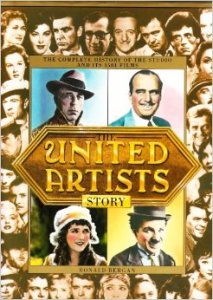


booksUAstoryThe United Artists Story by Ronald Bergan, Crown Publishers,
Inc., 1986.

[Note: An excellent resource for the films released by United Artists, including pages upon pages of photographs, and general film information for each movie released by the studio. Really no financial information and not too many insightful bits of information from the studio files about the films. Interesting overall history of the studio as a whole, however.]

From the entry on Raffles (1930):

“You can’t help but liking him,” says inspector McKenzie of Scotland Yard after being defeated once again by gentlemen thief Raffles. The remark could also be applied to Ronald Colman’s captivating performance as the character created by E.W. Hornung in his turn-of-the-century novel The Amateur Cracksman. Scenarist Sidney Howard updated it slightly, but it still took place in a foggy London, much of the fog created by the elusive rascal around himself. Nobody in London connects the daring exploits of the cracksman with Mr. Raffles, man-about-town and cricketer. When caught red-handed by his girlfriend (Kay Francis), he only seems even more romantic in her soulful eyes (see illustration). But he makes his escape ingeniously and continues to baffle the police. The befuddled Inspector was played by David Torrence, and Branwell Fletcher, Frances Dade, Alison Skipworth and Frederick Kerr were members of the upper crust duped by our likeable hero. Harry d’Abbadie d-Arrast and George Fitzmaurice directed this Samuel Goldwyn hit. John Barrymore in 1917, House Peters in 1925, and David Niven in 1939 also played the screen stealing role. (GOLDWYN)

From the entry on Cynara (1932):

The title of Cynara comes from the poem by Ernest Dowson which contained the line, “I have been faithful to thee, Cynara; in my fashion.” The film, therefore, like the play by H.M. Hardwood and Robert Gore Brown (adapted by Frances Marion and Lynn Starling) was about adultery. The triangle consisted of an English barrister, his wife who leaves him alone in London to holiday in Venice, and the shop girl who fills the vacuum. It ends tragically with the suicide of the girl when he decides to return to his wife. Henry Stephenson played the cynical bachelor who encourages the affair. Florine McKinney, Clarissa Selwynne, Donald Stewart and Paul Percasi were also in the cast. Ronald Colman (illustrated) played the lawyer rather than gloomily, Kay Francis suffered nobly as the wife, and Phyllis Barry (illustrated) was too genteel as the girl. King Vidor directed this dated production with a veneer of
class. (GOLDWYN)


booksbacklot

Warner Bros.: Hollywood’s Ultimate Backlot
By Steven Bingen

On December 4, 1934 a fire started inside a machine shop near an outdoor mine set for the Michael Curtiz picture Black Fury—currently, the corner of Warner Boulevard and Avon Street. Curtiz rallied his crew of approximately seventy to battle the flames and was quickly aided by other employees and the staffs of the nearby Burbank, Los Angeles, and Hollywood Fire Departments, as well as the on-lot Fire Department commanded by its sixty-five-year-old chief, Albert Rounder. According to the Los Angeles Times, nearby Toluca Lake resident Bing Crosby and Warner Bros. stars Dick Powell Warren William, Helen Morgan and Kay Francis helped man the fire line. Ultimately, the blaze took out most of the standing backlot east of New York Street, as well as the studio’s craft departments, a property warehouse, and eight tractors just purchased as props for an upcoming Joe E. Brown comedy, Earthworm Tractor.


William Powell: The Life and Films by Roger Bryant

[Note: Gives information about the Francis/Powell teamings.]

Excerpt (RE-One Way Passage): What could have been a maudlin tale is handled by director Tay Garnett and the exemplary cast with finesse, wit, and just the right amount of pathos. Kay Francis gave what is arguably her best performance–she is thoroughly believable as a wealthy and somewhat flighty woman who nonetheless yearns to experience life more fully. Powell is excellent as a basically decent man who made a terrible mistake and, in the end, faces the consequences.


With Love by Mauriece Chevalier

[Note: Mauriece, Kay’s former lover, tells the story of his life, including his relationship with Kay.]


bookswomansviewA Woman’s View by Jeanine Basinger

Excerpt: WHEN ONE THINKS about Hollywood and fashion and glamour, there is one star of the woman’s films who stands out beyond any other as representative of those concepts. It is Kay Francis, who became a star only because of fashion and glamour, and only because of the woman’s film genre. Her career is absolute proof of the importance of clothes, makeup, and jewelry both on and off the screen.

Kay Francis was before my time. I knew her name, and I had seen her in one of her later vehicles, When the Daltons Rode (1940), but she had ceased to be a movie star of the top rank when I began going to the movies in the 1940s. her importance was brought home to me, however, when my sixth-grade teacher, Doris Danielson Dolan, the essence of local glamour, named her firstborn child Kay Francis. The name, she said, was for her favorite movie star, the most glamorous and fashionable woman ever to appear in films. I was suitably impressed because Doris Danielson Dolan was a fashion oracle of the same significance. Every Christmas concert: fake cherries in her hair, á la Betty Grable, and gold lame ballet slippers, á la no one we had ever heard of in Brookings, South Dakota… I trusted her judgment and, as soon as I was able, began to track down the films of Kay Francis, who turned out, indeed, to be the most glamorous and fashionable woman ever to be in films.

Sadly, many people today don’t know who Kay Francis was, although she herself once said, “I can’t wait to be forgotten.” People think that the most glamorous and fashionable woman of the 1930s was Carole Lombard, or perhaps her more exotic counterpart Marlene Dietrich. Lombard, however, was a talented comedienne and often a good serious actress. Dietrich was an original, a representation of an androgynous ideal for whom glamour and fashion were tools to be used, but for whom they could never provide the complete definition. Both of these women wore clothes well, but their careers have substance beyond the label of “clotheshorse.” Kay Francis was only fashion and glamour, a true star of the woman’s film. She forged a top-drawer career out of nothing but tears and tiaras, a clotheshorse who gave significance to them.


The Women of Warner Brothers by Daniel Bubbeo

Excerpt: No one suffered on-screen like Kay Francis. Throughout a series of Warner weepers in the ‘30s, Kay played a string of unwed mothers, streetwalkers, and terminally ill heroines. Despite their dilemmas, their suffering was made easier by being draped in assorted furs, silk and diamonds.

Kay’s screen incarnations had nothing to do with the lady herself, who endured no end of indignities during her last few years at Warners. Jack Warner considered is a real coup when he lured Kay from Paramount in 1932. Once Kay’s star had fallen a few years later, she crashed and burned in the worst films the studio could dig up in the hopes that she’d leave. But Kay wouldn’t quit, especially if it meant giving up her well-padded paycheck.

Kay rebounded somewhat with the successful Four Jills in a Jeep tour during World War II, and a Broadway stint in State of the Union, but she lived out her last few years bitter over her mistreatment in Hollywood. Few remembered she was once the epitome of Hollywood chic.


The World According to Hollywood 1918-1939 by Ruth Vasey

Excerpt: The consequences of [Joseph Breen’s] approach are demonstrated by the history of Dr. Monica (Warner Bros., 1934), which starred Kay Francis. The original script contained adultery, a pregnant unmarried woman, attempted abortion, and several clinical discussions about infertility. Breen complained to Jack Warner that he could not recall any picture which “combined so many difficult elements in one story.” Nevertheless, Warners persisted with the adaptation. The studio proposed that Monica should be a successful gynecologist, herself unable to conceive children. She discovers that her unmarried friend Mary is pregnant and promises to look after her until the baby is born. On the night of the birth, she is shocked to discover that the father of Mary’s baby is her own husband. The situation is resolved when Mary commits suicide, and Monica and her husband, now reconciled, decide to adopt the baby.

The studio and the PCA faced the difficulty of getting across the facts of Mary’s pregnancy without being too blatant about it. Warners tried giving Mary a fainting spell, but this was such a well-established convention that is was considered to be insufficiently subtle. As Breen told Warner, “This action of Mary fainting at the piano will very likely be interpreted by censor boards as an indication of her pregnancy, as has proven to be the case in numerous previous pictures. If this interpretation is gives, it will probably be cut.”

[Note: Vasey goes more in depth about the Dr. Monica troubles, but that’s it as far as Kay is concerned.]

Stage Career

For a period of years before and (most notably) after her film career, Kay Francis has a distinguished career on the stage. While photos of her stage work are scarce, I have pieced together as much as I could find (hopefully, in time, I will be able to find more playbills and photographs).

Many thanks to authors Scott O’Brien, Lynn Kear, and John Rossman, as well as the Internet Broadway database for providing a lot of information.

1920/1921:

Let’s Not and Say We Did. Performed at the Catholic School of St. Mary in Garden City, Long Island for two performances. [Kay was credited as Katie Gibbs.] Kay played the male lead.

1925:

Shakespeare’s Hamlet. Opened on November 9, 1925 at the Booth Theater in New York and ran for 88 performances. Kay, credited as Katharine Francis, appeared as a Player Queen.

The School for Scandal. Opened on December 2, 1925 at the Knickerbocker Theatre for only one performance. Kay had only a bit part, did not appear in the playbill.

1926:

1926kaystuart27[April-September of this year, Kay toured with the Stuart Walker Company. Performances were brief.]

White Collars. Opened and closed the week of April 26, 1926 at the Grand Opera House in Cincinnati, Ohio. Kay, credited as Katherine Francis, played Sally Van Luyn.

White Collars. Opened and closed the week of May 3, 1926 at B.F. Keith’s Theatre in Indianapolis, Indiana. . Kay, credited as Katherine Francis, played Sally Van Luyn.

The Outsider. Opened and closed the week of May 10, 1926 at B.F. Keith’s Theare in Indianapolis, Indiana. Kay’s character is undetermined.

Seventh Heaven. Opened and closed the week of May 17, 1926 at B.F. Keith’s Theatre, Indianapolis, Indiana. Kaye Francis played Arlette.

They Knew What They Wanted. Opened and closed the week of May 24, 1926 at B.F. Keith’s Theatre in Indianapolis, Indiana. Katharine Francis played Second Italian Mother.

The Goose Hangs High. Opened and closed the week of May 31, 1926 at B.F. Keith’s Theatre in Indianapolis, Indiana. Kay’s character is undetermined.

Polly Preferred. Opened and closed the week of June 14, 1926 at B.F. Keith’s Theatre in Indianapolis, Indiana. Katharine Francis played A Young Lady.

White Collars. Opened and Closed the week of June 21, 1926 at the Victory Theatre in Dayton, Ohio. Katherine Francis played Sally Van Luyn.

Puppy Love. Opened and closed the week of July 5, 1926 at B.F. Keith’s Theatre in Indianapolis, Indiana. Katherine Francis played Ivy.

Puppy Love. Opened and closed the week of July 12, 1926 at the Victory Theatre in Dayton, Ohio. Katherine Francis played Ivy.

The Fall Guy. Opened and closed the week of July 19, 1926 at the Victory Theatre in Dayton, Ohio. Katherine Francis played Lottie.

The Old Soak. Opened and closed the week of July 26, 1926 at the Grand Opera House in Cincinnati, Ohio. Katherine Francis played Ina Heath.

Maid Errant. Opened and closed the week of August 2, 1926 at the Grand Opera House in Cincinnati, Ohio. Katherine Francis played Janet Wickham.

Justice. Opened and closed the week of August 9, 1926 at the Grand Opera House in Cincinnati, Ohio. Kay’s character is undetermined.

Dancing Mothers. Opened and closed the week of August 16, 1926 at the Grand Opera House in Cincinnati, Ohio. Katharine Francis played Irma Raymond.

Love is Like That. Opened and Closed the week of August 23, 1926 at the Grand Opera House in Cincinnati, Ohio. Katharine Francis played Kay Gurlizt.

Beatrice and the Blackguard. Opened and closed the week of August 30, 1926 at the Grand Opera House in Cincinnati, Ohio. Katharine Francis played Francesca.

[Kay’s days at the Stuart Walker Company end.]

1927:

Damn the Tears. Opened January 21, 1927 at the Garrick Theatre in New York. Ran for twenty-two performances. Kay’s work is undetermined.

Crime. Opened at the Eltinge Theater in New York on February 22, 1927 and ran for 186 performances. Katherine Francis played Marjorie Grey.

Amateur Anne. Opened the week of October 5, 1927 at the Shubert Theatre in Wilmington, Delaware. Katharine Francis played Lele Davis.

Amateur Anne. Opened at The Bronx Opera House in New York the week of October 10, 1927. Katherine Francis played Lele Davis.

Amateur Anne. Opened at Parson’s Theatre in Hartford, Connecticut the week of October 17, 1927. Katharine Francis played Lele Davis.

Venus. Opened at the Theatre Masque in New York on December 26, 1927 the play ran for eight performances. Katharine Francis played Diana Gibbs.

1928:

Fast Company. Opened in Worcester, Massachusetts, theater information unknown, on May 3, 1928. The performances ended on May 5, 1928.

Fast Company. Opened at the Tremont Theatre in Boston, Massachusetts on May 3, 1928. Performances ended on June 16, 1928.

Elmer the Great. A retitled version of “Fast Company.” Opened at the Blackstone Theatre in Chicago. Katharine Francis played Evelyn Corey.

Elmer the Great. Opened at the Lyceum Theatre in New York on September, 1928 and ran for forty performances. Katharine Francis played Evelyn Corey.

1928 with Walter Huston in Elmer the Great.

1945:

Windy Hill (tour). Opened at the Shubert Theatre in New Haven, Connecticut (after a try-out in Montclair, New Jersey at the Montclair Theatre on August 13, 1945) on September 20. A theatrical tour, “Windy Hill” played in 37 locations around the country. The last stop on the tour was the Harris Theatre in Chicago on May 25, 1946.


windyhill1 windyhill2
 

shubertwindshubertwind1


windyhillchwindyhillchic1


windykillad2windykillad1

1946:

[See 1945 entry for “Windy Hill” productions during this year.]


State of the Union. Opened at the Hudson Theatre in New York City on September 2, closing on September 16, 1947. When Kay’s health proved a problem, she was briefly replaced with Edith Atwater from December 1, 1946—January 19, 1947. Kay returned on the 20th until the cast was given vacation time on May 17, 1947. They returned on June 16, 1947 and completed the play’s run at the Hudson Theatre on September 16, 1947.


stateoftheunionkaybellaamy
Kay and Ralph Bellamy

stateoftheunion1947

stateoftheunionplaybill109stateoftheunionplaybill209stagepublicityunknown
 

1947:

State of the Union (tour). Began its theatrical tour on September 18, 1947 at the Playhouse in Wilmington, Detroit. The tour played in an outstanding 54 locations, a huge commercial success. It all ended on January 23, 1948 at the Hartman Theatre in Columbus, Ohio.

1948:

The Last of Mrs. Cheyney (tour). Began its theatrical tour on June 7, 1948 at the McCarter Theatre in Princeton, New Jersey. The tour played in fourteen different locations on the East Coast only. The last performance on this tour was at the Montclair Theatre in Montclair, New Jersey on September 20, 1948.

Favorite Stranger (tour). Began its theatrical tour on December 25, 1948 at the Strand Theatre in Elmira, New York. The tour played in 35 locations (mostly over the course of 1949), the last stop being on April 2, 1949 at the Nixon Theatre in Pittsburgh.

1949:

Let Us Be Gay (tour). Began its theatrical tour on June 3, 1949 at the Bucks County Playhouse in New Hope, Pennsylvania. The tour played in 18 different locations on the East Coast only. The last performance on this tour was at the Penthouse Theatre in Jacksonville, Florida on March 27, 1950.

1949kayletusbegay

1950:

Good-Bye, My Fancy (tour). Began its theatrical tour on May 23 at the Flatbush Theatre in Brooklyn, New York. The tour played in 7 different locations on the East Coast only (mostly in New York State, however). The last performance on this tour was at the Summer Theatre in Somerset, Maryland on July 10.

kayfrancisstagead51


The Web and the Rock. Opened in Saratoga Springs, New York at the Spa Theatre on August 14. The only other location in which Kay performed this play was at North Shore Players in Marblehead, Maryland on August 21. When the summer ended, so did this play’s run.

1951:

Mirror, Mirror (tour). Opening at the Westhampton Playhouse on Long Island on July 9, Kay hoped that this production would bring her back to Broadway. Unfortunately, mixed reviews and public response limited the play’s chances. Mirror, Mirror played in nine locations along the East Coast before closing on September 3 at the Bucks County Playhouse in New Hope, Pennsylvania.

kayfrancisonstage23mirrormirrorkay

1952:

Theatre (tour). Began its theatrical tour on March 5 at the Central Florida Drama Festival in Winter Park, Florida. The play was a major success, Kay’s greatest triumph as an actress. The tour stretched into 1953, and played in 20 locations across the country before ending its summer stock run in Skowkegan, Maine at the Lakewood Playhouse on August 4, 1953.

1954:

[Kay was still touring in Theatre .]

Theatre. Performed at the Biltmore Playhouse in Miami, Florida on May 25, 1954.

Black Chiffon. Opened at the Biltmore Playhouse in Miami, Florida on June 22, 1954. Kay played Alicia Christie. The play closed on July 4, 1954.

Theatre. Performed at Pickwick Players in Birmingham, Alabama on July 12, 1954.

Theatre. Performed at the Town and Country Playhouse in Indianapolis, Indiana on July 27, 1954.

Theatre ends its run at the Grove Theatre in Lake Nuangola, Pennsylvania on August 9, 1954. This performance marked the end of Kay’s stage career.

Radio Days

radiokay

Kay Francis’ career on the radio stretched twelve years (1935-1947). Below, I have information regarding only major radio appearances of special note. The others, which can be read in The Complete Kay Francis Career Record, briefly featured Kay as a guest star. The appearances listed below have Kay either performing or promoting the war effort.

January 4, 1935. Hollywood Hotel.

CBS. Hosted by Dick Powell. Kay Francis and George Brent reenact scenes from and promote Living on Velvet , their new picture.

November 1, 1935. Hollywood Hotel.

CBS. Hosted by Dick Powell. Kay Francis, Ian Hunter, and Sybil Jason reenact scenes from and promote I Found Stella Parish.

May 29, 1936. Hollywood Hotel.

CBS. Hosted by Dick Powell. Kay Francis, Ian Hunter, and Donald Woods reenact scenes from and promote The White Angel.

September 25, 1936. Hollywood Hotel.

CBS. Hosted by George Burns and Gracie Allen. Kay Francis and George Brent reenact scenes from and promote Give Me Your Heart.

November 26, 1937. Hollywood Hotel.

CBS. Hosted by Ken Murray. Kay Francis, Preston Foster, and Verree Teasdale reenact scenes from and promote First Lady.

May 13, 1938. Hollywood Hotel.

CBS. Hosted by Frank Parker. Kay Francis, Bonita Granville, and John Litel reenact scenes from and promote My Bill.

March 6, 1939. Lux Radio Theatre.

CBS. Hosted by Cecil B. DeMille. Kay Francis and William Powell perform One-Way Passage. Kay stepped in when Norma Shearer, original set to star, became ill.

March 26, 1939. Gulf Screen Guild Show.

CBS. Hosted by George Murphy. Kay Francis, Leslie Howard, and Virginia Weidler perform Never in This World.

December 11, 1939. Lux Radio Theatre.

CBS. Hosted by Cecil B. DeMille. Cary Grant, Carole Lombard, and Kay Francis reenact scenes from and promote In Name Only.

December 17, 1939. The Silver Theatre.

CBS. Hosted by Conrad Nagel. Kay Francis performs Twice Upon a Time.

March 3, 1940. The Silver Theatre.

CBS. Hosted by Conrad Nagel. Kay Francis performs A Lady By Preference.

March 18, 1940. Lux Radio Theatre.

CBS. Hosted by Cecil B. DeMille. Kay Francis, George Brent, and others reenact scenes from and promote The Rains Came. Interestingly, Kay was considered for the lead in the actual movie version, but the part went to Myrna Loy instead.

December 15, 1940. The Silver Theatre.

CBS. Hosted by Conrad Nagel. Kay Francis performs in Four on a Match.

March 3, 1941. Lux Radio Theatre.

CBS. Hosted by Cecil B. DeMille. Kay Francis and Warren William, among others, perform My Bill, a movie Kay had made in 1938 for Warner Brothers.

May 18, 1941. The Jack Benny Program.

NBC. Hosted by Jack Benny. Kay Francis and Benny reenact scenes from and promote Charley’s Aunt, their new picture from Twentieth Century-Fox.

October 13, 1941. The Cavalcade of America.

NBC. Kay Francis stars in Waters of the Wilderness, based on the 1941 novel by Shirley Seifert.

February 11, 1943. Stage Door Canteen.

CBS. Kay Francis was a guest star.

March 1, 1943. Lux Radio Theatre.

CBS. Hosted by Cecil B. DeMille. Kay Francis and George Brent, among others, perform The Lady is Willing.

March 24, 1943. Stage Door Canteen.

CBS. Kay Francis was a guest star.

April 5, 1943. Great Gildersleeve.

NBC. Kay Francis makes a speech about the importance of War Bonds. Her speech can be read in Lynn Kear and John Rossman’s The Complete Kay Francis Career Record, page 224.

May 3, 1943. Cavalcade of America.

NBC. Kay Francis, Mitzi Mayfair, and Martha Raye perform in Soldiers in Greasepaint.

July 4, 1943. The Silver Theatre.

CBS. Hosted by Conrad Nagel. Kay Francis performs in Murder Unlimited.

November 25, 1943. Soldiers in Greasepaint.

NBC. Hosted by Jack Benny and Bob Hope. Kay Francis, Al Jolson, Fredric March, Martha Raye, Carole Landis, Mitzi Mayfair, Merle Oberon, John Garfield, and others promote the war effort. Bob Hope personally thanks Kay and the girls for their work on their USO tour of Europe and Africa.

November 28, 1943. The Silver Theatre.

CBS. Hosted by Conrad Nagel. Kay Francis performs in The Lady Grew Up.

December 11, 1943. The Globe Theatre.

CBS. Hosted by Herbert Marshall. Kay Francis and Walter Pidgeon perform in Strange Victory.

Kay Francis on Television

Kay Francis resisted the television at first, noting in her diary why she found it a bad medium (noting how horribly photographed her fellow contemporaries appeared on the small screen). But she didn’t resist for long. With her stage career dwindling down, and film offers practically non-existent, Kay Francis decided to venture into the television world but never found much interest in it. Her work included mostly guest appearances. (Unlike her friend Ruth Chatterton who had a major 1953 production of Hamlet, which cost a reportedly $180,000, then a record-high for a TV project.)

Unfortunately, none of Kay Francis’ early television appearances have survived.

Following this is a list of Kay Francis movies scheduled for air on Turner Classic Movies.


May 14, 1950. This is Show Business.

A variety show which was shown on Sundays on CBS, Kay appeared with Herb Shriner and Patice Munsel.

November 7, 1950. The Prudential Family Playhouse.

This show—formatted in a similar way to Robert Montgomery Presents—had actors performing small plays. In this episode, which aired on Tuesday on CBS, had the cast performing Call It a Day. Kay Francis is the only notable actor in the credits.

January 8, 1951. Hollywood Screen Test.

A talent show for Hollywood hopefuls, this episode aired on Monday on ABC. Kay and an unknown actor appeared in a skit titled “The Long Way Round.”

May 24, 1951. Betty Crocker Show.

Kay more than likely appeared as herself, since this was a show which basically featured cooking and cleaning tips for wannabe Stepford wives (it’s a joke).

June 4, 1951. Lux Video Theatre.

This series was a Television spin-off of the legendary Lux Radio Theatre (which featured Kay on several occasions). Kay’s skit was titled Consider the Lilies, and featured her then-lover Joel Ashley.

October 20, 1951. Beat the Clock.

A game show in which Kay’s appearance is unknown. (She probably just appeared as a special guest, nothing more.)

October 31, 1951. The Frances Langford-Don Ameche Show.

This series was co-hosted by Kay’s Feminine Touch (1941) costar, Don Ameche.

November 11, 1951. Celebrity Time.

Legendary stage actor Conrad Nagel hosted this program, a quiz/talk show.

April 2, 1952. The Stork Club.

Hosted by Sherman Billingsley, Kay appeared as an interviewed guest.

May 10, 1952. The Ken Murray Show.

A variety show which featured Kay in a skit with Lola Albright.

September 1, 1953. Anyone Can Win.

Hosted by Al Capp, this game show featured a celebrity hiding behind a mask, and panelists guessed who was underneath. Kay probably appeared as a masked guest.

December 24, 1954. Strike it Rich.

A CBS morning show. Kay tripped over a dolly track and injured herself. She filed a lawsuit against the studio, which was headlined in 1957 in Variety (June 14, 1957) and Billboard (June 17, 1957). [Thanks to Scott O’Brien for the info.]


Kay Francis on TCM:

A ** next to a title indicates a film of Kay’s which I think you should particularly try to see or record for later viewing.


**ONE WAY PASSAGE (1932) DECEMBER 12, 6:00 AM (ET)
THE COCOANUTS (1929) DECEMBER 31, 8:15 AM (ET)

Birthday Tribute to Kay on TCM!
January 13, 2016:

6:00 AM **A Notorious Affair (1930)
7:15 AM **Guilty Hands (1931)
8:30 AM **Jewel Robbery (1932)
9:45 AM **Mary Stevens, M.D. (1933)
11:00 AM I Loved A Woman (1933)
12:45 PM **Mandalay (1934)
2:00 PM **Confession (1937)
3:30 PM **Stolen Holiday (1937)
5:00 PM **Another Dawn (1937)
6:15 PM Always In My Heart (1942)

Box Office Information

stolenholidayposter0914The Kay Francis Box Office Information
This is one of the most difficult projects to complete for any classic film star, finding out how much money their films actually made upon initial release. Unfortunately, it is very time consuming and involves a lot of help from outside sources, for those who helped me I am truly grateful. This list is far from complete, but I want to thank the staff at the University of Southern California Film Library (especially Ned Comstock) for sending me the majority of the grosses for Francis’ films from Warner Bros. Click here to visit their webpage for their Cinematic Arts collection. The financial information I received from USC was taken directly from the William Schaefer ledger, the financial records for the Warner Bros. film studios during the time of Kay Francis’ employment.

For the features Passion Flower (1930), Guilty Hands (1931), and Storm At Daybreak (1933), I took the information from an article titled “MGM Film Grosses, 1924 – 1948” published in the Historical Journal of Film, Television, and Radio, Vol. 12, No. 2 [1992]. The article was written by H. Mark Glancy. That information was taken from the Eddie Mannix financial information for Metro-Goldwyn-Mayer (MGM) film studios. Unfortunately, in the article there was no information for The Feminine Touch (1941).The information for In Name Only (1939), made at RKO, was taken from “RKO Film Grosses 1929-1951”, published in the Historical Journal of Film, Radio and Television, Volume 14, Issue 1, [1994]. The article was written by Richard B. Jewell, with a commentary by C.J. Trevlin. Thanks to Jewell for sending me numbers for the other films Francis completed for RKO: Transgression (1931), Little Men (1940), and Play-Girl (1941).

Regarding the two features Kay Francis completed for 20th Century-Fox, Charley’s Aunt (1941) and Four Jills in a Jeep (1944), the financial information available was from Aubrey Solomon’s Twentieth Century Fox: A Corporate and Financial History, published in 1988 by Scarecrow Filmmaker Series.

Information for Trouble In Paradise (1932) came from The Complete Kay Francis Career Record, by Lynn Kear and John Rossman, published in 2008 by McFarland. Information regarding profits from Mandalay, Wonder Bar, and Doctor Monica (all 1934) was pulled directly from Mark Vieira’s Sin in Soft Focus, published in 1999 by Abrams. I am not aware of how Mr. Vieira received the numbers for the profits made from those three films.

It should be noted by all readers that the William Schaefer ledger does not include information regarding profits or losses for the film information recorded. In the article “Warner Bros. Film Grosses, 1921-1951”, also published in the Historical Journal of Film, Radio, and Television, the top ten grossing movies of each year were presented. The films on the following chart in purple text represent the movies which were on that list, indicating that they were indeed on the top-ten list of the highest-grossing films for Warner Bros. in their released years.

The blank spaces on the chart below represent missing data from the films Miss Francis completed between in which no information could be currently found. Please note that this chart begins with Passion Flower, her 14th movie, because no information from her previous films is in my collection. For simplicity, I left the gaps instead of listing the numerous titles for which I have no information. Some films which I have no information are on this because it followed her filmography without leaving enormous blank spaces on the chart. A “-” on the chart indicates I do not have a number for that figure.

If you have any information on where I can obtain box office information for any films of Kay Francis in order to complete this chart, please email me.

Last, but certainly not least, thanks to Scott O’Brien, author of Kay Francis: I Can’t Wait to be Forgotten, for putting me in touch with James Robert Parish who co-wrote, among numerous other books, the first retrospect article ever written on Kay Francis. Parish’s “Kay Francis’ Complete Career” was published in the February, 1964 edition of Films in Review. That article is of major importance not only because it was the first of its kind, but because Parish was also able to send a copy to Miss Francis personally. Click here to visit O’Brien’s site. Click here to visit Parish’s site.

A big thanks to Parish for putting me in touch with the right people.

Amounts given in $1,000 increments—e.g., “259” = $259,000 and “1,108” = $1,108,000.

[The cost of production for Trouble in Paradise, as well as the profits listed for Mandalay, Wonder Bar, and Doctor Monica are listed in
the whole numerical amounts.]

Film Cost of Production Domestic Gross Foreign Gross Total Gross
Profit/(Loss)
Passion Flower (1930) $259 $470 $172 $642 $138
Transgression (1931) $279 $269 $41 $310 ($85)
Guilty Hands (1931) $152 $452 $234 $686 $282
Man Wanted (1932) $171 $258 $59 $317
Street of Women (1932) $195 $250 $89 $339
Jewel Robbery (1932) $308 $316 $110 $426
One-Way Passage (1932) $350 $791 $371 $1,108
Trouble In Paradise (1932) $519,706 $475
Cynara (1932)
The Keyhole (1933) $167 $301 $227 $528
Storm at Daybreak (1933) $280 $302 $334 $636 $121
Mary Stevens, M.D. (1933) $150 $360 $139 $499
I Loved A Woman (1933) $338 $381 $168 $549
The House on 56th Street (1933) $211 $410 $284 $694
Mandalay (1934) $294 $346 $273 $619 $83,462
Wonder Bar (1934) $675 $2,035 $756,962
Doctor Monica (1934) $167 $294 $140 $434 $70,962
British Agent (1934) $475 $532 $390 $922
Living on Velvet (1935) $276 $334 $170 $504
Stranded (1935) $348 $349 $217 $566
The Goose and the Gander (1935) $245 $329 $177 $506
I Found Stella Parish (1935) $392 $461 $374 $835
The White Angel (1936) $506 $886 $530 $1,416
Give Me Your Heart (1936) $436 $633 $402 $1,035
Stolen Holiday (1937) $524 $502 $272 $774
Another Dawn (1937) $552 $572 $473 $1,045
Confession (1937) $513 $457 $187 $644
First Lady (1937) $485 $322 $102 $424
Women Are Like That (1938) $403 $315 $117 $432
My Bill (1938) $197 $376 $183 $559
Secrets of An Actress (1938) $345 $273 $115 $388
Comet Over Broadway (1938) $258 $196 $149 $345
King of the Underworld (1939) $235 $319 $179 $498
Women in the Wind (1939) $301 $260 $88 $348
In Name Only (1939) $772 $926 $395 $1,321 $155
It’s a Date (1940)
When the Daltons Rhode (1940)
Little Men (1940) $424 $216 $118 $334 ($214)
Play Girl (1941) $221 $219 $95 $314 ($16)
The Man Who Lost Himself (1941)
Charley’s Aunt (1941) $650 $2,400
The Feminine Touch (1941)
Always in My Heart (1942) $515 $524 $1,574 $2,098
Between Us Girls (1942)
Four Jills in a Jeep (1944) $1,125

The Films of Kay Francis

givemeyourheart11334Kay Francis completed 68 films beginning her debut in 1929’s Gentlemen of the Press, and ending with 1946’s Wife Wanted, which turned out to be her final film. Click on the title of a film in the table below to go to that film’s page where you can find my reviews, vintage reviews, photos from the film, and images from advertising materials as well as background information about the production.

Important Kay Francis films which I feel readers should especially see are highlighted in bold purple text.

Click here to view information regarding box office figures for Kay Francis movies.

The Availability column refers to a film’s status for readers viewing. If the film is shown on Turner Classic Movies, then TCM is written under the column. Films which are on DVD are noted, and reader’s should keep in mind that almost all of the movies of Kay Francis’ which are on DVD are also shown on Turner Classic Movies. The titles marked “unavailable” refer to titles, most of which Francis completed for Paramount, which are not shown on TCM or available for DVD purchase. The only film of Kay Francis’ which is considered lost is Illusion (1929).

If you’re interested in finding out which movies of Kay Francis you can own on DVD, click here. To find out what Kay Francis movies are being shown on Turner Classic Movies, click here.

Lastly, scroll to the bottom of THIS page for general information/trivia about her Hollywood career.

Film Studio Availability
Gentlemen of the Press
(1929)
Paramount Unavailable
The Cocoanuts (1929) Paramount DVD
Dangerous Curves (1929) Paramount Unavailable
Illusion (1929) Paramount Unavailable
The Marriage Playground
(1929)
Paramount Unavailable
Behind the Make-Up (1930) Paramount Unavailable
Street of Chance (1930) Paramount Unavailable
Paramount on Parade (1930) Paramount Unavailable
A Notorious Affair (1930) Paramount DVD
For the Defense (1930) Paramount DVD
Raffles (1930) Goldwyn/
UA
DVD
Let’s Go Native (1930) Paramount Unavailable
The Virtuous Sin (1930) Paramount Unavailable
Passion Flower (1930) MGM DVD
Scandal Sheet (1931) Paramount Unavailable
Ladies’ Man Paramount Unavailable
The Vice Squad (1931) Paramount Unavailable
Transgression (1931) RKO TCM
House That
Shadows Built
(1931)
Paramount Unavailable
Guilty Hands (1931) MGM DVD
24 Hours (1931) Paramount TCM
Girls About Town (1931) Paramount Unavailable
The False Madonna (1931) Paramount Unavailable
Strangers in Love (1932) Paramount Unavailable
Man Wanted (1932) WB DVD
Street of Women (1932) WB DVD
Jewel Robbery (1932) WB DVD
One Way Passage (1932) WB DVD
Trouble in Paradise (1932) Paramount DVD
Cynara (1932) Goldwyn/
UA
TCM
The Keyhole (1933) WB TCM
Storm at Daybreak (1933) MGM TCM
Mary Stevens, M.D. (1933) WB DVD
I Loved a Woman (1933) WB TCM
The House on 56th Street
(1933)
WB DVD
Mandalay (1934) WB DVD
Wonder Bar (1934) WB DVD
Dr. Monica (1934) WB TCM
British Agent (1934) WB DVD
Living on Velvet (1935) WB DVD
Stranded (1935) WB DVD
The Goose and the Gander
(1935)
WB DVD
I Found Stella Parish (1935) WB DVD
The White Angel (1936) WB DVD
Give Me Your Heart (1936) WB DVD
Stolen Holiday (1937) WB DVD
Another Dawn (1937) WB DVD
Confession (1937) WB DVD
First Lady (1937) WB TCM
Women Are Like That (1938) WB TCM
My Bill (1938) WB TCM
Secrets of an Actress (1938) WB TCM
Comet Over Broadway (1938) WB DVD
King of the Underworld (1939) WB DVD
Women in the Wind (1939) WB TCM
In Name Only (1939) RKO DVD
It’s a Date (1940) Universal DVD
When the Daltons Rode (1940) Universal DVD
Little Men (1940) RKO DVD
Play Girl (1941) RKO DVD
The Man Who Lost
Himself (1941)
Universal Unavailable
Charley’s Aunt (1941) 20th
Century
Fox
DVD
The Feminine Touch (1941) MGM DVD
Always in My Heart (1942) WB TCM
Between Us Girls (1942) Universal Unavailable
Four Jills in a Jeep (1944) 20th
Century
Fox
DVD
Divorce (1945) Monogram TCM
Allotment Wives (1945) Monogram TCM
Wife Wanted (1946) Monogram DVD
     

 Film Trivia:

Kay’s Costars:

womenarelikethatposterKay’s most frequent leading men were William Powell, Ian Hunter, George Brent, and Walter Huston. She made a total of 7 films with Powell, 7 with Hunter, 6 with Brent, and 4 with Huston.

But Kay also had some other memorable leading men: Cary Grant, Humphrey Bogart, Errol Flynn, Fredric March, Pat O’Brien, Basil Rathbone, Edward G. Robinson, Ronald Colman, Claude Rains, Leslie Howard, Lionel Barrymore, Randolph Scott, and Ricardo Cortez.

In terms of memorable female costars, well, Kay also had a few mentionable women she worked with on film too: Carole Lombard, Jeanette MacDonald, Clara Bow, and Rosalind Russell. According to Shirley Temple, she had a bit part in Mandalay, but good luck trying to find her in the film.

It should also be mentioned Kay did have one of her earliest film appearances opposite the Marx Brothers in 1929’s The Cocoanuts.

Kay’s Characters:

Though mostly identified with being a fashion icon, in some of Kay’s most memorable movies she played career women, especially in her early Warner Bros. films. Man Wanted featured Kay as head-honcho in the publishing world. In Street of Women she owns her own salon. She plays doctors in Mary Stevens, M.D. and Doctor Monica. Kay also played Florence Nightingale in The White Angel. In Women Are Like That she takes charge in the advertising industry in a battle of the sexes with onscreen husband Pat O’Brien.

Kay’s Fashion Image:

streetofwomenYes, Kay Francis was a clotheshorse of the first order. There are two of her movies which have a specific tie-in to the fashion world: Street of Women (1932) and Stolen Holiday (1937). In the first, Kay has one of her best roles as the owner of a fashion boutique. In the latter, originally titled Mistress of Fashion, she plays an American model in Paris who begins a business association with a seedy business man who helps her become one of the most important women in the Parisian fashion scene.

In Stolen Holiday, Kay Francis makes perhaps her best entrance at a party in a white-organdy dress complete with a headpiece turban.

Kay’s first notable association with a fashion designer was with Travis Banton in her time at Paramount (1930-1932). But it was at Warner Bros. where she became one of the most important women regarding fashion and film due to her association with Orry-Kelly. Cary Grant recommended Kelly to Warner Bros., and he was told he would be hired only of Ruth Chatterton and Kay approved of his creations (PL).

Orry-Kelly remembered Kay fondly. He said of her, “In the beginning, she was very reserved but well-mannered and knew exactly what she wanted. I designed simple unadorned evening gowns in velvet, chiffon, and crepes for One-Way Passage. And I introduced what was the forerunner of the shirtmaker dress for evening. At first, only those with sensitive taste were impressed. Luckily, Kay was the essence of good taste” (PL).

Kay also worked with notable designers Adrian (when she was on loan-out to MGM) and Vera West.

When Kay worked for Monogram at the very end of her career, her costumes for Divorce and Allotment Wives were designed by Odette Myrtil. The last designer to dress Kay Francis for the screen was Athena, who designed the wardrobe for Wife Wanted, which was Kay’s last film.

Kay’s Star Status & Salary at Warner Bros.

1935kayfrancisblackgownThis is one of the most interesting and widely debated aspects of Kay Francis’ career. Just how popular was she?

When Kay was at Paramount (pre 1932) she was really just playing featured roles. When Warner Bros. hired her, they upped her salary from the $750 she was making per week at Paramount to $2,000 per week with the promises of stardom and more money if she succeeded (this figure quickly went up, 4 years later to $5,250/week, PL). In 1935, Kay’s annual salary was $115,167; in 1936 she earned $227,100 and in 1937 $209,100 (PL). The latter two salaries were reported in the New York Times as having topped the entire Warner Bros. payroll for their respective years. Contrast that with James Cagney who made $150,000 in 1935 and Bette Davis who made a meagerly $18,000 that same year (DV).

Author Ed Sikov wisely wrote in Dark Victory: The Life of Bette Davis, “[Bette Davis] knew she wasn’t being cast in the best of the studio’s productions…The producer Robert Lord suggested Bette for the lead in Give Me Your Heart, a melodrama, but Warners cast Kay Francis instead. Davis was actually announced for the role of Julia in Another Dawn, but again Kay Francis took the role, this time opposite Errol Flynn.”

While most historians make note of Davis’ long waiting period to achieve superstardom between her breakthrough in Of Human Bondage (1934) and Jezebel (1938), which made her a top star, most also leave out Kay’s position at the studio as a factor in all of that. While Davis herself made references to Francis’ popularity causing Warner Bros. to second-guess her own, few writers, until recently, have actually acknowledged the fact that those years Davis spent waiting in the wings were due in part to Kay Francis receiving all of the star treatment herself.

It was in 1934-1937 when Kay Francis was at the peak of her success at the studio. In January 1934 the Motion Picture Herald listed the top money-making stars in 1932-1933. Kay Francis was ranked 42nd, Joan Blondell 44th, Barbara Stanwyck 46th, Ruth Chatterton 55th while Bette Davis wasn’t listed at all (RC). In 1937 when Variety announced the most popular female stars in the entire movie industry, Kay was voted 6th behind Myrna Loy, Loretta Young, Claudette Colbert, Ginger Rogers and Alice Faye (PL).

kayfrancisandbettedavisWhen the year switched over from 1937 to 1938, Kay had two major box office bombs: First Lady and Women Are Like That. The latter, made during her lawsuit with Warner Bros. in the fall of ’37, confirmed in the minds of studio executives it was time to dispose of Francis’ services. Of course, one could wisely point to the fact that the disappointing returns of both films could be due in part to the terrible script quality. However, when Davis (being paid a fraction of what Kay was) began the year with Jezebel, Warner Bros. felt the time had come to end Kay’s employment with them.

Though The Sisters and Dark Victory were purchased for Kay Francis (BF), she was demoted to B-movies. Those projects were handed to Davis. Though Kay’s contract ended in late September 1938, her last film for Warner Bros., Women in the Wind, was not released until the summer of 1939. A month later RKO released In Name Only, with Kay’s name in equal billing, though third billed, to Carole Lombard and Cary Grant’s.

It should be noted that there was no animosity between Kay and Davis. Actually, Bette Davis was one of the people who stuck up for Kay Francis even long after both had left the studio (BF).

Sources:
(BF) Kay Francis: I Can’t Wait to be Forgotten, Scott O’Brien, 2006, BearManor Media.
(DV) Dark Victory: The Life of Bette Davis, Ed Sikov, 2007, Holt.
(PL) Kay Francis: A Passionate Life and Career, Lynn Kear and John Rossman, 2006, McFarland.
(RC) Ruth Chatterton: Actress, Aviator, Author, O’Brien, 2013, BearManor Media.

Wife Wanted (1946)

1945KayFrancisColor46Cast:
Kay Francis … Carole Raymond
Paul Cavanagh … Jeffrey Caldwell
Robert Shayne … Bill Tyler
Veda Ann Borg … Nola Reed
Teala Loring … Mildred Kayes
John Gallaudet … Lee Kirby
Jonathan Hale … Philip Conway
Tim Ryan … Bartender
Barton Yarborough … Walter Desmond

Produced by Jeffrey Bernerd and Kay Francis.
Directed by Phil Karlson.
Based on the novel by Robert E. Callahan.
Screenplay by Caryl Coleman & Sidney Sutherland.
Musical Direction by Edward J. Kay.
Sound by Tom Lambert.
“There Wasn’t a Moon” by Edgar Hayes.
Camera by Harry Neumann.
Editing by Ace Herman.
Miss Francis’ gowns by Athena.

Released November 2, 1946.
A Monogram Picture.

When Kay Francis finished her obligations for Monogram, she had no idea that her Hollywood career would be over. Monogram’s parent company, the newly founded Allied-Artists, had offered her a couple of deals.

She politely turned them down. At this point she was interested in returning to the stage.

Kay was only considered for two major projects after this. The first was the role of Judy Garland’s mother in The Helen Morgan Story, which was supposed to be made in the early 1950’s at Warner Bros. but never materialized. The second was to play Lana Turner’s mother in the outdated Madame X (1966). By then she was dying of the cancer that would indeed end her life two years later.

Even from the beginning of her freelancing days there was trouble with Kay’s career. She wisely chose to play in In Name Only (1939) and It’s a Date (1940). But she lost good parts in The Rains Came (1939) and My Son, My Son! (1940) to Myrna Loy and Madeleine Carroll, respectively.

Instead she made two stinkers: Little Men (1940) and When the Daltons Rode (1940), which could have been played by any young starlet.

The box office polls were arranged into three categories: the top 10, the 15 honor stars (both for sensational favorites, few had durability up there), group one, group two, and group three. Western stars were in a category all their own. In 1937 Kay placed in the first group (other names were Norma Shearer and Bette Davis). In 1938 she fell into group two (Judy Garland, Jean Arthur, Charles Boyer placed in this category). By 1939, 1940 and 1941 she slumped into the third listing (with Greta Garbo and Katharine Hepburn, whose careers had also slumped).

It was probably a lack of enthusiasm and laziness which caused Kay’s freelancing career decline. She had always been carefree about her career until Warner Bros. aggravated her with taking Tovarich (1937) away from her. But her freelancing parts weren’t any better than the stuff Warner Bros. had offered her in 1938, honestly.

After she took time off to help out with World War II, she was virtually unemployable. (Of course, one can not fault her for; what she did was extremely generous and patriotic.) When Monogram employed her, she was likely humiliated by having fallen so far from grace.

As with Divorce and Allotment Wives (both 1945), Kay worked with Jeffrey Bernerd. Jonathan Hale had a small part in the film [he also worked with Kay in In Name Only (1939)]. But Wife Wanted was less creditable than either film. It fell into the campy category of “so bad, it’s good.”

Released to second-rate theaters and not reviewed in the major publications (New York Times, Variety), Wife Wanted turned out to be the final film Kay Francis ever made.

It should be mentioned, that same year Joan Crawford (the same age as Kay) had two successful films: Possessed, for which she received an Oscar nomination, and Daisy Kenyon. Katharine Hepburn appeared in Sea of Grass with Spencer Tracy. Both stars had appeared with Kay on the “box office poison” list in 1938.

Unfortunately, Kay Francis didn’t have the determination or motivation to succeed from the failure she shared with her one-time contemporaries.


Webmaster’s Review:

As Carole Raymond, Kay Francis is a girl in all sorts of trouble these days (wasn’t Kay ALWAYS in trouble during her screen roles?). Here, as Ms. Raymond, she plays a fading movie queen. Her shady agent has turned down two parts within the past week because they weren’t “right” for her. But he has a plan: real-estate. “Lots of picture people have made a lot of money in real-estate ventures,” he tells her.

She agrees, but admits, “I’d hate to give up pictures entirely…”

Unfortunately, the shady real-estate business is connected with the shady “friendship club.” This friendship club serves the purpose to falsely link lonely people together (not mentioned outright in the film, but made quite clear by the players: it’s a club for sexually repressed individuals to meet others looking for some passion).

The real-life one time Queen of Warner Bros. wants no part in the friendship club when she learns of it, she tells her new real-estate partner. So he has her take Mr. Desmond out to a beautiful home on the palisades. For a B-movie, the house is gorgeous. There Mr. Desmond produces a check for $40,000, telling Carole that was really what she just wanted from him.

“I don’t believe I know what you’re talking about, Mr. Desmond.”

He tells her she’s a “come-on” for Jeff Caldwell. He tells her how he’s been basically robbed by someone through Caldwell’s friendship club, and blackmailed. She still denies any involvement and goes to the phone to call Caldwell to the home. While she’s trying to get him on the phone, a shady, shadowy figure emerges and throws him from the balcony off the cliff and into the waters below.

Carole emerges from the home and finds him dead. Her place at the beach home that night is covered by Caldwell. When she tells him she still wants out, he tells her it’s too late. If she opens her mouth about anything Desmond said, he will spread the word so that movie producers won’t be so keen on signing her for a new movie.

Like Kay would do in real life, Carole goes to a bar and gets drunk. The next morning she wakes up with Mildred in her home, and doesn’t know how she got there (just like some mornings for real-life Kay!). Here, Mildred was a bit player who Carole got a good part in a good film for. Unfortunately, it’s been downhill from here ever since. And Mildred has been in trouble ever since she got met up with a man she met at the friendship club, the man we later found out was Mr. Desmond. Carole agrees to hide Mildred out while she lands back on her feet.

Carole meets Bill Tyler through the club. She’s trying to get him to buy some real estate, since he is quite wealthy.

Jeff Caldwell and his secretary Nola find out that Carole is plotting to expose them, that she is hiding Mildred in her home. Caldwell goes there to kill Mildred, but she stumbles down the stairs. Thinking she’s dead, he walks away and leaves her there. Then we see a shot of doctors saying “she’ll be alright.” That’s the last we see of Mildred.

Bill confronts Carole and tells her she’s a shady soul, tied up in phony scams with Caldwell. Carole is beside herself, since she was, of course, finally starting to fall in love with Bill. “There’s only one night I was at that beach house,” she tells Bill. “That was the night Mr. Desmond was killed.”

He calls the police after she leaves.

At the beach house, Carole meets Caldwell. He presents the check, which she says “…wait…that check was here the night I was here with Mr. Desmond…that means…you were here, too. You pushed him from that balcony!”

Caldwell presents a gun, and walks Carole over to the balcony. Before he can push her off, Bill and a police officer arrive, arrest him and save Carole.

Bill and Carole embrace and all is well for Carole Raymond again.

I like this movie. Like Kay’s other two Monogram movies, it’s fast-paced, compelling, and the production values are surprisingly strong. It’s no Stolen Holiday, of course, but nonetheless still a must-see.

Kay does an excellent job with this script. It’s fun seeing her play drunk at the bar. What must be said is that even at 42-years-old she still has that irresistible Kay Francis charm. That warm smile, the sweetness, it’s all still there. Still just as fresh from the I Found Stella Parish days.

It’s bitter-sweet, though. It shows she still could have worked as a top-star at lucrative studios such as Warner Bros. MGM, Paramount, and RKO. Unfortunately, a long, long movie career just wasn’t in the cards for her.

Still, her final three Monogram movies are most interesting than any of the B-movies she made during her final Warner Bros. years, her early Paramount years, and her early free-lance years. Her performances in these final three are still amazing to watch.

The other players do fine. Veda Ann Borg is memorable as the nasty secretary for Caldwell. Teala Loring, as usual, is beautiful but has an exceptionally annoying character to play. As usual, she’s the sweet, innocent dimwit of the film.

Robert Shayne does well in his small screen time as Kay’s love interest. Paul Cavanagh, a long-time player opposite Kay since the days of Virtuous Sin and Transgression.

The lighting and sets are superb for a “poverty row” studio.

Kay’s gowns are breathtaking; just as stunning as anything Orry-Kelly or Adrian made for her.


Lobby Cards:wifewantedlobby1 wifewantedlobby2 wifewantedlobby3 wifewantedlobby4wifewantedlobby5wifewantedlobby6


Posters:

wifewantedtitlelobbywifewanted4wifewantedinsertwifewantedinset


wifeantedposterspanish

Dangerous Curves

Cast:
Clara Bow … Pat Delaney
Richard Arlen … Larry Lee
Kay Francis … Zara Flynn
David Newell … Tony Barretti
Anders Randolf … Colonel P.P. Brack
May Boley … Ma Spinelli
T. Roy Barnes … Po Spinelli
Joyce Compton … Jennie Silver

Directed by Lothar Mendes.
Production Supervisor Ernst Lubitsch.
From a story by Leslie Cohen.
Screenplay by Donald Davis; Florence Ryerson.
Dialogue by Viola Brothers Shore.
Camerawork by Harry Fischbeck.
Editing by Eda Warren.
Music by W. Franke Harling.

A Paramount Picture.
Released July 13, 1929.

IMDb Info.
TCMDb Info.

About the film:
After completing two productions at Paramount’s New York City studio, Kay Francis was summoned by their Hollywood location to begin her career as a long term contract star. From the beginning, Francis was leery of the move to Hollywood, as the thought working in pictures professionally was more terrifying than the so-so career she had built for herself on the stage.

It was the money which made up her mind, of course.

Dangerous Curves was Kay’s first production completed on the west coast. The film was a starring vehicle for Clara Bow, Paramount’s top star, then-titled Pink Tights. Richard Arlen was the leading man who shared the affections of both Bow, his true love, and Francis, the vamp who set out to steal him for herself.

Kay was later quoted about her fear of working with Hollywood stars, but Bow was kind to newcomer Francis. Legend has it that it was Bow who convinced Kay to shorten her name from Katherine, so it would fit snugly on a marquee. Also, Bow encouraged Kay to “move in a little closer” to the camera, so that Francis would get some deserved attention that the director might not have set out to give.

Richard Arlen turned out to be one of Kay’s first regular west coast friends. His chemistry in the film with both Francis and Bow was genuine, and some believed that Kay walked off with the film.

Her own opinion was a little different than the rest. Francis simply stated in her diary after viewing the final print on June 21, “Ouch!”

Personal and professional problems Bow was enduring did not cause too much chaos on the set. It was not long after the completion of Dangerous Curves that Bow found her career on the rocks at Paramount. A brief revival at Fox studios three years later did little to help bring her back to her former glory. She left the screen soon for good.

For Kay Francis, Dangerous Curves proved to be the successful launch for a star who would become one of the most prominent and admired in the decade to come.


Film Images:


What the Picture Did for Me:

Exhibitor Herald-World‘s long-running column for independent theater owners to tell each other what type of business was made and what the quality of the product was during their showings. Some also wrote the days the film was shown in their theater. 

October 12, 1929
Clara Bow – September 22. Oy! Yoy! Just see what sound has done to us again! “The Wild Party” showed a little falling off, but this one was only about 60 percent of our average on a Bow picture. Not much of a story to begin with, and Clara seems to have lost some of “it” in these silent versions. Once more Paramount sends us one of the cussed prints with a blank track, although it was OK otherwise. For several reasons, guess this will be our last Bow picture. Oy! Yoy! Eight reels. – O.B. Wolfe, Screenland theatre, Nevada. – Small town patronage.

Clara Bow – September 22-26. Nice clean entertainment. Everyone will be pleased. Eight reels. – Orris F. Collins, Palace theatre, Rector, Ark. – Small town patronage.

October 19, 1929
Clara Bow— Sound-on-disc on this terrible. About one-half audible. — Winton W. Lowery, Strand theatre, Atmore, Ala. — General patronage.

Clara Bow— September 19-20.  Fair, though not as good as some Bow’s. —A. L. Revert, New Home theatre, Rantoul, 111. — General patronage.

Clara Bow— Here is a picture that will please the entire family. Made money on this one. Clara always makes money for us. Although Clara Bow plays a very unusual role in this picture, that of a bare back rider in a circus, she is well suited for the part and her acting is unusually good. Disc recording good. — Walker & Donnell. Leroy theatre, Lampasas, Tex. — Small town patronage.

October 26, 1929
Clara Bow— September 28-29-30. I heard bad reports on the sound of this picture, but in my equipment it was very good. The story and acting also good. Poor business on account of bad weather. Paramount goes too high in rentals. Seven reels. — F. Fleitas, Monroe theatre, Key West, Fla. — General patronage.

November 2, 1929
Clara Bow—We considered this a nice clean little picture. But why should we be compelled to pay more money for Bow when she does not draw any more at the box office? — W. J. Shoup. DeLuxe theatre, Spearville, Kan. — Small town patronage.

November 16, 1929
Clara Bow- October 12. This picture gave very good satisfaction. Clara always brings them in. Recording good. Paramount sold me this picture at a price that let me make some money for myself — the first I have made since installing sound two weeks ago. — Mrs. Faye Corpe, Colonial theatre, Colfax, 111. —General patronage.

November 23, 1929
Clara Bow- October 27-28-29. This is a very good entertaining picture. The stars and cast fine.  A little hokum in the circus background, but the picture gave good satisfaction. There is talking enough in it to make it pass as a talking picture. — Bert Silver, Silver Family theatre, Greenville, Mich. — General patronage.

Clara Bow- October 12-13. Very good small town picture. Comments good. Disc recording very good.  Eight reels. — George J.  Rhein, Manchester theatre, Manchester, Wis. — General patronage.

December 7, 1929
Clara Bow—November 1. Business on this picture about as usual.  It seems that it does not matter what picture you have for a special, its just about the same old crowd.  The radio here has hurt the picture business, and sometimes I don’t blame the folks for staying at home. Eight reels. — Earle Eveland, Twin City Opera house, McConnelsville, O. — General patronage.

Clara Bow—Clara rings the gong for me again, nearly breaking house record. A good story. A good star, favorably supported by Richard Arlen. — C. E. Robinson, Town Hall, Carmel, Me. — Small town patronage.

December 21, 1929
Clara Bow— December 3-4-5.  Clara has cost me plenty. It’s similar to other pictures. I had a poor print and recording on film was weak. Lost plenty.  Nine reels. — E.  A.  Reynolds, Strand theatre, Princeton, Minn. — General patronage.

Clara Bow— Recording okay. Played to fair business. — William Roob, Chain Theatres, Inc., Port Washington, Wis. —General patronage.

Clara Bow— The first Bow picture I have played for a long time. Clara has got so fat patrons did not know her in this picture. I think this girl’s day is past unless she can reduce about 50 lbs. What’s wrong with the Hollywood diet?— H.  G.  Stettmund, Jr., H  & S. theatre, Chandler, Okla. — General patronage.

January 4, 1930
Clara Bow – Pretty good story ruined by rotten recording (disc). – J.A. Bailey, Strand theatre, Greensburg, Ind. – General Patronage.

Clara Bow – December 1. It’s a pleasure to me to get to report on a picture like this one, to advise my brother exhibitors to lay off this one of Miss Bow’s. She’s entirely out of her class in a picture of this type, and where did the title come from? I say it is one of her worst pictures. A few like this one and she’ll be a dead star. – S.B. Callahan, Arrow theatre, Broken Bow, Okla. – General Patronage.

January 11, 1930
Clara Bow – Good picture and cast. – William Leonard, Ridgeway Community theatre, Ridgeway, Mo. – General Patronage.

Clara Bow – Did not see this on account of sickness. Business very good, however. Recording fair. – L.E. Palmer, Postville theatre, Postville, Ia. – General Patronage.

March 8, 1930
Clara Bow – Can’t see where this picture got its title. People were disappointed as they expected a different type of picture. Not a bad picture of the circus type, though. Eight reels. – Harold Smith, Dreamland theatre, Carson, Ia. – General Patronage.

July 26, 1930
Clara Bow – May 16-17. No comments either way but the box office told the story of a fallen star. Clara has done her bit for the industry and Paramount. Eight reels. – O.A. Fosse, Community Theatre, Ridgeway, Ia. – Small town patronage.


 Film Advertisements:

Lobby Cards:

dclobby34

dclobby32 dclobby33 dclobby35dcl


Film Posters:dangerous_curves


dangerouscurvesposterfrench

The False Madonna (1931)

Cast:
Kay Francis … Tina
William ‘Stage’ Boyd … Dr. Ed Marcy
Conway Tearle … Grant Arnold
John Breeden … Phillip Bellows
Marjorie Gateson … Rose
Charles D. Brown … Peter Angel

Directed by Stuart Walker.
Based on “The Heart is Young” by May Edginton.
Screenplay by Arthur Kober & Ray Harris.
Dialogue by Arthur Kober.
Camera by Henry Sharp.
Still Photography by Bert Lynch.
Music by Hermand Hand, W. Franke Harling & Bernard Kaun.
Song “Roamin’ in the Gloamin'” by Sir Harry Lauder.

Released December 5, 1931.
A Paramount Picture.


Webmaster’s Review:

The False Madonna, Kay’s last starring film for her Paramount contract, signaled to moviegoers exactly why she had made the switch from Paramount to Warner Bros. after two years of so-so roles. The film was almost good. The keyword in that description is almost.

Kay plays Tina, a hard-edged con woman who’s fed up with her life of crime. Her partners include Dr. Ed Marcy (played by William Boyd), Rose (Marjorie Gateson), and Peter Angel (Charles D. Brown). The film opens up with them on a train heading to their next hideout. Dr. Marcy is not a legitimate doctor. He was forced to give up his practice when he was linked to some shady malpractice.

Despite Tina’s desire to leave them for good, Dr. Marcy comes up with a plot to get a lot of fast cash. There’s a young blind man, Phillip Bellows (John Breeden) who is searching for his mother. Dr. Marcy doesn’t know the boy is blind, but decides Tina would be perfect to pose as her, get some cash, then they can bail and she can leave the racket for good.

A reluctant Tina goes through with it. No one is familiar with the real Mrs. Bellows, since she left her home and husband right after her child was born. Grant Arnold, a father-like figure for Phillip, is immediately suspicious, but doesn’t let anyone else know he’s onto Tina.

Since Phillip is blind (from an airplane accident two years ago), he believes Tina is really Mrs. Bellows. Almost immediately he’s attached to her. They spend time in a beautiful garden together, play games, and enjoy what appears to be the start of a long relationship.

Unfortunately, Phillip is ill, and most likely will die soon. Dr. Marcy begins to press Tina for the cash. She ignores him, as she’s beginning to love Phillip as her own. When he dies, she’s heartbroken.

Dr. Marcy plans a shakedown, not knowing Phillip is dead. Everything comes out, and Grant, who has come to admire Tina for allowing Phillip to die happily, decides she can stay with him.

As I was watching the film, I was aware of how bizarre the plot was. But didn’t realize how absurd it all is until I sat down to write this review. Despite its shortcomings and dated dramatic material, it does come together nicely. There’s only one major flaw with the film: Kay Francis, at 26, was too young for the part.

Seriously. It’s even too ridiculous for the other people around Phillip to be convinced she’s his mother because she’s so young. That, not the weird plot-line, are what dampen the movie. It’s not a bad one, and Kay Francis does great acting with her awkward position, but the role called for someone older.

The only way the producers could have made this more believable would be if the age of Phillip was reduced by 10 years. It’s more believable to have a 26-year-old Kay Francis fake her position as a mother of a seven year old than a 17 year old. Really.

Marjorie Gateson, who appeared with Kay in several films, is almost unrecognizable, as she’s under a cheap platinum blonde wig. William Boyd does great with his part as the corrupt doctor, and Conway Tearle also does well as Grant Arnold.

The acting by the entire cast is excellent. And the part allows Kay great range, but because of the ridiculous plot-line and miscasting of Kay Francis, this one would never be considered a classic or a must see.

There are a few interesting shots of Kay getting herself ready before a mirror. That’s about it in terms of clever camera work. The sets are beautiful, but this definitely was not an expensive picture to make.

Still, it was Kay’s largest role at Paramount to date, and the first film she ever made for the studio which was completely about her character.

Unfortunately, this was also the last.


Vintage Reviews

(From the January 1932 issue of Photoplay):

falsemadonnareview1932janphotolay


Film Advertisements:

The Virtuous Sin (1930)

virtuousssinsCast: 
Walter Huston … Gen. Gregori Platoff
Kay Francis … Marya Ivanova Sablin
Kenneth MacKenna … Lt. Victor Sablin
Jobyna Howland … Alexandra Stroganov
Paul Cavanagh … Capt. Orloff
Eric Kalkhurst … Lt. Glinka
Oscar Apfel … Maj. Ivanoff
Gordon McLeod … Col. Nikitin
Youcca Troubetzkov … Capt. Sobakin
Victor Potel … Sentry

Directed by George Cukor & Louis Gasnier.
Based on the play “A Tabornok” by Lajos Zilahy.
Screenplay by Martin Brown.
Scenery by Louise Long.
Music by Sam Coslow, Karl Hajos, Howard Jackson, Ralph Rainger, Leo Robin, Max Terr & Richard A Whiting.
Sound by Harold M. McNiff.
Camera by David Abel.
Editing by Otto Lovering.
Gowns by Travis Banton.

Released October 24, 1930.
A Paramount Picture.

Webmaster’s Review:

The Virtuous Sin, despite a second billing to Walter Huston, proved to be the first starring role for Kay Francis. And it’s a good one. Floating between heavy drama and clever comedy, the picture gave Kay her best acting opportunity until that point. The role allowed her to play a desperate woman trying to save the life of a husband she doesn’t love by posing as a glorified prostitute, trying to seduce a hard-edged General, falling in love with him in the process.

The film opens up in Russia in 1914. Kay plays Marya, a young woman interested in scientist Victor, played by Kay’s future husband Kenneth MacKenna. Though she doesn’t really love him, they decide to get married anyway, since Marya is interested in his science work. Unfortunately, she loses him when he is drafted into the war under the tough, dominant General Gregori Platoff.

Victor doesn’t prove to be a good solider. Uninterested in his duties, he has a confrontation with Platoff. When he refuses to respect the General, he is sentenced to die by firing squad.

Marya receives a letter announcing the news her husband is to die. She unsuccessfully tried to beg Platoff not to draft her husband before, and he was unimpressed by her tears.

This time, she’s firm. There will be no tears.

Marya goes away and gets herself in with Alexandra, the mistress of an enormous brothel. The General and his soldiers visit frequently, and Marya realizes this is her best opportunity to seduce the Platoff into a night of love making, after which she can plea for her husband’s pardon.

After her first night there, the General doesn’t come in. Knowing it’s only days until her husband is to be shot, she goes out to lure him in. She pretends that one of his soldiers made a cheap pass at her as she was walking along, and she demands him to walk her home. Isn’t he quite surprised when her home is the brothel he and his soldiers visit?

Interested in her, he goes to Alexandra’s that night. They drink and go for a long walk. By the next night, they make love.

During the course of this the camera shows a shot here and there of Victor sitting in his cell thinking and wondering what it is Marya can possibly doing to get him out.

The morning after their night together, Marya goes to visit General Platoff to beg him to release Victor. She tells him she’s his wife. He’s enraged, believing her and Victor got this scheme together to release him. She tells him Victor doesn’t know, “Then you’ve been rotten to both of us!” He scolds her, and tells her to get out.

Victor is released by Platoff, but realizes what Marya has done. When she confirms it, and that she never really loved Victor, he’s surprised but not entirely shocked. When questioning her, she admits, “To be loyal, I had to be disloyal.”

Realizing they are an unmatched pair, Victor agrees they should get a divorce.

The last scene shows General Patoff and Marya embrace and kiss.

This film was far better than I had ever expected it to be. Really. I know the plot is extremely dated, but I think it’s handled fairly well. This is one of those Kay Francis movies her critics like to use to argue she had no talent. In reality, take a name like Katharine Hepburn or Bette Davis and throw them in here and the performances would have been just as uniformly poor.

Or even worse.

Honestly, this isn’t that bad of a movie. It certainly moves quickly, and the brothel is really a marvel to look at. It’s like a palace. The rest of the sets are a bit drab, but it’s 1914 Russia at the start of the First World War. It’s not a glamorous setup to begin with. This isn’t Park Ave, and the set designers weren’t about to give it the illusion as being such.

Kay gives a good performance. This allows her great range. To say it’s one of her best may be a bit of a stretch, but it certainly was up until that point. Despite Walter Huston getting top billing, this is her movie. This is about her struggle, no one else’s.

It’s most interesting seeing her play coquettish when the General is walking her home. The camera shoots Kay from a downward angle, and she’s extremely flirty but very suggestive. Almost channeling the suggestiveness of Clara Bow, whom she had worked with in the previous year’s Dangerous Curves.

It’s interesting to see her play opposite Kenneth MacKenna, knowing how hot things were between them off the set. Still, aside from all her personal diary entries about their love making, she is totally out for Walter Huston in this one.

His character is ideal for him, a tough General whose heart is warmed by a young woman in trouble. He makes the most of every scene he’s in, and his chemistry with Kay is the strongest here than in any of the other films that made together: Gentlemen of the Press, Storm At Daybreak, and Always in My Heart.

MacKenna is theatrical in the way one would expect a stage actor from New York to be in an early sound film. Really, it is Jobyna Howland as Alexandra who does most of the scene stealing. Standing at 6 feet tall, she is the only woman I can ever remember seeing on the screen who towered over Kay Francis.

The two have good chemistry, too. Howland as the older mistress of the brothel, and Kay, a young a woman who’s pretending to work there. She’s humorous and the center of attention of whatever scene she’s in. It is her who prevents this film from becoming just another early talking melodrama.

It’s unfortunate she didn’t make more films.

Director George Cukor later said he wished the movie would just disappear. Thankfully, that isn’t the case. While this may not have been the best example of his work, it certainly wasn’t as painful as he remembered it to be.

There are painful to watch movies made from this time. The Virtuous Sin definitely isn’t one of them.


A spread that originally appeared in
Picture Play, December 1930:

virtuoussinpictureplayspread


Vintage Reviews:

By Mordaunt Hall. Published November 2, 1930 in the New York Times.

“THE Virtuous Sin,” the lurid title for the picturization of Lajos Zilahy’s play “The General,” which was at the Paramount, is a clever comedy with a splendid performance by Walter Huston, who appears as a Russian General-Gregori Platoff. This high officer is a strict disciplinarian, whose uniforms fit him to perfection. He is not a philanderer. He might never have noticed Marya Ivanova, played by Kay Francis, had she not accosted him one day when he is with his officers.

Marya’s intention in addressing the General is to prevail upon him to pardon her husband, who at that moment is in jail, sentenced to be shot within less than a week. Marya thought that by flirting with the General and flattering him she might wheedle a signature out of him that would set free her husband, Lieutenant Victor Sablin, a medical student who found himself unfit for the fighting branch of the army. Marya, after having elicited admiration and affection from the General, finds that she has fallen in love with him.

This talking picture was directed by George Cukor and Louis Gasnier, who have sensed the many opportunities afforded for levity—restrained, natural comedy. When the General, who knows no superior on earth in his district, stalks into a night club presided over by Alexandra Stroganoff the whole atmosphere of the place changes. Young officers flushed by wine control themselves and where there was revelry and boisterous laughter there is sudden quiet. The General takes a seat beside Marya. Where drinks and bottles of wine were being ordered a moment before, the gilded youths content themselves with subdued conversation and smiles at pretty girls. As for Alexandra, who is impersonated by Jobyna Howland, she is more than slightly disappointed in the falling off in receipts. In fact, it is with a decided sigh of relief that Alexandra observes the General and Marya leave the place.

There is a constant fund of interest in this picture’s action. It is one of those rare offerings in which youth takes a back seat and the General wins the bright-eyed Marya, the excuse being that Marya, although willing to do her utmost to obtain a pardon for her husband, is not really in love with him and never was. Marya, one understands, would be just as devoted to the haughty General if he wore a lounge suit as she is when he is arrayed in his stunning Cossack regalia.

Originally appeared in Photoplay, March 1931:

virtuoussinmarch1931photoplay


Film Advertisements:

virtuousslobbyvirtuoussinlobbyvirtouslobbyvirtusslobbyvirtuousslobbydvirtuoussinlobby0914